Get your free personalized podcast brief
We scan new podcasts and send you the top 5 insights daily.
Once an AI agent accesses contracts and sales data to calculate commissions, it possesses the necessary components to generate new contracts itself. This progression can make dedicated contracting software like PandaDoc redundant.

Related Insights
While AI SDRs are effective at generating pipeline, the next step is building agents that can close deals for fixed-price offerings like newsletter sponsorships. This moves beyond outreach to handling availability and contract generation for tangible revenue without a human sales rep.

The sales process will evolve from human-to-human or human-to-agent interactions to a world where company 'buyer agents' and 'seller agents' negotiate directly. Humans will only step in for the 'final mile' to provide the ultimate sign-off after the AI has conducted the research and presented the optimal solution.

A significant portion of B2B contracts will soon be negotiated and executed by autonomous AI agents. This shift will create an entirely new class of disputes when agents err, necessitating automated, potentially on-chain, systems to resolve conflicts efficiently without human intervention.

Instead of relying on ad-hoc calls to finance or other reps, LLMs can act as a central nervous system for sales. By analyzing past quotes and data, AI can instantly recommend the optimal deal structure for a new quote—maximizing commission for the rep and aligning with business goals, putting revenue back in motion.

The capability of AI sales agents has accelerated dramatically, with new tools now able to autonomously book six-figure enterprise deals. This rapid pace of improvement indicates that even complex, relationship-driven functions like sales are vulnerable to disruption much faster than anticipated.
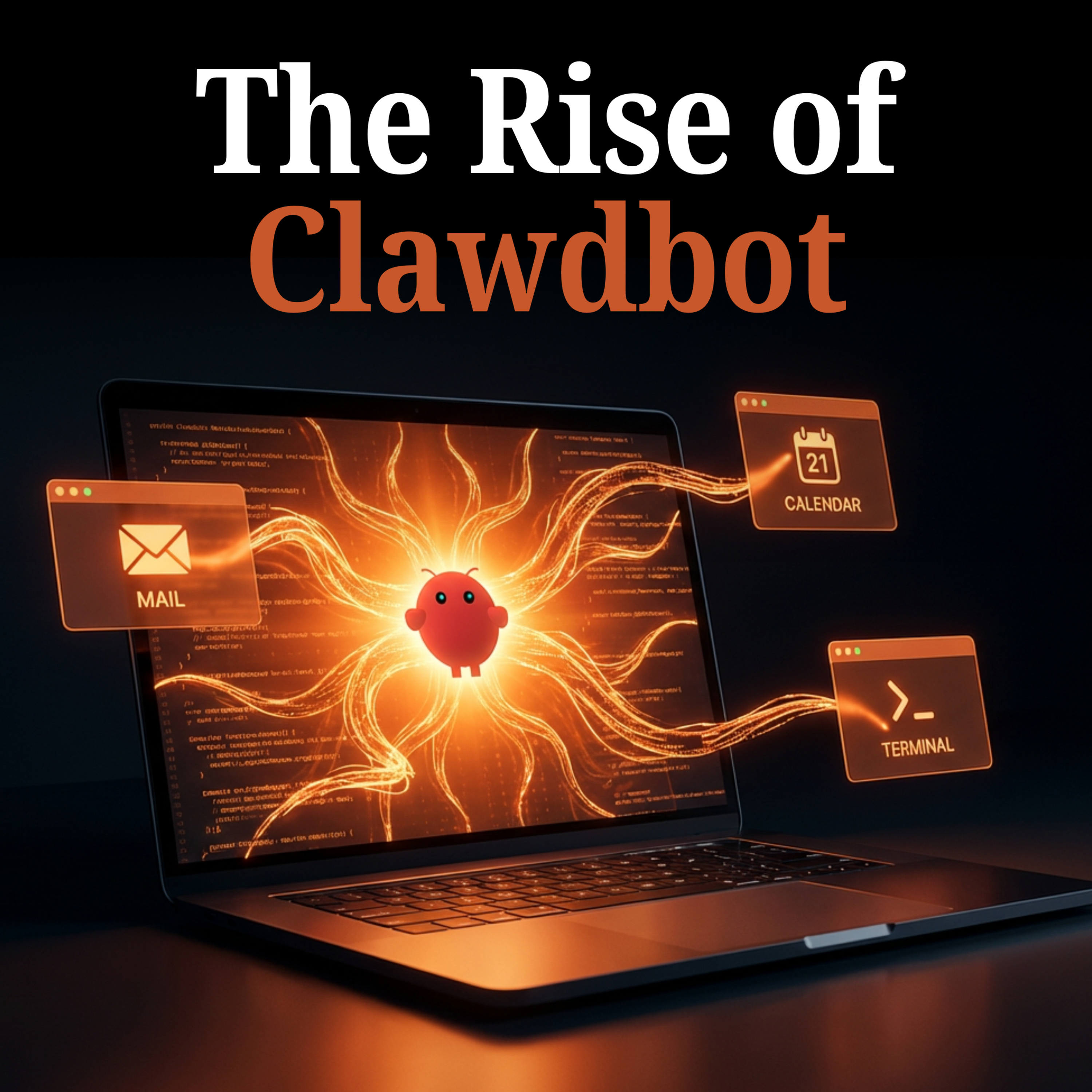
Unlike generative AI (like ChatGPT) which only provides text output, agentic AI can perform actions on your behalf. It can log into accounts, click buttons, and complete multi-step tasks, shifting AI from a smart consultant to an autonomous digital assistant.

Actively AI provides each sales account with its own persistent AI agent. This agent maintains context throughout the account's lifecycle, proactively guiding the human seller on next steps and even executing tasks. The core belief is that this model will lead to a sales world where AI agents vastly outnumber human sellers.

Instead of integrating with existing SaaS tools, AI agents can be instructed on a high-level goal (e.g., 'track my relationships'). The agent can then determine the need for a CRM, write the code for it, and deploy it itself.
AI agents could negotiate hyper-detailed contracts that account for every possible future eventuality, a theoretical concept currently impossible for humans. This would create a new standard for agreements by replacing legal default rules with bespoke, mutually-optimized terms.

The business model for AI agents fundamentally shifts the value proposition from selling a tool (license) to selling an outcome (automated work). This allows vendors to tap into operational or labor budgets, not just IT budgets, unlocking a new price-for-value equation and exponentially larger contract sizes.