Get your free personalized podcast brief
We scan new podcasts and send you the top 5 insights daily.
Andrew MacDonald highlights the innovator's dilemma at Uber. With nearly $250 billion in gross bookings, any new product must demonstrate a path to multi-billion-dollar GMV to be considered significant. This massive scale makes it difficult to justify and resource smaller, experimental bets.

Related Insights
Dara Khosrowshahi challenges the common pattern of large companies becoming more conservative. He argues that as a company's resilience increases with scale and cash flow, its capacity to take bigger, innovation-driving risks grows, making larger mistakes more survivable.
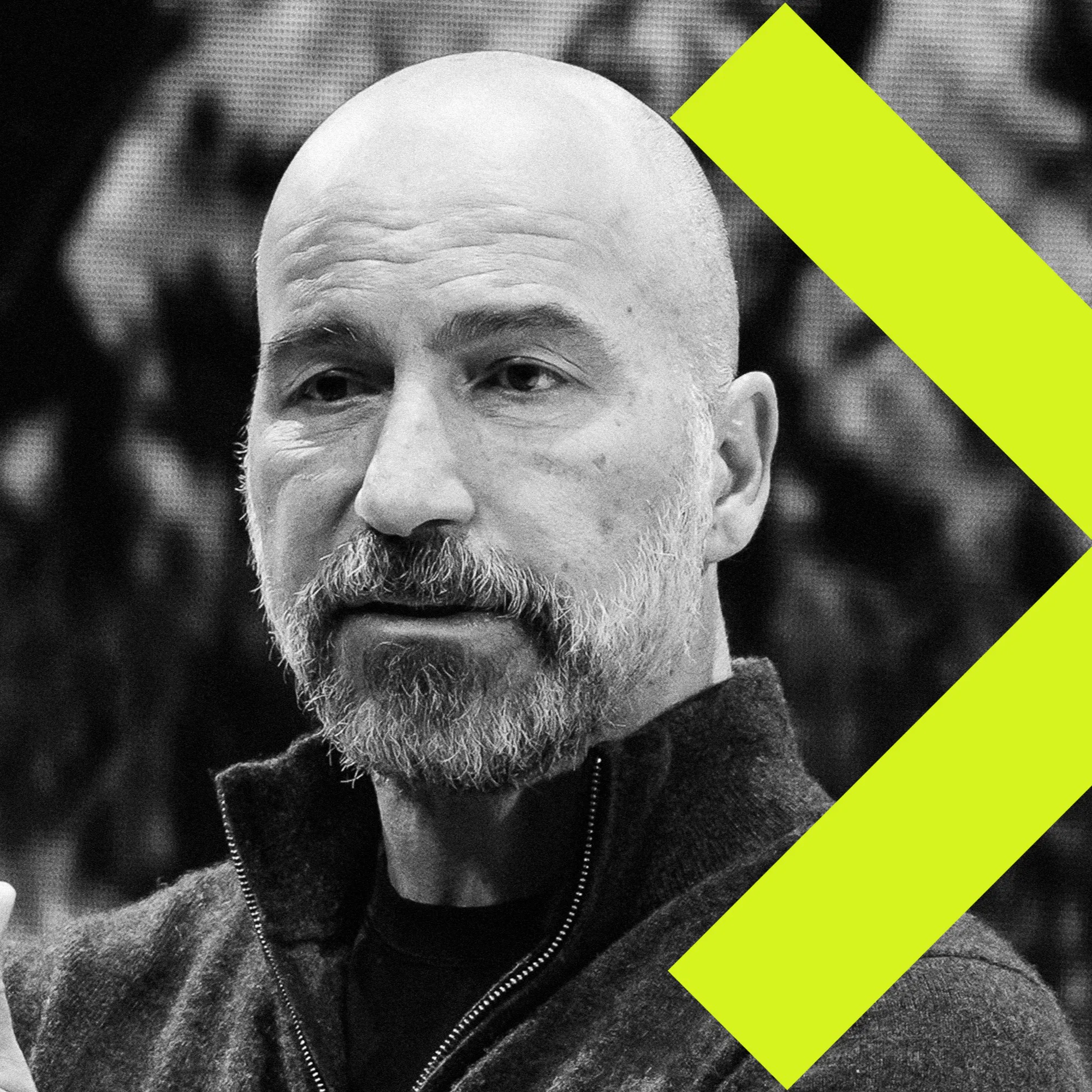
The "winner-takes-most" nature of marketplace businesses means that even an industry leader can operate for over a decade before achieving profitability. This model demands immense capital investment to survive a long, costly war of attrition to establish network effects.

Uber maintains a startup-like "builder" culture, emphasizing speed and risk tolerance even at scale. CEO Dara Khosrowshahi states their growth comes from rapidly building new products, not acquisitions, and accepts that some products will fail as a necessary byproduct of innovation.

Dara Khosrowshahi learned that unlike travel platforms (demand-led), Uber's growth is fundamentally driven by supply. The primary focus is on recruiting drivers and merchants into new markets. Once sufficient supply is established, latent consumer demand naturally emerges and follows, dictating their entire expansion playbook.
![Dara Khosrowshahi - Uber's Bet on AVs, AI, and Building a Super-App - [Invest Like the Best, EP.476] thumbnail](https://megaphone.imgix.net/podcasts/ef669774-cccd-11ed-889b-c36caad6646f/image/158efdddfb983d2678b3530d484e8aa2.jpg?ixlib=rails-4.3.1&max-w=3000&max-h=3000&fit=crop&auto=format,compress)
When scaling in operational companies like Walmart or Lyft, product leaders must analyze the entire P&L, not just revenue. The cost of training millions of employees on a new feature can outweigh its benefits, making frictionless, self-adopted solutions essential.

When incubating new businesses, large companies like Uber risk making teams "fat on resources." Andrew MacDonald notes this leads to slower, less efficient development compared to lean startups. To combat this, they try to impose startup-like constraints, knowing their ultimate advantage is their massive distribution network.
Dara Khosrowshahi argues that entrepreneurs over-index on Total Addressable Market (TAM), which he sees mainly as a fundraising tool. The real focus should be on proving product-market fit and solid unit economics in a small, defensible niche. Once that's established, you can expand into adjacent markets.

Large companies dismiss opportunities that aren't massive enough to impact their market cap (e.g., 'just a $2 billion opportunity'). This creates openings for startups to dominate valuable niches that incumbents ignore due to their own scale.
Uber's defense against AV players like Waymo isn't to build better tech, but to leverage its distribution. Autonomous vehicles are expensive fixed assets requiring high utilization to be profitable. Uber's 200M+ user base offers that utilization, giving them leverage even against technologically superior partners.
Contrary to the belief that AVs will simply replace human drivers, Uber is seeing markets with autonomous vehicles grow faster overall. The novelty of the product attracts a new customer segment, expanding the total addressable market rather than just substituting existing rides.
