Get your free personalized podcast brief
We scan new podcasts and send you the top 5 insights daily.
Cusp AI, a platform for generative materials discovery, has pioneered a royalty-based business model in a sector where it was deemed impossible. Co-founder Chad Edwards insisted on baking royalties into corporate contracts. This aligns incentives, allowing Cusp AI to share in the massive commercial upside when their discovered materials go into production, much like a biotech firm earning royalties on a successful drug.

Related Insights
The combination of AI reasoning and robotic labs could create a new model for biotech entrepreneurship. It enables individual scientists with strong ideas to test hypotheses and generate data without raising millions for a physical lab and staff, much like cloud computing lowered the barrier for software startups.
The business model of selling AI access via tokens is just the start. The truly immense value creation will occur when labs turn their AGI inward to solve humanity's biggest scientific challenges, like longevity, clean energy, and materials science, capturing the resulting value.

Since one cannot own sun or wind, Altius created novel intellectual property to structure royalty-like contractual interests in renewable projects. They provide early-stage capital to developers in exchange for a long-term revenue share from future power generation, effectively creating a new asset class.
![Altius Minerals: Royalty Check - [Business Breakdowns, EP.243] thumbnail](https://megaphone.imgix.net/podcasts/5cb3e638-3f99-11f1-84d2-8361abcf0f70/image/bcdf73c47dcba2bd0f96606768d92e3d.jpg?ixlib=rails-4.3.1&max-w=3000&max-h=3000&fit=crop&auto=format,compress)
Contrary to the focus on large upfront payments, a smarter partnership strategy is to negotiate for a larger share of downstream success through royalties and milestones. This can yield far greater long-term returns if the product succeeds.

The prevailing biotech model is shifting from an asset-centric approach to one focused on creating a "learning system." The most successful future companies will be those with a repeatable engine for discovery and validation that can consistently generate new insights and a diversified pipeline of assets.
Platforms like Audos are creating a new asset class by acquiring AI-driven investors to programmatically fund the thousands of small businesses created by their users. This moves beyond traditional VC to a high-volume, royalty-based model for the "Donkey Corn" economy.

OpenAI plans to demand revenue shares from drugs developed using its AI and a cut of e-commerce transactions. This transforms its business model from a simple per-token utility into a complex, risk-involved partner in multiple industries, akin to a venture firm.

The innovation pipeline in biotech often starts in academia with fundamental breakthroughs like CRISPR or single-cell sequencing. Industry then provides the resources and engineering mindset to scale these technologies, robustify them, and generate the massive, high-quality datasets required to power AI-driven discovery.
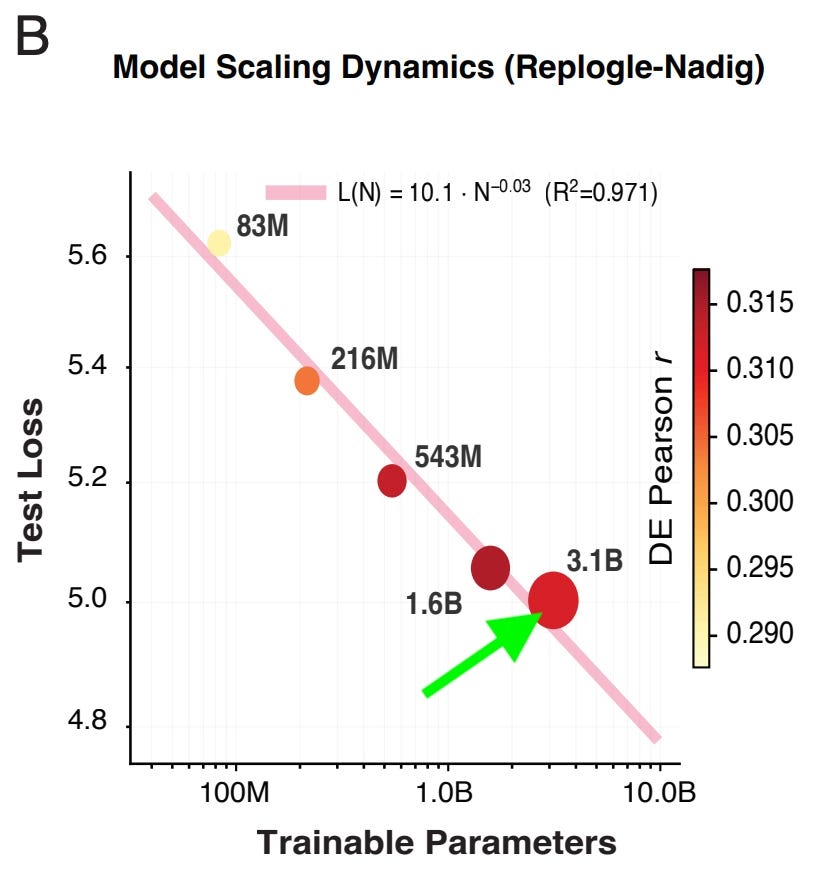
In the past, AI drug discovery startups often had to build their own drug pipeline to succeed. Now, a market shift is occurring where large pharmaceutical companies are actively acquiring or licensing specialized AI models and platforms, validating the business model of being a pure AI provider to the industry.

Companies developing effective AI-powered workflows and system prompts are creating a new form of valuable IP. Instead of keeping these internal processes secret, they can be packaged as 'playbooks' and licensed to other businesses, generating a new, scalable stream of passive income.
