Get your free personalized podcast brief
We scan new podcasts and send you the top 5 insights daily.
Initiatives like "The Longest Table" started as simple ideas tested with minimal investment. Unlike corporate projects requiring extensive proposals and ROI calculations that can stifle creativity, Banikarim advocates for just trying things. A low-investment trial reveals true viability and organic demand without the pressure of a pre-defined strategy.

Related Insights
To overcome organizational inertia, use simple one-page templates ('Improvement Napkins,' 'Solution Napkins') to capture ideas. This structured, low-friction approach forces clarity and commitment, moving teams from complaining about problems to executing small-scale experiments.

In ROI-focused cultures like financial services, protect innovation by dedicating a formal budget (e.g., 20% of team bandwidth) to experiments. These initiatives are explicitly exempt from the rigorous ROI calculations applied to the rest of the roadmap, which fosters necessary risk-taking.
In traditional C-suite roles, marketing is about command and control. However, when building authentic communities like "The Longest Table," Maryam Banikarim learned success comes from "grace and trust." Empowering volunteers and letting go of rigid control unlocks a collective creativity that top-down directives cannot replicate.
Instead of building an MVP, pitch a one-liner about your solution to a target audience and gauge their reaction. Passionate, unsolicited stories about their pain points signal strong problem-solution fit. This method provides objective validation with minimal resources.
Before investing in a lengthy business case, gauge a project's potential by asking for volunteers. If no one is excited enough to join, it's a strong signal the project lacks a compelling purpose and should be abandoned. This simple, five-minute test can save months of wasted work.
Instead of trying to convince skeptical leadership with a presentation, carve out a small part of your budget to run a real-world test of your creative idea. Present the superior results from your experiment. Data from a live campaign is far more persuasive than a theoretical argument.

Forcing innovations to "scale" via top-down mandates often fails by robbing local teams of ownership. A better approach is to let good ideas "spread." If a solution is truly valuable, other teams will naturally adopt it. This pull-based model ensures change sticks and evolves.
In a high-agency environment, action trumps bureaucracy. Instead of asking for permission via a proposal, building a functional prototype demonstrates initiative and delivers immediate value, short-circuiting endless meetings and discussions.
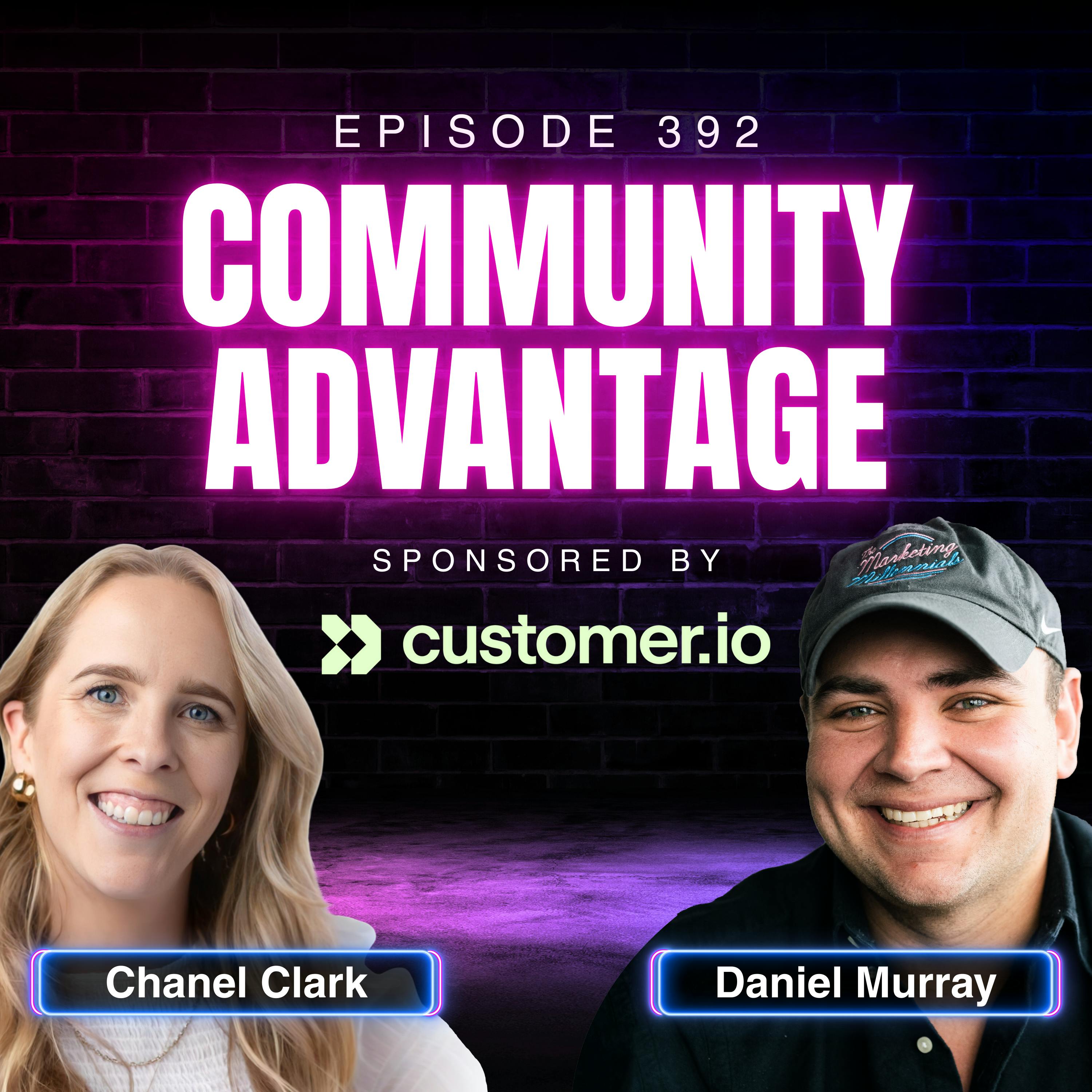
The Marketing Club (TMC) began not from a business plan, but from founder Chanel Clark's personal need as a solo marketer. A single, innocent LinkedIn post asking to connect with peers unexpectedly went viral, proving that organic, problem-led community origins are highly effective.
Don't waste time on detailed business plans, which are just guesses. The only effective plan is to take immediate, imperfect action. Starting messy allows you to get real-time feedback from customers, which is the only reliable guide for building a successful business.
