Get your free personalized podcast brief
We scan new podcasts and send you the top 5 insights daily.
The emergence of multiple effective but distinct therapies (systemic, liver-directed, immunotherapy) has created a new clinical challenge. Without head-to-head trials, oncologists must now strategize the optimal sequence and combination for each patient, moving beyond a one-size-fits-all approach.

Related Insights
The success of immunotherapy in neoadjuvant and adjuvant settings has rendered the traditional, sequential referral model (dermatologist to surgeon to oncologist) obsolete. Optimal care now demands an integrated, team-based discussion among all specialists *before* the first treatment decision is made to determine the best sequence and timing.
The field of multiple myeloma has transformed from having few treatments to an abundance of effective drugs. The primary clinical challenge is no longer finding a therapy that works, but rather determining the optimal sequence and combination of available options, highlighting a unique form of market maturity.

The rapid adoption of neoadjuvant immunotherapy as the superior standard of care means this new adjuvant vaccine faces an uphill battle for relevance. Its true future impact hinges on proving its efficacy when combined with neoadjuvant therapy, a combination that could potentially lead to unprecedentedly low relapse rates for patients.

The arrival of multiple effective, biomarker-linked therapies for diseases like ovarian cancer creates a new, complex challenge for oncologists. No longer a matter of choosing the single best next option, treatment has become a strategic game of sequencing, requiring physicians to think "five plays ahead" to maximize the benefit of all available drugs over the patient's lifetime.

Beyond low mutational burden, uveal melanoma's tendency to metastasize to the liver is a key reason for immunotherapy failure. The liver's microenvironment fosters systemic immune tolerance, creating a major hurdle for checkpoint inhibitors that are effective in other melanomas.
The scarcity of new melanoma targets at the AACR conference doesn't indicate a solved problem. Instead, it reflects a strategic shift in the field. Researchers are prioritizing innovation in modalities (e.g., mRNA vaccines) and combinations with established PD-1 inhibitors to enhance efficacy, rather than focusing on discovering novel biological pathways.

The future of medicine isn't about finding a single 'best' modality like CAR-T or gene therapy. Instead, it's about strategic convergence, choosing the right tool—be it a bispecific, ADC, or another biologic—based on the patient's specific disease stage and urgency of treatment.

The OptumO2 trial's combination of duravacertib and crizotinib produced a small number of complete responses. While few, achieving any CRs with a systemic therapy is a significant milestone in uveal melanoma, raising hopes for potential long-term durability and even cure for a select subgroup of patients.
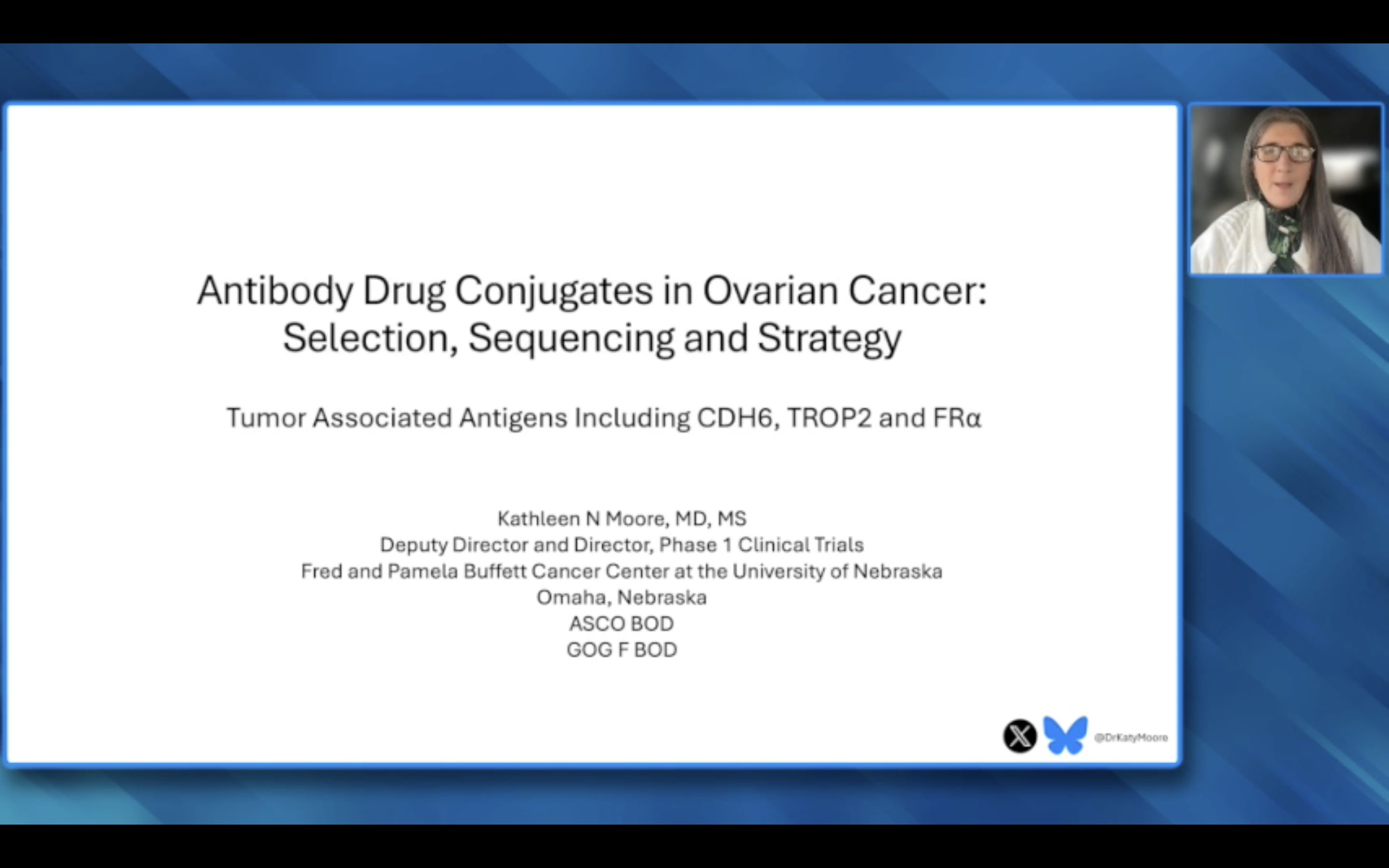
As multiple effective Antibody-Drug Conjugates (ADCs) become available, the primary clinical challenge is no longer *if* they work, but *how* to use them best. Key unanswered questions involve optimal sequencing, dosing for treatment versus maintenance, and overall length of therapy, mirroring issues already seen in breast cancer.
With several viable treatment options available, practical considerations are becoming as important as clinical data. A patient's ability to travel, manage weekly infusions, or handle side effects of oral medication are now critical factors in shared decision-making for personalized treatment plans.