Get your free personalized podcast brief
We scan new podcasts and send you the top 5 insights daily.
Inspired by Cron founder Raphael Schaad's comprehensive Figma file, an AI can be prompted to generate a single, editable HTML document containing every toast, dialog, and error notification. This allows UX writers and content teams to review and edit system-wide copy holistically and efficiently.

Related Insights
Don't just save good prompts; codify entire successful back-and-forth conversations into reusable "skills" within AI platforms like Claude. This automates complex, multi-step tasks like content repurposing with a single command, saving significant time.

Markdown plans from AI agents are becoming too long and unreadable. HTML allows for richer, more engaging artifacts with visuals and better formatting. This improves human oversight and collaboration with the AI, as the plans are more likely to be read and understood by the engineer.

Instead of static mockups, prompt an AI to create a single HTML file containing multiple interactive UI options. This allows designers to quickly test and compare complex elements like animations or hover states, providing a faster and more tangible feedback loop for UI development.
Instead of simple mockups, AI can generate standalone HTML documents with interactive elements like approve/deny buttons. This creates a conversational artifact, allowing designers to provide structured feedback directly within the prototype, which is then fed back to the AI for the next iteration.
Instead of iterating on prompts for single assets, focus on building reusable systems. This approach ensures brand consistency, saves time, and empowers non-designers to create on-brand assets efficiently by turning complex workflows into simple interfaces.
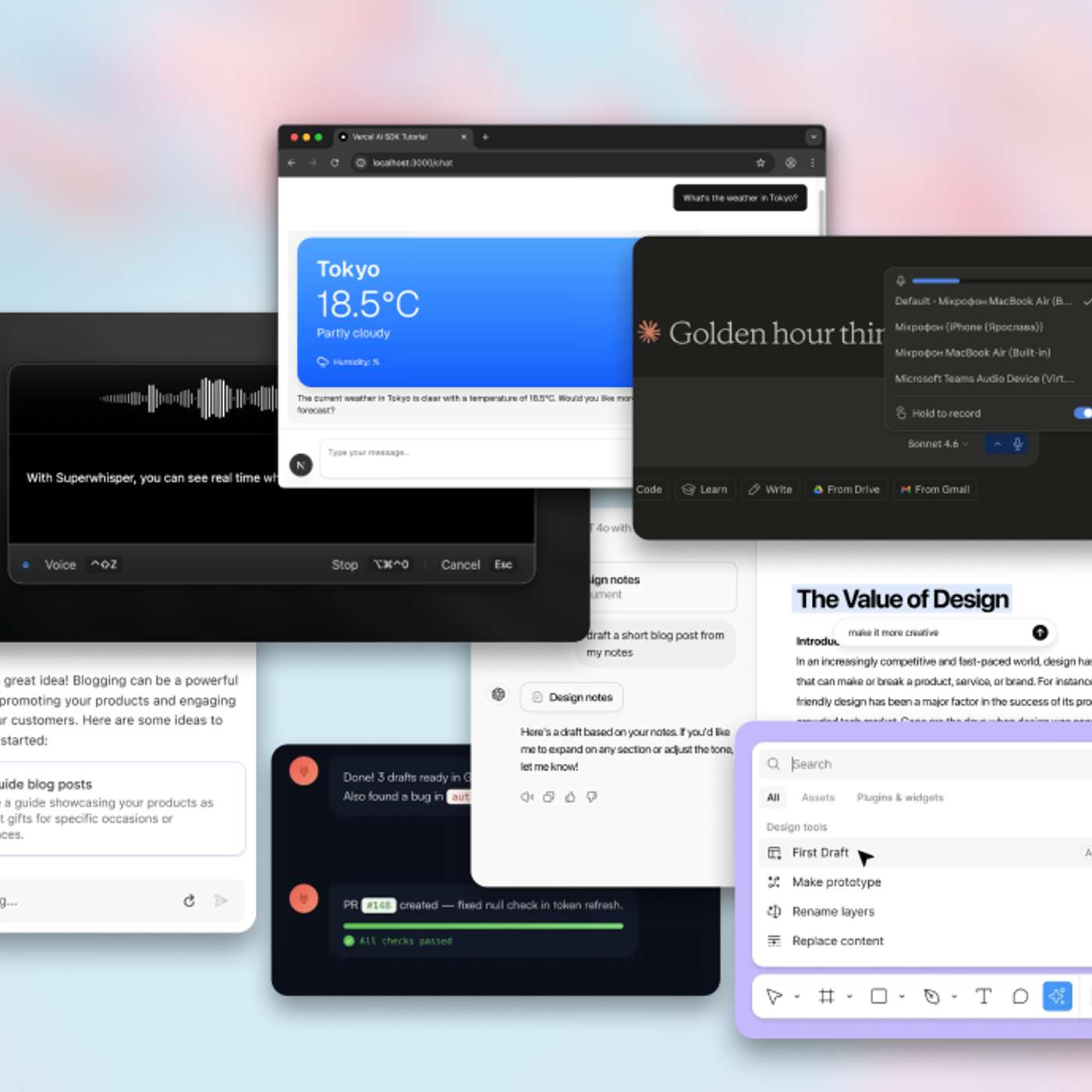
Early AI tools forced a frustrating 'regenerate' loop. Modern UX patterns succeed by making AI output interactive and editable within the same workflow. This shifts the user's expectation from a perfect final answer to a workable starting point, fostering a more collaborative process.
Instead of receiving a wall of text from an agent, prompt it to generate an interactive HTML artifact using a tool like Lavish. This makes plans easier to skim, critique, and annotate, enabling a much richer and faster feedback loop with the agent.

Instead of relying on scattered design docs or linking a repo, generate a "living design system" as a single HTML file. This artifact visually represents colors, typography, and components. It's easily passed to an AI agent in any new project, providing a compressed, comprehensive, and visual understanding of design constraints.
OpenAI is developing a "dynamic user interface library" designed so the AI model can interpret and compose UI elements itself. This forward-thinking approach anticipates a future where the model assembles bespoke interfaces for users on the fly.

Instead of editing a complex AI-generated plan via text prompts, ask the AI to build a custom, throwaway HTML interface for a specific part of the plan (e.g., a table of rules). This "micro software" provides a more intuitive way to interact with and modify the plan, improving the quality of human feedback.