Get your free personalized podcast brief
We scan new podcasts and send you the top 5 insights daily.
Instead of feeding data into a frontier model's context window for every task, companies can train a custom model where proprietary information is embedded directly into its weights. This creates a persistent, owned intelligence asset.

Related Insights
Public internet data has been largely exhausted for training AI models. The real competitive advantage and source for next-generation, specialized AI will be the vast, untapped reservoirs of proprietary data locked inside corporations, like R&D data from pharmaceutical or semiconductor companies.

The key for enterprises isn't integrating general AI like ChatGPT but creating "proprietary intelligence." This involves fine-tuning smaller, custom models on their unique internal data and workflows, creating a competitive moat that off-the-shelf solutions cannot replicate.

Michael Dell identifies the next frontier for enterprise AI as applying models to vast stores of private, unused data. The winning strategy involves taking standard models and retraining them on this proprietary data, creating a unique competitive advantage and organizational knowledge that cannot be easily copied.

A key competitive advantage for AI companies lies in capturing proprietary outcomes data by owning a customer's end-to-end workflow. This data, such as which legal cases are won or lost, is not publicly available. It creates a powerful feedback loop where the AI gets smarter at predicting valuable outcomes, a moat that general models cannot replicate.

Since LLMs are commodities, sustainable competitive advantage in AI comes from leveraging proprietary data and unique business processes that competitors cannot replicate. Companies must focus on building AI that understands their specific "secret sauce."

Enterprises using generic closed-source models fail to leverage their unique, domain-specific data collected over decades. Mistral argues that fine-tuning an open-weight model on this private data creates a significant competitive advantage that simply providing context at inference time cannot replicate.
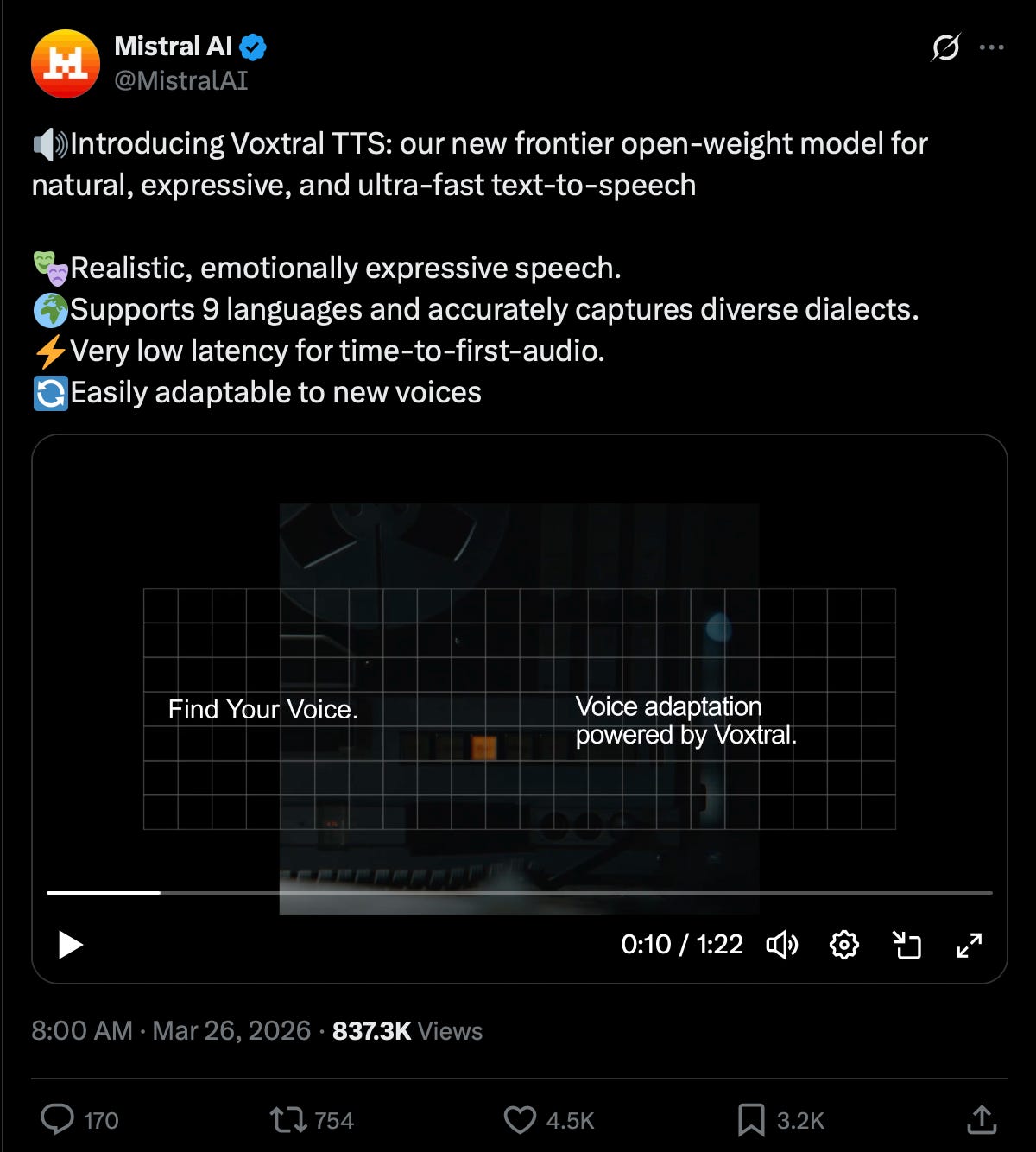
By training a smaller, specialized model where company data is in the weights, firms avoid the high token costs of repeatedly feeding context to large frontier models. This makes complex, data-intensive workflows significantly cheaper and faster.
If a company and its competitor both ask a generic LLM for strategy, they'll get the same answer, erasing any edge. The only way to generate unique, defensible strategies is by building evolving models trained on a company's own private data.

The real competitive advantage from AI comes from encoding your organization's unique intellectual property—its frameworks, theses, and internal voice—directly into prompts. This 'Savile Row' level of tailoring transforms a generic tool into a bespoke, high-value asset that competitors cannot replicate.

The concept of "sovereignty" is evolving from data location to model ownership. A company's ultimate competitive moat will be its proprietary foundation model, which embeds tacit knowledge and institutional memory, making the firm more efficient than the open market.