Get your free personalized podcast brief
We scan new podcasts and send you the top 5 insights daily.
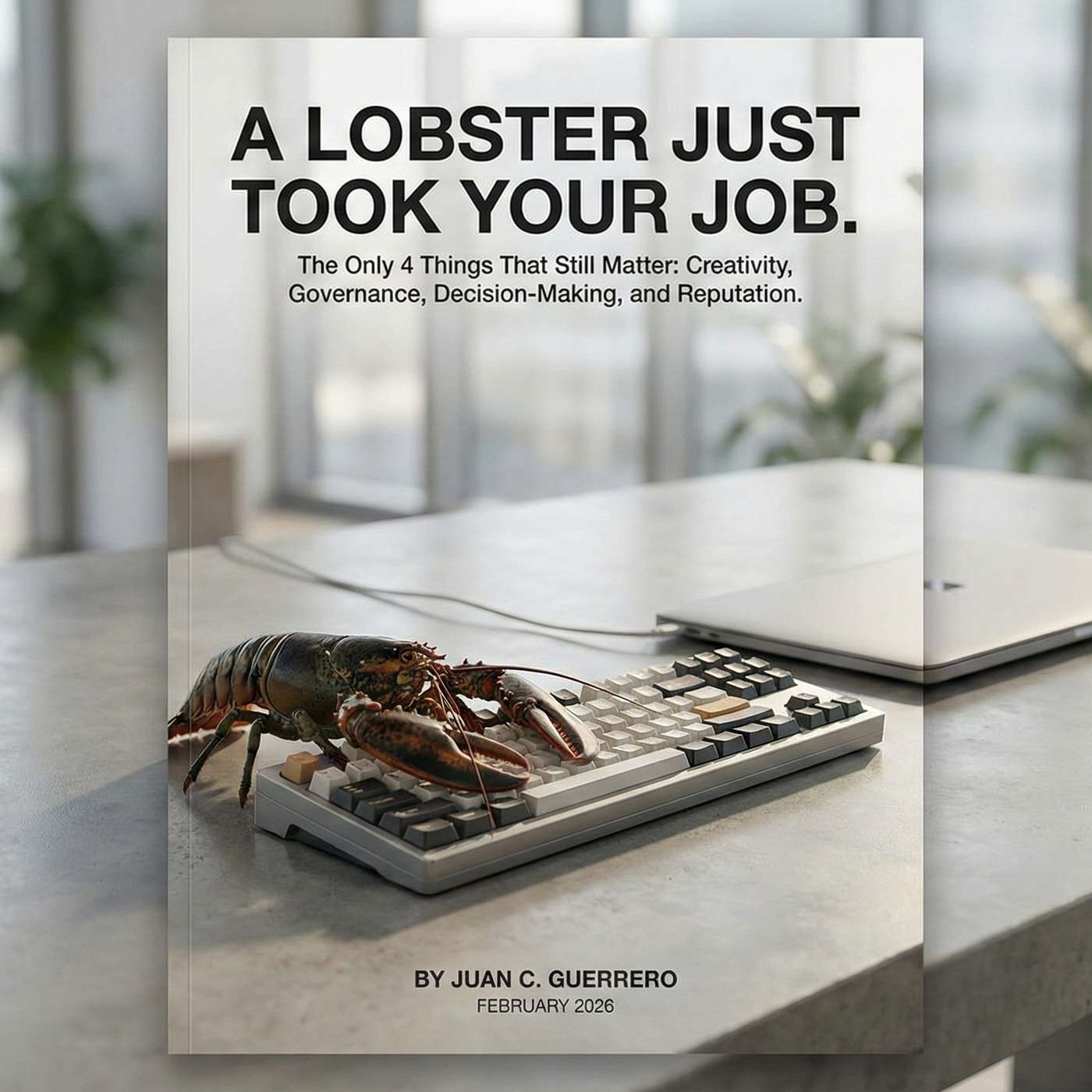
The staggering drop in compute cost—a task that cost $80,000 now costing $10—is the primary driver of economic disruption. This makes mass deployment feasible, accelerating job displacement far faster than capability improvements alone would suggest.

Related Insights
Conservative GDP growth forecasts for AI often fail because they analyze its capabilities at a single point in time. The most critical factor is AI's exponential improvement trajectory, which makes analyses based on year-old capabilities quickly obsolete and misleadingly pessimistic.

The true disruption from AI is not a single bot replacing a single worker. It's the immense leverage granted to individuals who can deploy thousands of autonomous AI agents. This creates a massive multiplication of productivity and economic power for a select few, fundamentally altering labor market dynamics from one-to-one replacement to one-to-many amplification.
The cost for a given level of AI capability has decreased by a factor of 100 in just one year. This radical deflation in the price of intelligence requires a complete rethinking of business models and future strategies, as intelligence becomes an abundant, cheap commodity.

The Industrial Revolution shifted economic power from land to labor. AI is poised for an equally massive transition, making capital, not labor, the primary driver and limiting factor of production. As AI increasingly substitutes for human labor, access to capital for machines and computation will determine economic output.
The key threat from AI isn't just its capability, but the unprecedented speed of its improvement. Unlike past technological shifts that unfolded over decades, AI agent autonomy on complex tasks has grown exponentially in just two years. This rapid acceleration is what financial systems and labor markets are not stress-tested for.

The cost for a given level of AI performance is falling at an unprecedented rate of 47% per quarter, according to Epic AI Research. This drop is multiples faster than Moore's Law, DNA sequencing, or electricity, unlocking previously uneconomical use cases like large-scale agent swarms.

A radical improvement in compute efficiency won't just lower costs; it will trigger Jevons' paradox, where consumption increases by more than the price drops. Making AI compute 1000x cheaper will unlock currently unimaginable applications, creating a market far larger than linear projections and potentially the largest in human history.

As AI gets exponentially smarter, it will solve major problems in power, chip efficiency, and labor, driving down costs across the economy. This extreme efficiency creates a powerful deflationary force, which is a greater long-term macroeconomic risk than the current AI investment bubble popping.

Capitalism values scarcity. AI's core disruption is not just automating tasks, but making human-like intellectual labor so abundant that its market value approaches zero. This breaks the fundamental economic loop of trading scarce labor for wages.

The fear of AI-driven deflation stems from its distribution model. While technologies like railroads took 50 years to build out, AI capabilities can be deployed globally and instantly via software. This pace means the cost of knowledge work could plummet rapidly, creating an economic shock without historical precedent.
