Get your free personalized podcast brief
We scan new podcasts and send you the top 5 insights daily.
For many founders and product people, personal fulfillment is tied to learning and overcoming challenges. Even in a profitable, stable business, stagnation can lead to personal dissatisfaction and burnout, making growth a necessity for morale, not just for investors.

Related Insights
As startups hire and add structure, they create a natural pull towards slower, more organized processes—a 'slowness gravity'. This is the default state. Founders must consciously and continuously fight this tendency to maintain the high-velocity iteration that led to their initial success.

Many companies focus only on growing revenue, which is an output. A high-performance culture focuses on the inputs: the personal and professional growth of its people. Investing in employees' skills, confidence, and well-being is what ultimately drives sustainable financial success, not the other way around.

Olipop's founder argues that during hypergrowth, leaders face an "inhuman" demand to grow personally and professionally at the same pace as the company. He frames his own role starkly: he will either be the company's biggest unlock or its biggest bottleneck, depending on his capacity for personal evolution.
The final product of your entrepreneurial journey isn't just the company. The most significant outcome is your personal transformation. Success should be measured by whether the process of building is shaping you into the person you genuinely want to be.

Founders often equate constant hustle with progress, saying yes to every opportunity. This leads to burnout. The critical mindset shift is recognizing that every professional "yes" is an implicit "no" to personal life. True success can mean choosing less income to regain time, a decision that can change a business's trajectory.
A startup's trajectory directly mirrors its founder's psychology and leadership capabilities. The business can only scale as fast as the CEO can evolve, particularly after the initial "brute force" stage (around $1-3M revenue) when leadership, not individual contribution, becomes the primary driver of growth.

When a business flatlines, the critical question isn't which new marketing channel to try. It's whether the founder has the motivation and long-term desire to reignite growth. This "founder activation energy" is a finite resource with a high opportunity cost that must be assessed before choosing a path.

The biggest risk for a founder isn't a quick failure, but a slow-growing company stuck at a few million in ARR. This 'zombie' state consumes years of your life without delivering on the venture-scale dream. To avoid this, anchor your startup in a future where the need for it is growing, not shrinking.
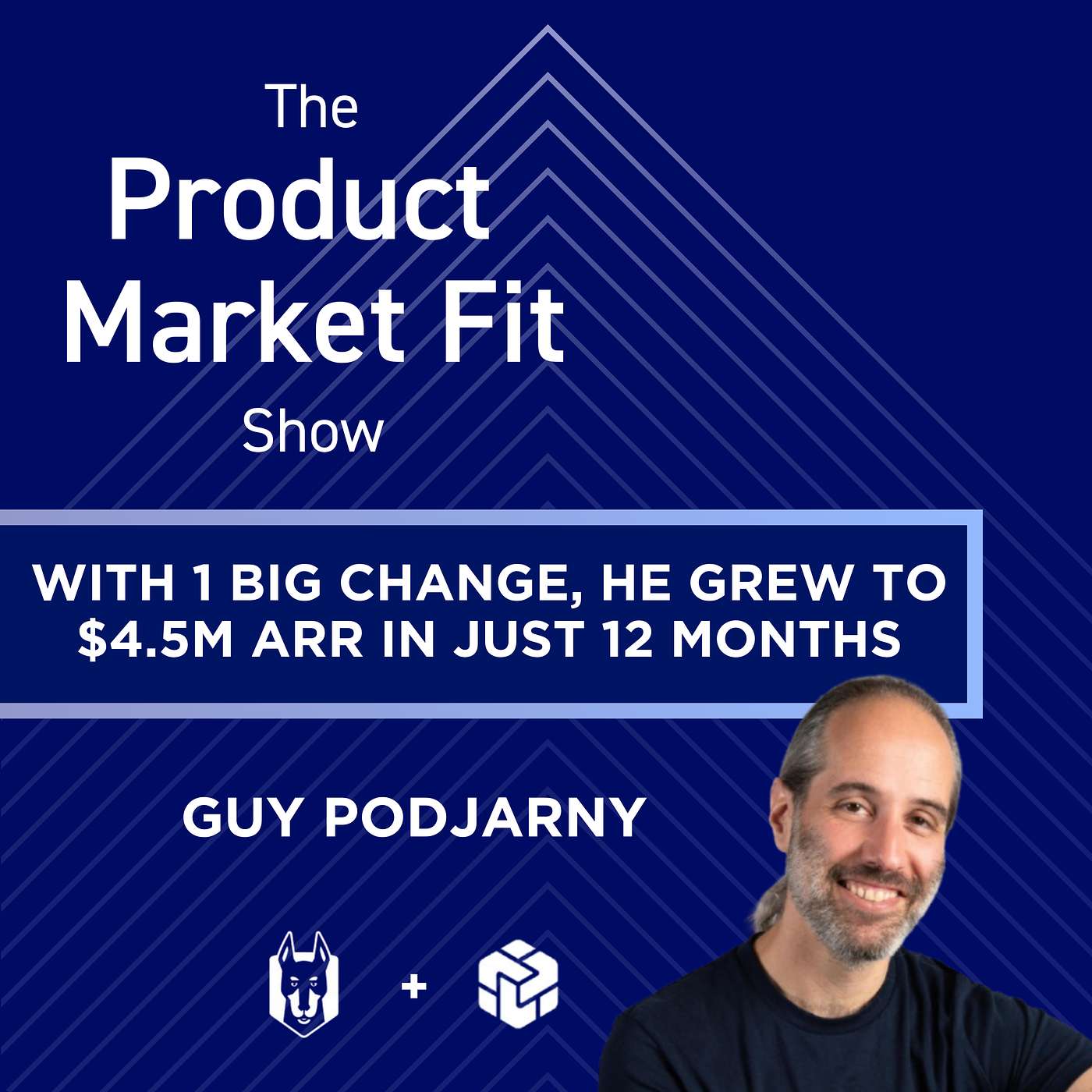
Borrowing a quote from Shopify's CEO, Mike Cannon-Brookes emphasizes that a founder's key responsibility is to counteract the natural decline in ambition that occurs as a company grows. They must constantly push the organization to remain bold and hungry.
The motivation for massive change doesn't always come from crisis or desperation. It can stem from boredom, a lack of failure, and the feeling of being on autopilot. This hunger for a new, scaled-up challenge is a powerful driver for unconventional growth.