Get your free personalized podcast brief
We scan new podcasts and send you the top 5 insights daily.
A startup's trajectory directly mirrors its founder's psychology and leadership capabilities. The business can only scale as fast as the CEO can evolve, particularly after the initial "brute force" stage (around $1-3M revenue) when leadership, not individual contribution, becomes the primary driver of growth.

Related Insights
Merge's founder believes a startup's first $10M in revenue can be achieved through the founders' sheer force of will. However, scaling to $100M requires a fundamental shift: building a strong leadership team, focusing on enterprise sales, and creating scalable systems—a completely different company.

The primary threat to a bootstrapped company is not external competition but internal struggle. Burnout, self-doubt, and loss of motivation kill more startups than any market force. Protecting your mental health is a critical business function, not a luxury.

Olipop's founder argues that during hypergrowth, leaders face an "inhuman" demand to grow personally and professionally at the same pace as the company. He frames his own role starkly: he will either be the company's biggest unlock or its biggest bottleneck, depending on his capacity for personal evolution.
Tariq Farid shares his grandfather's wisdom: "brawn to brain." In a company's early days, a founder's physical work ("brawn") is crucial. As it matures, their value shifts to wisdom, strategy, and system-building ("brain") to enable scale and prevent burnout.

When a business flatlines, the critical question isn't which new marketing channel to try. It's whether the founder has the motivation and long-term desire to reignite growth. This "founder activation energy" is a finite resource with a high opportunity cost that must be assessed before choosing a path.
Daniel Ek uses the analogy of parenthood to describe a founder's evolving role. In the beginning, the company is completely dependent on the founder. Over time, like a child, it develops its own personality, and the founder's job shifts from direct control to guidance and support.

An engineering background provides strong first-principles thinking for a CEO. However, to effectively scale a company, engineer founders must elevate their identity to become a specialist in all business functions—sales, policy, recruiting—not just product.

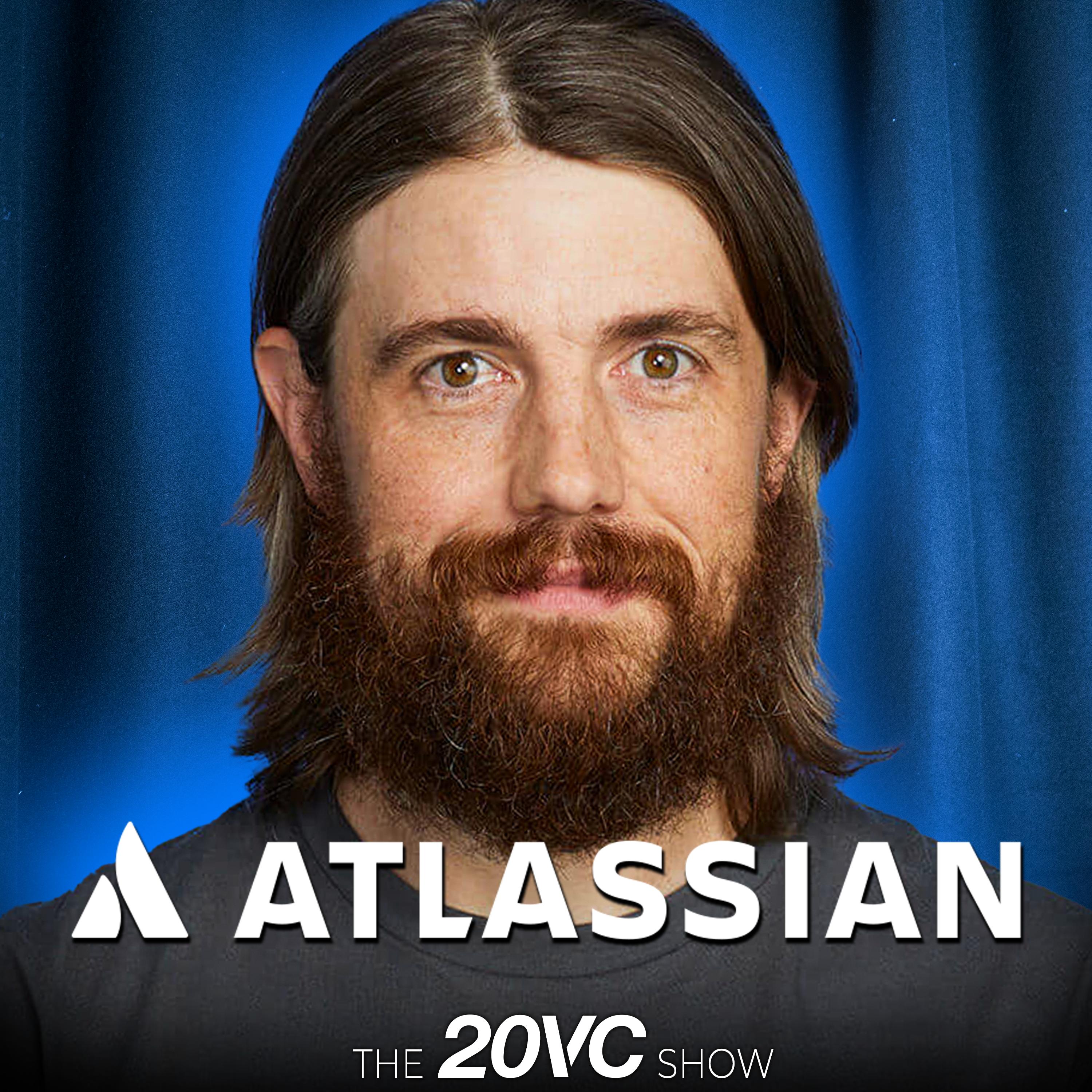
Borrowing a quote from Shopify's CEO, Mike Cannon-Brookes emphasizes that a founder's key responsibility is to counteract the natural decline in ambition that occurs as a company grows. They must constantly push the organization to remain bold and hungry.
Bumble's founder believes the initial, all-consuming obsession is critical for getting a startup off the ground. However, this same intensity becomes a liability as the company matures. Leaders must evolve and create distance to gain the perspective needed for long-term growth and to avoid stifling opportunity.

Building a self-sustaining business requires hiring the world's best people. However, top talent like Apple's Jony Ive or Elon Musk's engineers only work for visionary leaders with a proven track record. The ultimate constraint on your ability to attract A-players is your own credibility and ability to sell a compelling future.
