Get your free personalized podcast brief
We scan new podcasts and send you the top 5 insights daily.
Moderna's strategy isn't limited to melanoma. The first prong is augmenting existing checkpoint inhibitors (like Keytruda) where they work. The second is acting as a monotherapy in early-stage disease where checkpoints are too risky. The third is entering markets where inhibitors have failed entirely, such as pancreas cancer, due to its orthogonal mechanism of action.

Related Insights
Previous cancer vaccine attempts using "shared antigens" failed. Moderna's success stems from creating a unique mRNA vaccine for each patient after discovering that roughly 90% of the targeted cancer antigens differ between individuals. This finding proves that a highly personalized approach is not just an edge case, but a core requirement for the therapy's efficacy.
The initial hope for a revolution across many immune checkpoints has faded. With most targets outside of PD-1 failing to deliver, investors and pharma have grown fatigued. This disappointment has accelerated the industry's pivot towards other modalities like ADCs and cell therapies.

Even though companies like Moderna (mRNA) and Transgene (viral vector) use different platforms, positive results from any of them help validate the entire individualized neoantigen approach for investors and clinicians. The massive unmet medical need ensures the market is large enough to support multiple successful players.
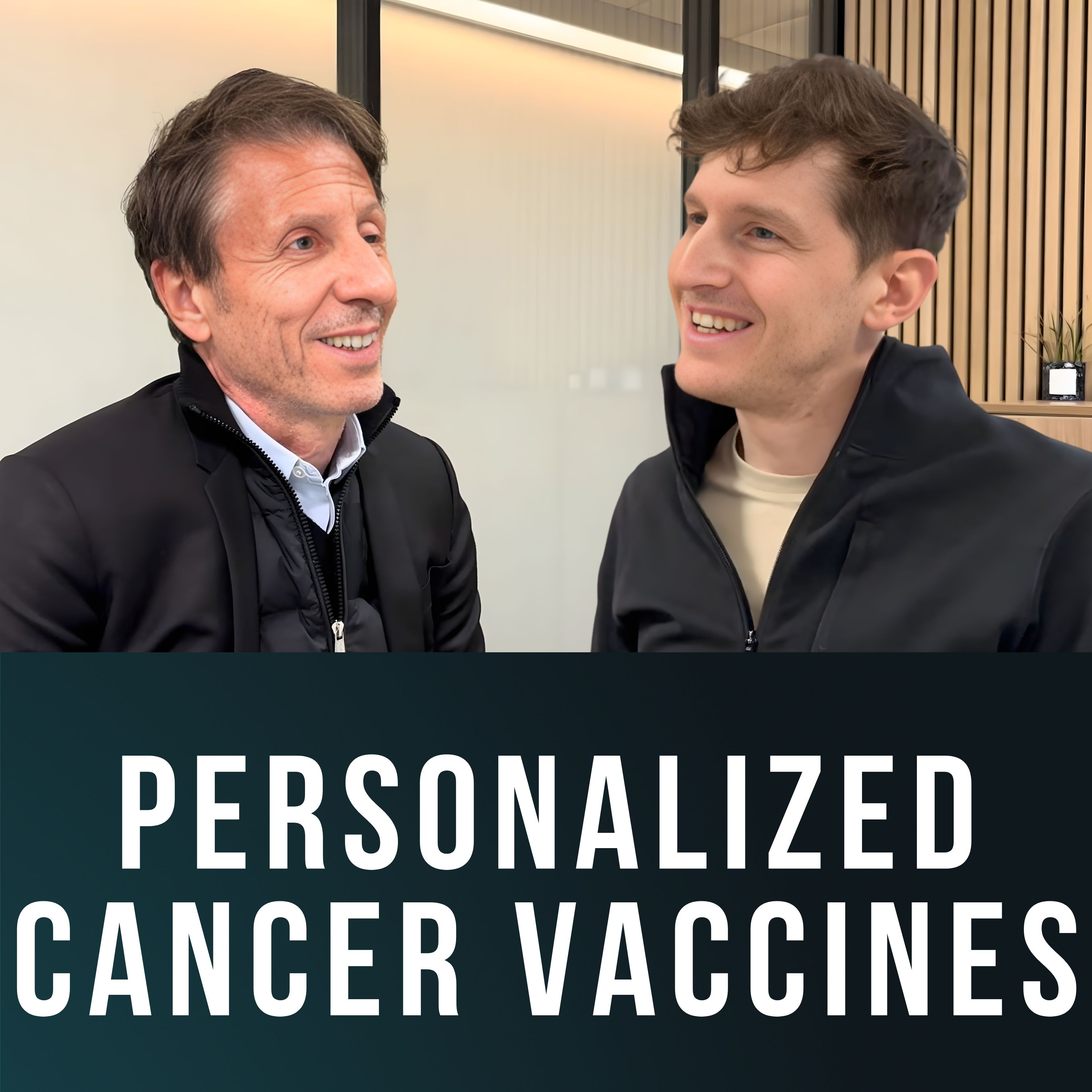
The scarcity of new melanoma targets at the AACR conference doesn't indicate a solved problem. Instead, it reflects a strategic shift in the field. Researchers are prioritizing innovation in modalities (e.g., mRNA vaccines) and combinations with established PD-1 inhibitors to enhance efficacy, rather than focusing on discovering novel biological pathways.

Unlike previous protein-based cancer vaccines that circulate in the blood, Moderna's mRNA enters antigen-presenting cells (APCs) in lymph nodes. The mRNA message is then translated inside the immune cells, presenting the cancer signature "from within." This creates a more robust and specific T-cell response, a crucial differentiator that led to success where others failed.
Immuneering selected pancreatic cancer not just for the unmet need, but because 97% of cases are driven by the MAPK pathway. This homogeneity means patients can enroll in trials without prior genetic testing, removing a significant bottleneck and speeding up the clinical development timeline.

Instead of competing with blockbuster PD-1 inhibitors like Keytruda, Multikine is positioned as a complementary therapy. It has shown efficacy in the majority of patients who lack the high PD-1 levels necessary for those inhibitors to work, creating a vast, underserved market.

A powerful analogy for combination immunotherapy: PD-1 checkpoint inhibitors act like releasing the brake on the immune system, reactivating existing but exhausted T-cells. In contrast, a cancer vaccine like NUS209 is the accelerator, creating entirely new T-cells and reactivities that can target the tumor, providing a synergistic effect.
The vaccine's success isn't solely due to mRNA. It 'trains' the immune system to spot cancer cells, while a companion drug (a checkpoint inhibitor) simultaneously disables the tumor's ability to suppress that immune response. This dual approach is the real breakthrough.

Newscom attributes its potential success to a "3 P's" framework that addresses historical failures. It requires a potent Platform (viral vectors) for a robust T-cell response, a high-quantity Payload (neoantigens) to prevent tumor escape, and selecting the right Patient population (earlier-stage disease) where the immune system isn't overwhelmed.