Get your free personalized podcast brief
We scan new podcasts and send you the top 5 insights daily.
Newscom attributes its potential success to a "3 P's" framework that addresses historical failures. It requires a potent Platform (viral vectors) for a robust T-cell response, a high-quantity Payload (neoantigens) to prevent tumor escape, and selecting the right Patient population (earlier-stage disease) where the immune system isn't overwhelmed.

Related Insights
While many focus on identifying a few high-"quality" neoantigen targets, Newscom argues that quantity is equally crucial. By presenting a broad set of over 200 targets in its vaccine, the company aims to significantly reduce the chance of tumor escape, as cancer cannot easily downregulate all targets at once.
The most common investor misconception is that cancer vaccines have "never worked." The key rebuttal is that past failures targeted generic, shared antigens. The new generation of vaccines is fundamentally different, targeting specific mutations unique to each patient's tumor, which changes the entire paradigm.
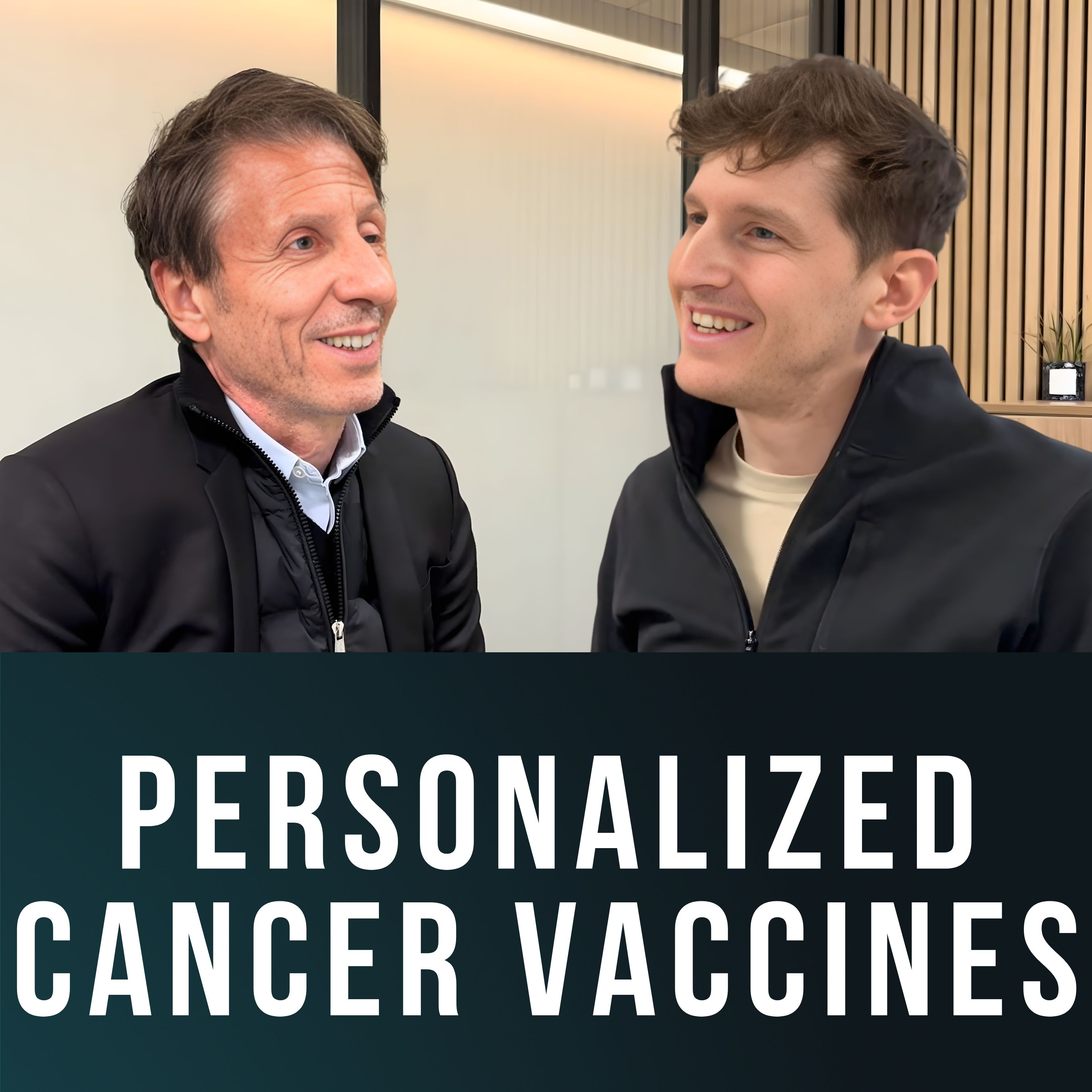
Create's strategy is not limited to a single cell type. They view success in solid tumors as requiring the programming of all immune cells. Their platform can specifically engineer myeloid cells, T-cells, and NK cells in vivo, orchestrating a coordinated, multi-pronged attack on cancer.
Even though companies like Moderna (mRNA) and Transgene (viral vector) use different platforms, positive results from any of them help validate the entire individualized neoantigen approach for investors and clinicians. The massive unmet medical need ensures the market is large enough to support multiple successful players.
Newscom's strategy is to "intercept" cancer before tumors can form, a significant shift from traditional treatment. By training the immune system to eliminate precancerous cells as they emerge in high-risk groups like Lynch syndrome carriers, they move from reactive treatment to proactive prevention at a cellular level.
Newscom uses the same viral vector delivery system for both its universal (off-the-shelf) and personalized cancer vaccines. The core technology remains constant, while the "payload"—the specific neoantigens being targeted—is what's customized. This platform approach allows for broad applicability across different treatment modalities.
Create Medicines chose LNP-delivered RNA for its in vivo platform to give physicians control. Unlike permanent lentiviral approaches, repeatable dosing allows for adapting to tumor antigen escape and managing durability and safety over time. This flexibility is a core strategic advantage for complex diseases like solid tumors.
A powerful analogy for combination immunotherapy: PD-1 checkpoint inhibitors act like releasing the brake on the immune system, reactivating existing but exhausted T-cells. In contrast, a cancer vaccine like NUS209 is the accelerator, creating entirely new T-cells and reactivities that can target the tumor, providing a synergistic effect.
Unconventionally, Infinitopes' first-in-human trial targets neoadjuvant patients (newly diagnosed, pre-surgery). This provides cleaner efficacy signals compared to trials in heavily pre-treated patients and enables unique analysis of resected tumors to prove the vaccine's mechanism, a key differentiator from competitors.

The future of biotech moves beyond single drugs. It lies in integrated systems where the 'platform is the product.' This model combines diagnostics, AI, and manufacturing to deliver personalized therapies like cancer vaccines. It breaks the traditional drug development paradigm by creating a generative, pan-indication capability rather than a single molecule.
