Get your free personalized podcast brief
We scan new podcasts and send you the top 5 insights daily.
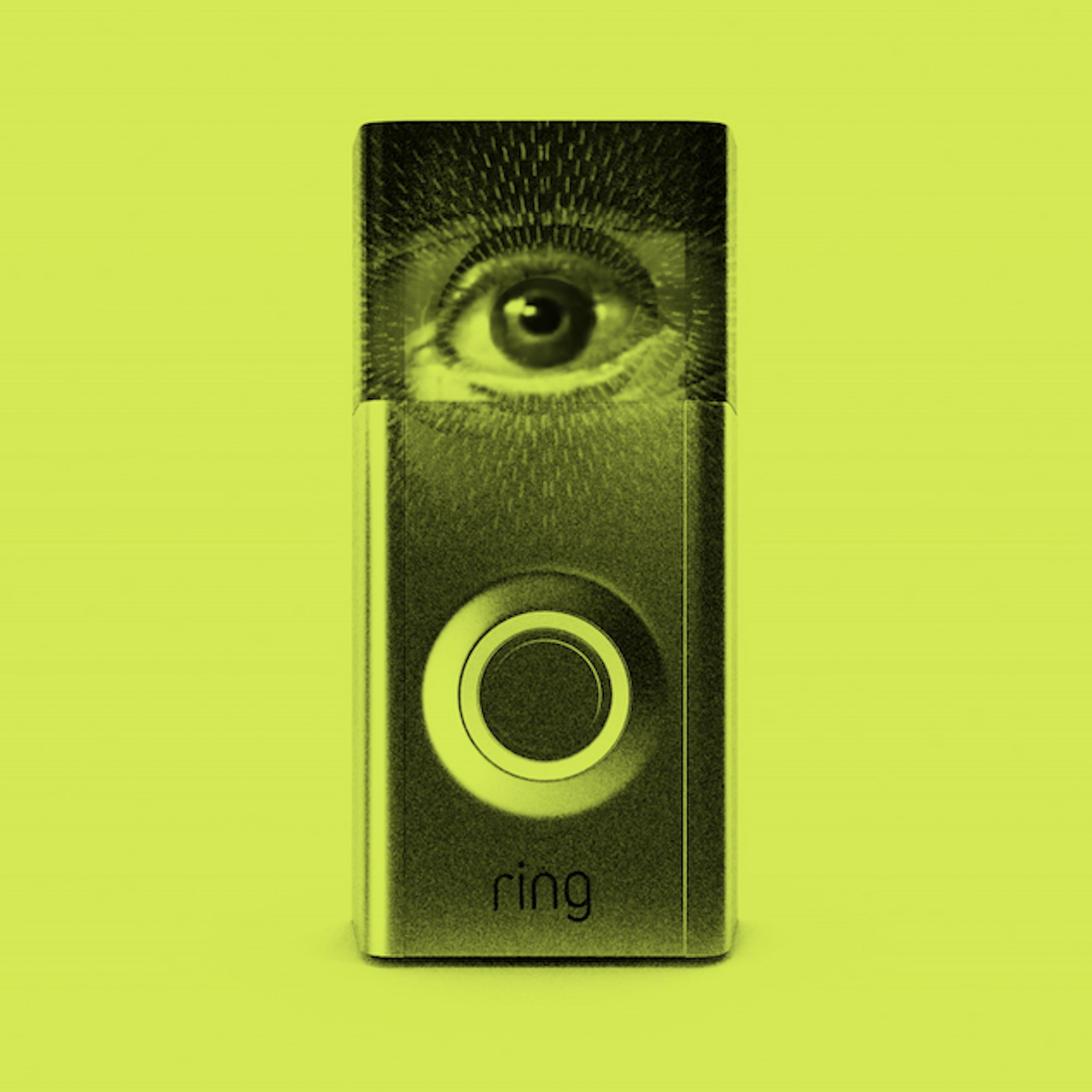
Ring's founder deflects privacy concerns about his company's powerful surveillance network by repeatedly highlighting that each user has absolute control over their own video. This 'decentralized control' narrative frames the system as a collection of individual choices, sidestepping questions about the network's immense aggregate power.
Related Insights
Unlike historical propaganda which used centralized broadcasts, today's narrative control is decentralized and subtle. It operates through billions of micro-decisions and algorithmic nudges that shape individual perceptions daily, achieving macro-level control without any overt displays of power.

AI video platform Synthesia built its governance on three pillars established at its founding: never creating digital replicas without consent, moderating all content before generation, and collaborating with governments on practical regulation. This proactive framework is core to their enterprise strategy.

Ring's Super Bowl ad framed its AI surveillance as a benign tool to find lost dogs. Critics and the public immediately saw this as a way to normalize and develop powerful technology that could easily be used to track people, revealing how a harmless use-case can mask more controversial long-term capabilities.
Ring’s founder clarifies his vision for AI in safety is not for AI to autonomously identify threats but to act as a co-pilot for residents. It sifts through immense data from cameras to alert humans only to meaningful anomalies, enabling better community-led responses and decision-making.

To address fears of misuse, Sora requires users to opt-in via a high-friction 'cameo' process to use anyone's likeness. This is a strategic design choice to give individuals full control, contrasting with open-source tools and reassuring partners in creative industries.

The podcast highlights a core paradox: widespread fear of corporate surveillance systems like Ring coexists with public praise for citizens using identical technology (cell phones) to record law enforcement. This demonstrates that the perceived controller and intent, not the technology itself, dictate public acceptance of surveillance.
While AI shopping agents promise to protect consumer privacy by abstracting away direct retailer relationships, this is a false dawn. Power will likely centralize with the major tech companies providing these agents, not empower individual users with decentralized control. The battle for "owning the customer" simply moves to a new layer.

Amidst the rise of AI-generated fakes, proving video authenticity is becoming critical. By building closed systems that can maintain a 'digital fingerprint' and chain of custody for video, companies like Ring are positioned to become indispensable arbiters of truth for the legal system, not just camera providers.
Ring founder Jamie Simenoff described his AI's goal as replicating a neighborhood with all-knowing private security. Instead of conveying safety, host Nilay Patel immediately challenged this vision as a "dystopian" nightmare, revealing a stark disconnect between a founder's intent and public perception of surveillance technologies.
A swift and intensely negative public reaction, amplified by social media influencers, directly led Amazon's Ring to cancel its planned integration with surveillance firm Flock Safety just days after its announcement. This shows public opinion on privacy can act as a powerful and immediate check on corporate strategy.