Get your free personalized podcast brief
We scan new podcasts and send you the top 5 insights daily.
Inherent Labs' Faraday agent (27B parameters) acts as a specialized 'scientist' that directs a much larger model (GPT-5.5 Codex) for coding tasks. This strategic division of labor allows them to innovate on scientific reasoning while leveraging existing state-of-the-art coding capabilities from other labs.

Related Insights
The path to robust AI applications isn't a single, all-powerful model. It's a system of specialized "sub-agents," each handling a narrow task like context retrieval or debugging. This architecture allows for using smaller, faster, fine-tuned models for each task, improving overall system performance and efficiency.

AI platforms using the same base model (e.g., Claude) can produce vastly different results. The key differentiator is the proprietary 'agent' layer built on top, which gives the model specific tools to interact with code (read, write, edit files). A superior agent leads to superior performance.

OpenAI recommends a bifurcated approach. Startups building bleeding-edge, code-focused agents should use the specialized Codex model line, which is highly opinionated and optimized for its tool harness. Applications requiring more general capabilities and steerability across various tools should use the mainline GPT model instead.

For large projects, use a high-level AI (like Claude's Mac app) as a strategic partner to break down the work and write prompts for a code-execution AI (like Conductor). This 'CTO' AI can then evaluate the generated code, creating a powerful, multi-layered workflow for complex development.
Maintain a single, unified AI interface but give it the ability to invoke other models as specialized agents. For example, use a primary model like Claude for general tasks but have it automatically call a model like GPT-5.5, which excels at security analysis, to review its own code output.
Legal AI firm Harvey proved a hybrid system—using a smaller model as a primary worker and routing selectively to a frontier model as an "advisor"—can beat a frontier-only approach on both quality and cost. This demonstrates that intelligent orchestration is a more effective strategy than simply using the most powerful model for every task.

To optimize costs, users configure powerful models like Claude Opus as the 'brain' to strategize and delegate execution tasks (e.g. coding) to cheaper, specialized models like ChatGPT's Codec, treating them as muscles.
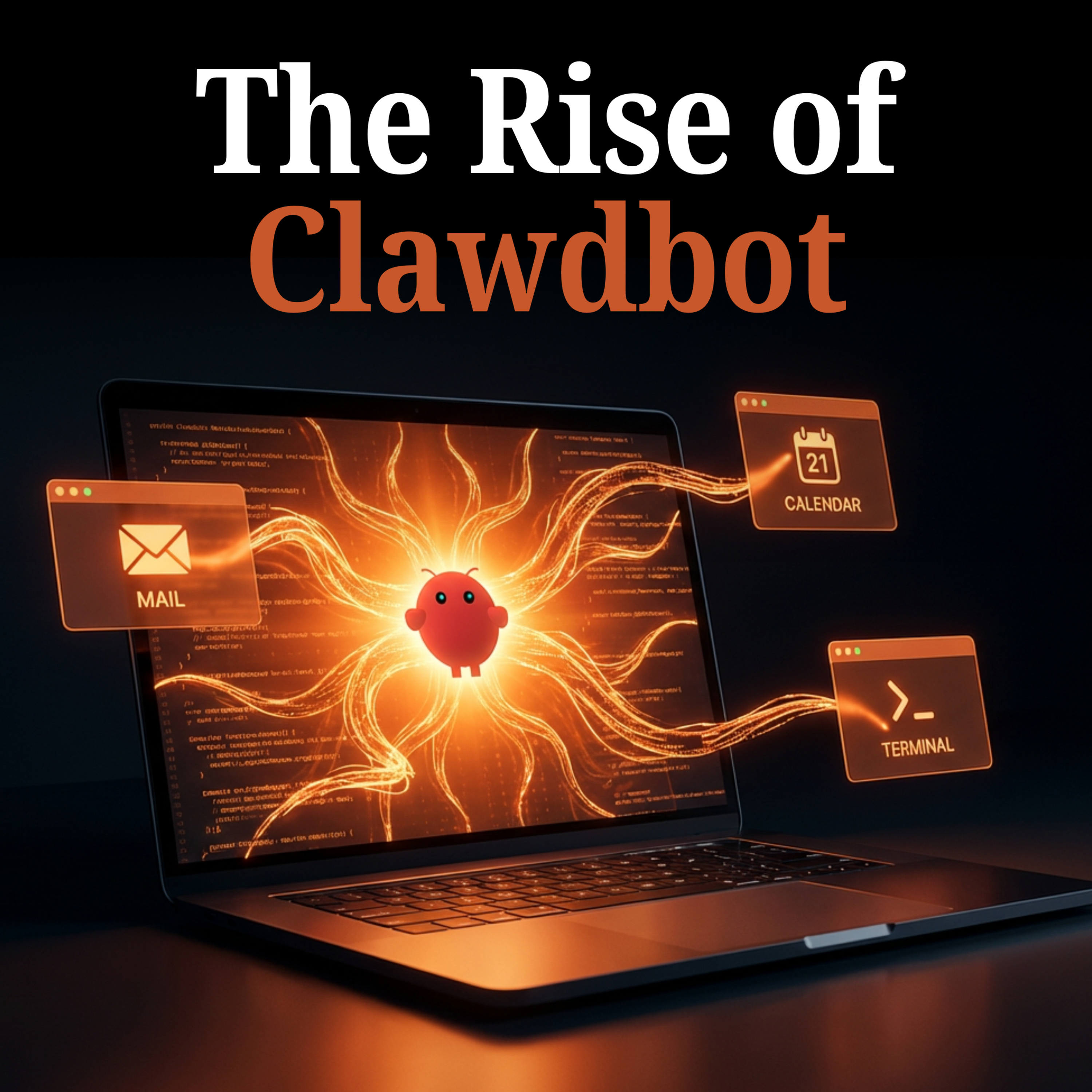
Periodic Labs doesn't use a single monolithic model. Instead, a powerful language model acts as a central coordinator or "copilot." It directs experiments by calling upon smaller, highly specialized, and more efficient neural nets (e.g., those with symmetry awareness for atomic systems) as tools.

Instead of relying on a single, all-purpose coding agent, the most effective workflow involves using different agents for their specific strengths. For example, using the 'Friday' agent for UI tasks, 'Charlie' for code reviews, and 'Claude Code' for research and backend logic.

A key competitive advantage for AI labs is using their own advanced coding agents internally to build next-generation models. This creates a self-reinforcing loop where the best models help build even better models faster, a realization that has sparked a "crisis" in other labs now playing catch-up.
