Get your free personalized podcast brief
We scan new podcasts and send you the top 5 insights daily.
The biggest value leap isn't turning non-users (L0) into users (L1), but empowering users to become 'non-technical builders' (L2). These individuals create durable, company-specific AI solutions, which provides far more leverage and real business impact than simple adoption.
Related Insights
Instead of relying solely on top-down, consultant-led workflow automation, enterprises should empower individual employees with AI tools. This builds user fluency and intuition, allowing them to pull AI into their own workflows, resulting in greater overall impact and less disempowerment.
Non-technical teams often abandon AI tools after a single failure, citing a lack of trust. Visual builders with built-in guardrails and preview functions address this directly. They foster 'AI fluency' by allowing users to iterate, test, and refine agents, which is critical for successful internal adoption.

The fastest way for smaller tech companies to leverage AI is not by building complex proprietary models, but by training employees to master existing consumer-grade tools like Claude and ChatGPT. This treats AI adoption as a skill to be developed through practice and experimentation, yielding immediate productivity gains.

Providing AI licenses isn't enough. Companies must actively manage the transition of employees from basic users (asking simple questions) to advanced users who treat AI as a collaborator for complex, high-value tasks, which is where real ROI is found.
The most valuable AI champions within a company don't just promote tools. They act as 'internally deployed vibe coders,' embedding with business units to show what's possible by co-creating solutions and helping to fundamentally change workflows.

Most users don't want abstract tools like 'agents' or 'connectors.' Successful AI products for the mainstream must solve specific, acute pain points and provide a 'golden path' to a solution. Selling a general platform to non-technical users often fails because it requires them to imagine the use case.
Instead of relying on traditional tutorials, non-technical individuals can successfully build complex AI agent teams by using a conversational AI as an interactive, patient, step-by-step coach. This approach democratizes access to advanced technology, bypassing conventional learning methods.
A common AI implementation failure is assuming users think like technologists. Trivial technical details can be huge adoption blockers. To succeed, focus on building user trust and actively partner with customers to operationalize the technology, rather than simply delivering it and expecting them to figure it out.

Successful AI transformation doesn't require everyone to be a data scientist. Instead, organizations should aim for a "30% rule"—a minimum baseline understanding of AI concepts for the entire workforce, similar to mastering a portion of a new language for business. This empowers broader contribution and demystifies the technology.
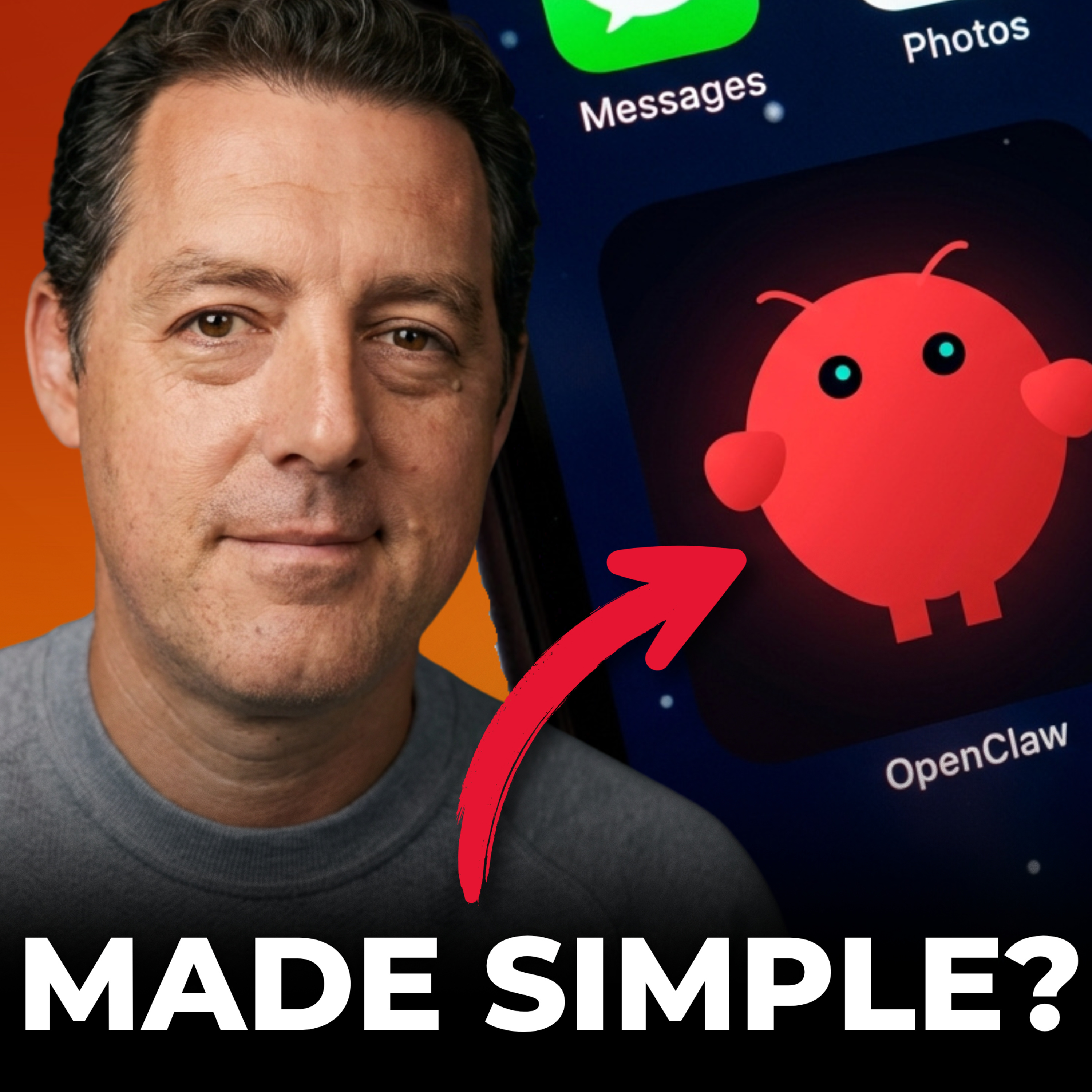
The excitement around tools like OpenClaw stems from their ability to empower non-programmers to create custom software and workflows. This replicates the feeling of creative power previously exclusive to developers, unlocking a long tail of niche, personalized applications for small businesses and individuals who could never build them before.