Get your free personalized podcast brief
We scan new podcasts and send you the top 5 insights daily.
Competitors might achieve rocket reusability, but SpaceX aims for *rapid* reusability—flying the same rocket multiple times per day. This is a monumental engineering challenge that is key to enabling ambitious goals like a Mars colony and represents a vast technological lead.

Related Insights
Getting to space is now relatively cheap thanks to SpaceX. The next economic revolution will be triggered by solving the much harder problem of bringing materials back from space. This will enable in-space manufacturing and create a true two-way space economy.

Unlike current rockets, Starship is designed for full and rapid reusability. This aircraft-like operational model is projected to drop the cost per kilogram to orbit from over $1,400 to potentially as low as $10, enabling an economic revolution for space-based infrastructure.

Elon Musk's ventures face vastly different competitive landscapes. While Tesla fights in the 'brutally competitive' auto industry, SpaceX enjoys a near-monopoly in space, allowing it to pursue large adjacent opportunities like orbital data centers with far less resistance.

SpaceX builds data centers dramatically faster (e.g., 66 days for their third one) and at lower cost than competitors. This operational excellence, combined with the scale to build true gigawatt data centers, gives them a dominant position in the AI compute market.
SpaceX can launch a kilogram into space for $1,500, while a key competitor costs over $9,000. This massive cost efficiency, combined with high launch frequency, creates a nearly insurmountable competitive advantage.

The defensible case for SpaceX's massive valuation is less about Elon Musk's futuristic vision and more about its tangible competitive moat. The company has a functional monopoly on launch capabilities and a decade-long head start on its satellite internet business, controlling essential infrastructure for the future space economy.

SpaceX's success isn't from one tactic but a reinforcing system. First principles identify waste in cost, vertical integration provides the control to eliminate it, and standardization creates the volume needed to make that control profitable. Removing any one part breaks the system.

Recent viability for orbital data centers doesn't stem from new server technology, but from SpaceX's Starship rocket. Its success in dramatically lowering the cost of launching mass into orbit is the critical, non-obvious enabler that makes the entire concept economically plausible for the first time.
SpaceX's cash-cow, Starlink, is facing network congestion due to rapid growth. The solution requires larger satellites that are too big for the current Falcon 9 rocket. The success of the much larger, reusable Starship is therefore a critical bottleneck for unlocking Starlink's future profitability and expansion.
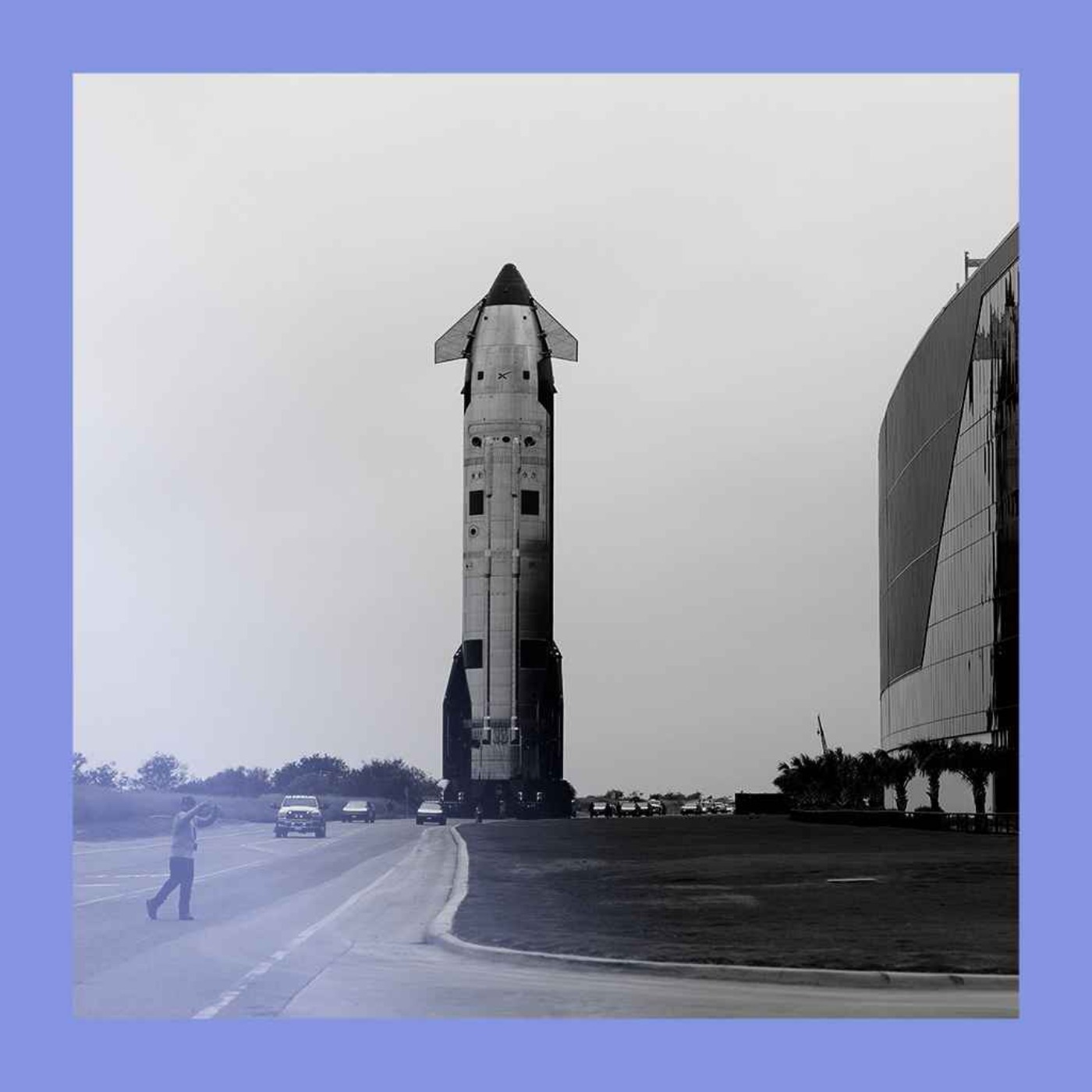
Unlike tech giants dominating terrestrial markets like search or e-commerce, SpaceX's near-monopoly on space launch makes it the gatekeeper to the entire physical universe. This reframes its potential from a niche industry player to a foundational utility for all future off-planet endeavors.
