Get your free personalized podcast brief
We scan new podcasts and send you the top 5 insights daily.
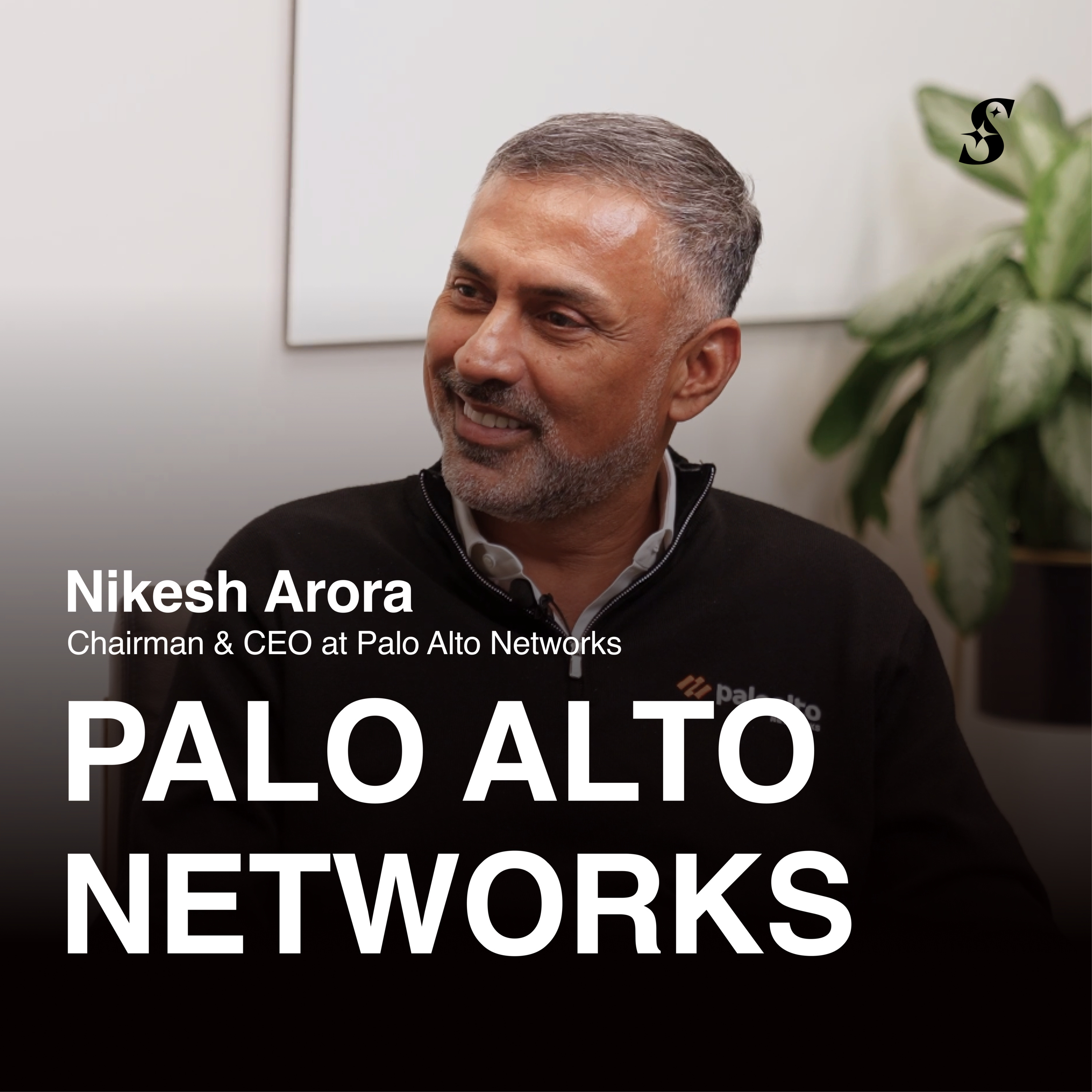
Unlike past software that performed deterministic tasks, future software will be infused with AI, giving it an 'opinion' and proactive intelligence. Nikesh Arora predicts this fundamental shift means the entire software industry will be rewritten over the next 10 years, creating massive disruption and opportunity.
Related Insights
Historically, software did ~10% of the work (tracking, organizing). AI will invert this, with software actively performing 70-80% of tasks. This fundamental shift means customers will refuse to buy legacy software that doesn't do the majority of the work for them, massively expanding the total addressable market.

In 10 years, AI will generate vast amounts of high-quality code, similar to the leap in image generation. The developer's role will shift from writing code to curation and design, exercising intent and critical judgment to select the best output from a sea of AI-generated options.

The next wave of enterprise software will shift from "dumb" SaaS applications that are mere containers for workflows to intelligent AI applications that offer opinions, critique work, and actively improve employee output. This marks a move from systems of record to systems of intelligence.
The programmer's role is evolving from a craft of writing code to a managerial task of orchestrating fleets of AI coding bots. The critical skill is no longer manual typing but directing, debugging, and arguing with these AIs to achieve a desired outcome.

Contrary to fears of AI making SaaS obsolete, the reality is that most enterprise software is deeply flawed. A contrarian view is that AI will provide the tools to finally rebuild these systems better, creating a massive new wave of demand for software development and product design.

The future of software isn't just AI-powered features. It's a fundamental shift from tools that assist humans to autonomous agents that perform tasks. Human roles will evolve from *doing* the work to *orchestrating* thousands of these agents.
AI models improve at coding exponentially faster than other tasks. The next big impact won't be AI replacing marketers directly. Instead, non-technical roles will use AI to write code, embedding software engineering into every business function and accelerating its reach.

The fundamental environment for creating software is evolving beyond the traditional IDE (Integrated Development Environment), where engineers are assisted, to the ADE (Agent Development Environment). In an ADE, autonomous AI agents build and generate code themselves, representing a paradigm shift in how software is created.

The next evolution for AI is not just better coding assistants, but agents that use software-generation abilities to automate tasks far beyond engineering, effectively rewriting business processes across the board.
For decades, software primarily stored information, digitizing paper processes without improving labor efficiency. AI now enables software to perform work itself, expanding the market from data storage to labor automation, which is an orders-of-magnitude larger opportunity.