Get your free personalized podcast brief
We scan new podcasts and send you the top 5 insights daily.
Dr. Crowe believes AI's most immediate impact isn't designing new antibodies from scratch. Instead, it's analyzing vast datasets to predict which newly discovered antibodies are developable (stable, high-expression), preventing investment in potent molecules that ultimately can't be manufactured at scale.

Related Insights
AI's impact isn't one magic bullet. It will accelerate drug discovery by enhancing multiple stages simultaneously: biasing protein drug candidates to fold correctly, improving their targeting and stability, and enabling the synthesis and testing of massive libraries in parallel. This multi-pronged optimization will create an exponential effect.

A key advantage of LabGenius's AI platform is its unbiased approach, which proposes multi-specific antibody designs that traditional engineers might dismiss as too complex or unmanufacturable. By testing these counter-intuitive candidates, the platform identifies high-performing molecules that would otherwise be overlooked.

Traditional antibody optimization is a slow, iterative process of improving one property at a time, taking 1-3 years. By using high-throughput data to train machine learning models, companies like A-AlphaBio can now simultaneously optimize for multiple characteristics like affinity, stability, and developability in a single three-month process.

As biologics evolve into complex multi-specific and hybrid formats, the number of design parameters (valency, linkers, geometry) becomes too vast for experimental testing. AI and computational design are becoming essential not to replace scientists, but to judiciously sample the enormous design space and guide engineering efforts.

While AI for novel drug discovery has lofty goals, its most practical value lies in accelerating development. This includes applying AI to de-risked assets for new indications, improving delivery methods, and designing faster, more effective clinical trials, which is where the real bottleneck lies.

Many innovative drug designs fail because they are difficult to manufacture. LabGenius's ML platform avoids this by simultaneously optimizing for both biological function (e.g., potency) and "developability." This allows them to explore unconventional molecular designs without hitting a production wall later.
The current, tangible breakthrough for AI in drug discovery is not identifying completely novel biological targets. Instead, it's rapidly designing effective molecules for known targets that have historically been considered "undruggable," compressing years of screening work into a month.
![Alex Karnal - The Trillion-Dollar Health Revolution - [Invest Like the Best, EP.467] thumbnail](https://megaphone.imgix.net/podcasts/cbc5538c-3d2c-11f1-abeb-8fa0b9345ba8/image/7338c7270d70078f65b4911eb9cd5b0b.jpg?ixlib=rails-4.3.1&max-w=3000&max-h=3000&fit=crop&auto=format,compress)
The immediate goal for AI in drug design is finding initial "hits" for difficult targets. The true endgame, however, is to train models on manufacturability data—like solubility and stability—so they can generate molecules that are already optimized, drastically compressing the development timeline.
The main benefit of AI in drug discovery isn't just accelerating existing processes. It's enabling the design of complex therapeutics like bispecific antibodies, which are nearly impossible to create through traditional methods like mouse immunization, thus opening entirely new classes of medicine.
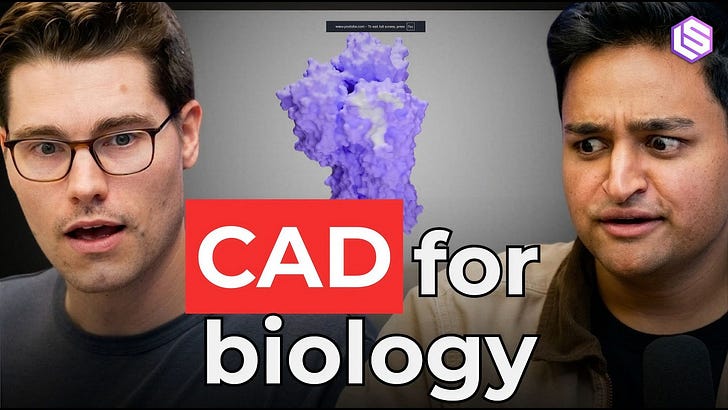
Titus believes a key area for AI's impact is in bringing a "design for manufacturing" approach to therapeutics. Currently, manufacturability is an afterthought. Integrating it early into the discovery process, using AI to predict toxicity and scalability, can prevent costly rework.
