Get your free personalized podcast brief
We scan new podcasts and send you the top 5 insights daily.
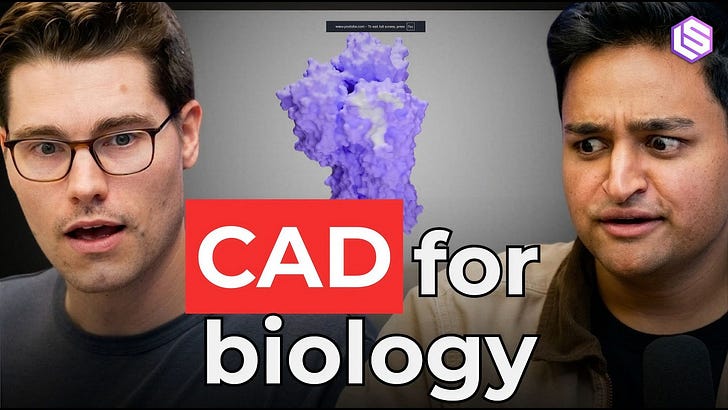
The main benefit of AI in drug discovery isn't just accelerating existing processes. It's enabling the design of complex therapeutics like bispecific antibodies, which are nearly impossible to create through traditional methods like mouse immunization, thus opening entirely new classes of medicine.
Related Insights
AI modeling transforms drug development from a numbers game of screening millions of compounds to an engineering discipline. Researchers can model molecular systems upfront, understand key parameters, and design solutions for a specific problem, turning a costly screening process into a rapid, targeted design cycle.

The long-term strategy for AI in drug discovery is a two-step process. First, create an AI platform to design effective drugs. Second, after a dozen or so AI-designed drugs succeed, use that data to convince regulators to trust AI predictions, potentially allowing future drugs to skip steps like animal testing and accelerate trials.

AI's impact isn't one magic bullet. It will accelerate drug discovery by enhancing multiple stages simultaneously: biasing protein drug candidates to fold correctly, improving their targeting and stability, and enabling the synthesis and testing of massive libraries in parallel. This multi-pronged optimization will create an exponential effect.

The paradigm for drug development is shifting from being "first" or "best" in a category to being "last in class." Using AI, the goal is to design a molecule with such intentionality and specificity that it becomes the final, definitive therapeutic for a disease, rendering subsequent improvements unnecessary.

De novo design is not a magic bullet, but it's a powerful new tool. Major pharmaceutical companies report it successfully generates binders for difficult targets where conventional methods like immunization have failed, effectively closing critical gaps in the discovery pipeline.
The future of AI in drug discovery is shifting from merely speeding up existing processes to inventing novel therapeutics from scratch. The paradigm will move toward AI-designed drugs validated with minimal wet lab reliance, changing the key question from "How fast can AI help?" to "What can AI create?"

Beyond accelerating timelines, AI's real value lies in its ability to design molecules for targets previously considered 'hard-to-drug.' These models operate on different principles than traditional lab methods and are indifferent to historical challenges, opening up entirely new therapeutic possibilities.

The current, tangible breakthrough for AI in drug discovery is not identifying completely novel biological targets. Instead, it's rapidly designing effective molecules for known targets that have historically been considered "undruggable," compressing years of screening work into a month.
![Alex Karnal - The Trillion-Dollar Health Revolution - [Invest Like the Best, EP.467] thumbnail](https://megaphone.imgix.net/podcasts/cbc5538c-3d2c-11f1-abeb-8fa0b9345ba8/image/7338c7270d70078f65b4911eb9cd5b0b.jpg?ixlib=rails-4.3.1&max-w=3000&max-h=3000&fit=crop&auto=format,compress)
Many diseases have well-understood genetic causes but lack effective treatments. Genesis CEO Evan Feinberg argues this makes drug discovery the most impactful area for AI, as it directly addresses the bottleneck of creating selective therapies for known targets where no medicine currently exists.

While AI offers some time savings, A-Alpha Bio's CEO argues this is minimal in the overall drug development timeline. The transformative impact is AI's ability to engineer therapeutics with novel properties, like binding to previously inaccessible epitopes, that traditional discovery methods could never find.