Get your free personalized podcast brief
We scan new podcasts and send you the top 5 insights daily.
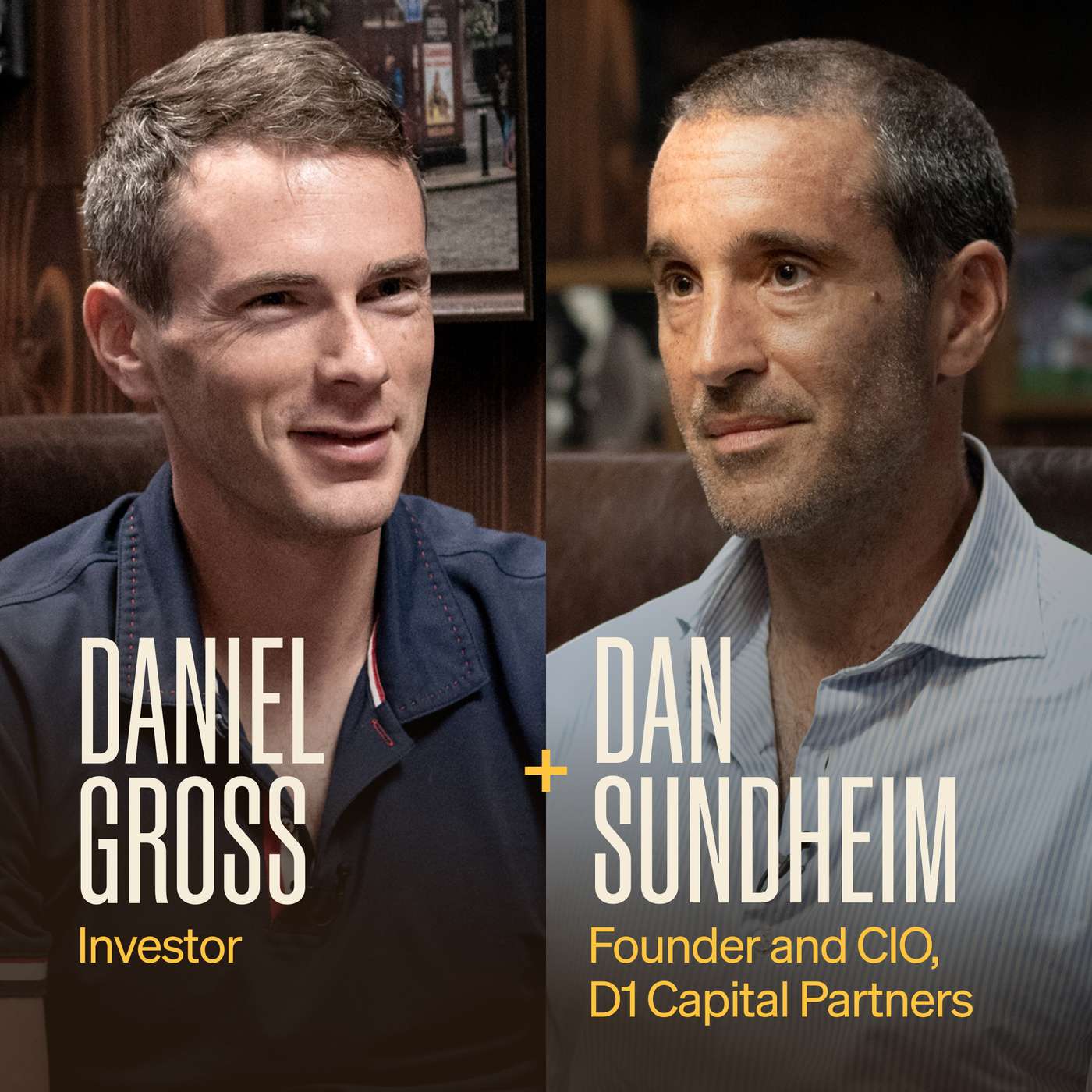
The expectation that universal, instant access to information would lead to more efficient markets has been proven wrong. Instead, it has amplified sentiment-driven volatility. Stock prices have become less tethered to fundamentals as information is interpreted through the lens of crowd psychology, not rational analysis.
Related Insights
With information now ubiquitous, the primary source of market inefficiency is no longer informational but behavioral. The most durable edge is "time arbitrage"—exploiting the market's obsession with short-term results by focusing on a business's normalized potential over a two-to-four-year horizon.

Contrary to conventional wisdom, the massive flow of capital into passive indexes and short-term systematic strategies has reduced the number of actors focused on long-term fundamentals. This creates price dislocations and volatility, offering alpha for patient investors.

Contrary to popular belief, the market may be getting less efficient. The dominance of indexing, quant funds, and multi-manager pods—all with short time horizons—creates dislocations. This leaves opportunities for long-term investors to buy valuable assets that are neglected because their path to value creation is uncertain.
Contrary to the belief that mega-cap stocks are efficiently priced, behemoths like Alphabet can see 100% price swings in a single year. This volatility creates massive opportunities for patient investors who ignore market noise and focus on fundamentals.
AQR's Cliff Asnes argues that markets are becoming less efficient due to social media. It destroys the independence required for the 'wisdom of crowds' to function, creating feedback loops that amplify biases and lead to bouts of irrationality, similar to how it has made politics more extreme.

The primary driver of market fluctuations is the dramatic shift in attitudes toward risk. In good times, investors become risk-tolerant and chase gains ('Risk is my friend'). In bad times, risk aversion dominates ('Get me out at any price'). This emotional pendulum causes security prices to fluctuate far more than their underlying intrinsic values.

Contrary to classic theory, markets may be growing less efficient. This is driven not only by passive indexing but also by a structural shift in active management towards short-term, quantitative strategies that prioritize immediate price movements over long-term fundamental value.
AQR's founder argues that markets are fundamentally "voting mechanisms" where price is a dollar-weighted average of opinions. Arbitrage is limited because correcting a mispricing becomes progressively riskier for less reward. Therefore, if a misguided belief is backed by enough capital, it can dominate and push prices away from fundamental value.
The most important market shift isn't passive investing; it's the rise of retail traders using low-cost platforms and short-term options. This creates powerful feedback loops as market makers hedge their positions, leading to massive, fundamentals-defying stock swings of 20% or more in a single day.

The dominance of passive, systematic investing has transformed public equities into a speculative "ghost town" driven by algorithms, not fundamentals. Consequently, financing for significant, long-term industrial innovation is shifting to private markets, leaving public markets rife with short-term, meme-driven behavior.