Get your free personalized podcast brief
We scan new podcasts and send you the top 5 insights daily.
Systems history demonstrates that dynamic optimization algorithms—from adaptive routing to virtual memory swapping—often introduce severe instability or oscillations under load. Engineers repeatedly choose to over-provision hardware capacity rather than depend on clever runtime prediction mechanisms to manage system operations.

Related Insights
Companies are designing expensive, multi-year infrastructure plans based on today's AI models. Because model architectures evolve so rapidly, these highly optimized but inflexible systems will quickly become suboptimal, leading to a huge waste of capital on underperforming hardware.

Designing custom silicon offers substantial speed and power advantages, but hyper-specializing creates severe operational risk if workloads evolve over a chip's multi-year lifetime. For instance, Google's TPU v8i (inference) and v8t (training) are optimized for specific jobs but still capable of running the other. Retaining cross-workload fungibility ensures clusters do not become stranded assets if traffic projections shift over the hardware's six-year lifespan.

Because autonomous agents enable a surge of personalized micro-applications used intermittently, hosting software on persistent infrastructure is economically untenable. Next-generation serverless architectures must automatically spin down unused instances and dynamically scale resources like liquid across diverse workloads to support sustainable compute economics.
When running AI inference at extreme scale, the most surprising and difficult challenges are often not unique to LLMs. Instead, they are classic distributed systems problems—like kernel panics caused by logging overload—that only manifest under immense load. The immaturity of runtimes exacerbates these issues.

A key trend in AI models is "dynamism"—the ability to vary computation and memory usage per token, as seen in Mixture-of-Experts (MoE) architectures. Current hardware, designed before this trend, is inefficient. New chips must be built to accelerate these dynamic computations.

Simply "scaling up" (adding more GPUs to one model instance) hits a performance ceiling due to hardware and algorithmic limits. True large-scale inference requires "scaling out" (duplicating instances), creating a new systems problem of managing and optimizing across a distributed fleet.
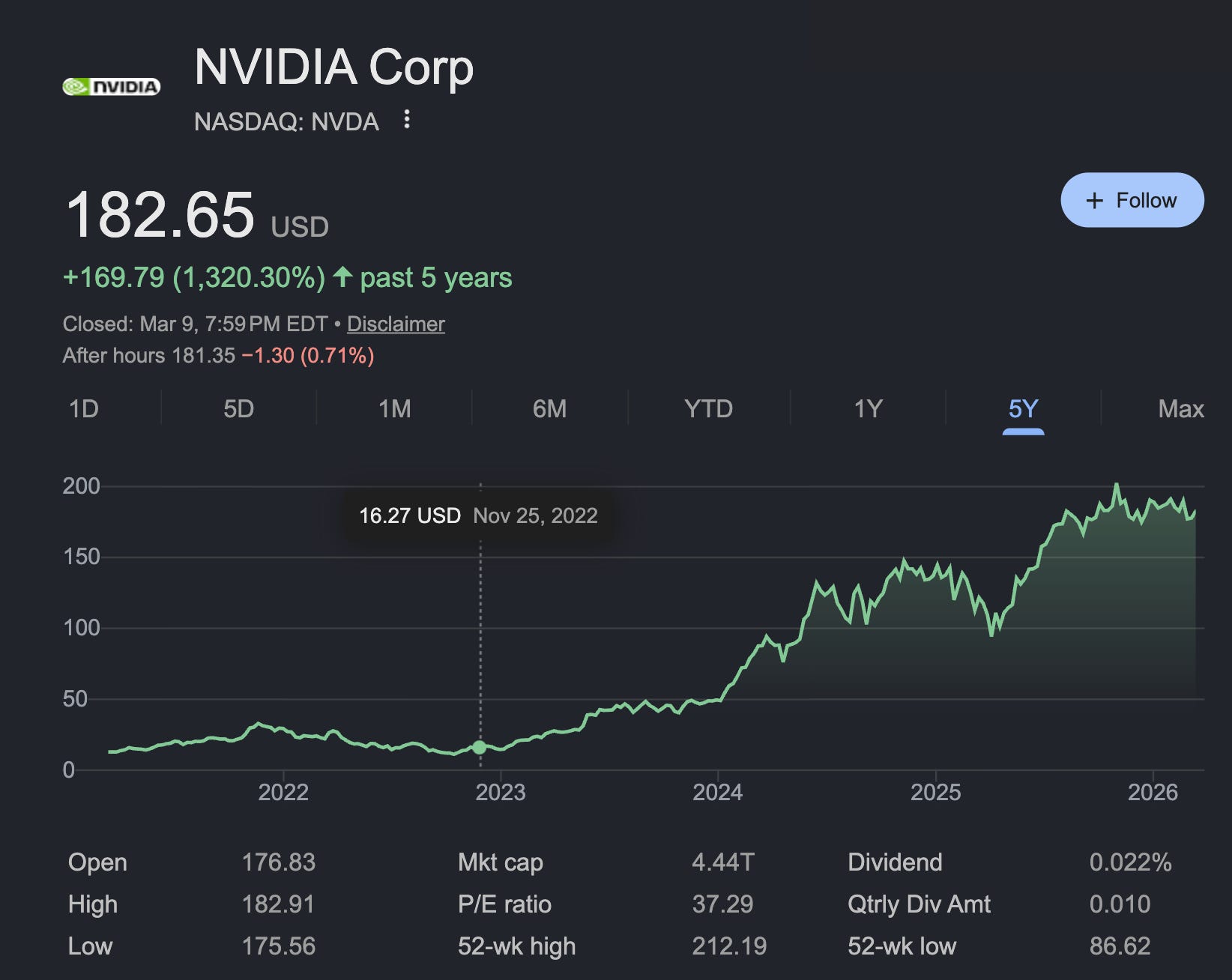
AI workloads, particularly for research and evals, don't follow predictable "follow-the-sun" patterns. They are extremely spiky, demanding massive compute resources instantly (e.g., 100,000 CPUs) and then dropping to zero. This forces providers like Daytona to maintain low mean utilization (15%) to handle unpredictable peaks.

While reinforcement learning (RL) improves model capabilities, it often results in unpredictable, "bursty" computational demands during inference. This complicates serving the model efficiently, as infrastructure must be provisioned for costly peak loads.

Go's garbage collector led to unpredictable memory usage. In Dropbox's storage system, a node OOMing would trigger a massive re-replication workload, which could cause other nodes to OOM, leading to a system-wide "congestion collapse". Rust's memory management provided the predictability needed to prevent these catastrophic failures.

When building systems with hundreds of thousands of GPUs and millions of components, it's a statistical certainty that something is always broken. Therefore, hardware and software must be architected from the ground up to handle constant, inevitable failures while maintaining performance and service availability.
