Get your free personalized podcast brief
We scan new podcasts and send you the top 5 insights daily.
While China's rapid, state-directed build-out of nuclear and renewable energy appears formidable, history shows that such "by decree" projects in communist countries often fail. They can become dysfunctional, obsolete, or result in a failed state, despite looking terrifyingly effective in the short term.

Related Insights
China's investment in green technology is driven less by environmentalism and more by strategic goals. By dominating renewables and EVs, China reduces its dependence on foreign oil—a key vulnerability in a potential conflict with the US—while building global soft power and boosting its GDP through green tech exports.
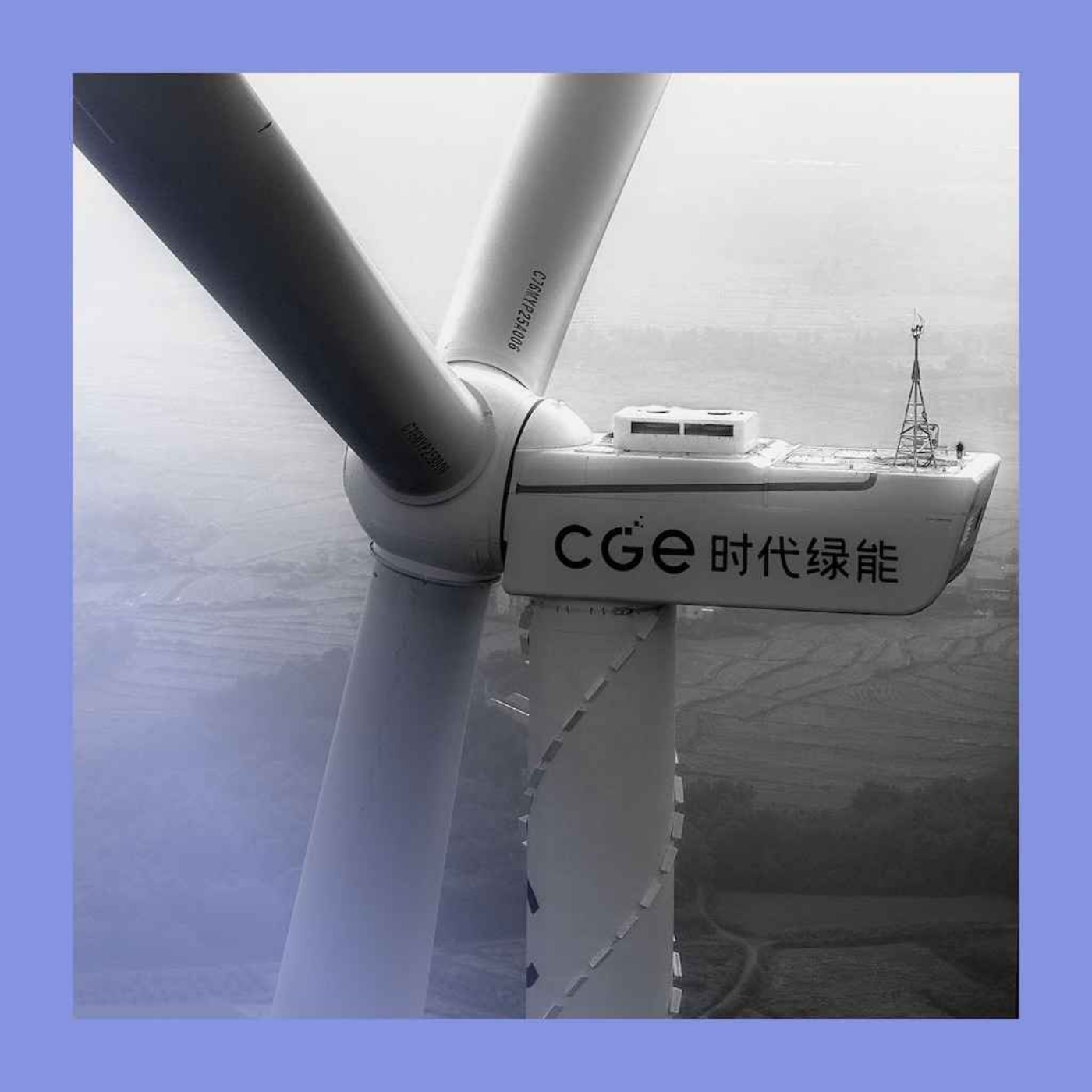
The concept of a five-year plan, common in large corporations and government procurement, was created by Joseph Stalin for the Soviet Union. This rigid, top-down model routinely fails because it cannot adapt to a dynamic world and stifles the rapid iteration necessary for innovation.
China's frantic deployment of solar is a strategic move to reduce dependence on oil imported through sea lanes it doesn't control, such as the Strait of Malacca. By becoming an 'electrostate,' China aims to neutralize a key point of economic and military leverage held by the U.S. and its allies.

Beyond algorithms and talent, China's key advantage in the AI race is its massive investment in energy infrastructure. While the U.S. grid struggles, China is adding 10x more solar capacity and building 33 nuclear plants, ensuring it will have the immense power required to train and run future AI models at scale.
![Dan Wang - The US vs China In The 21st Century - [Invest Like the Best, EP.444] thumbnail](https://megaphone.imgix.net/podcasts/e1599a88-a9f6-11f0-b532-e3695bb27d60/image/0f5c07552cef2689e5834d56786ad6f1.jpg?ixlib=rails-4.3.1&max-w=3000&max-h=3000&fit=crop&auto=format,compress)
China's immense state capacity allows for rapid infrastructure development but also enables disastrous national policies like the one-child policy or Zero-COVID. Unlike the deliberative U.S. system, China's efficiency means that when it goes off track, it can go catastrophically off track before any course correction is possible.
Despite developing the world's cheapest solar power, China remains addicted to coal for political, not economic, reasons. Countless local governments in poorer regions depend entirely on coal mining for revenue and employment. This creates a powerful political inertia that the central government is unwilling or unable to overcome, prioritizing local stability and energy security over a complete green transition.

In the 1970s, France built 57 reactors in 15 years through its government-led utility, which repeatedly built the same design. In contrast, the US's fragmented private utility system, with each company building different designs, failed to achieve similar cost reductions and scale.

China operates as a high-agency "engineering state" that executes relentlessly on large-scale projects. In contrast, America's deliberative, litigious society often leads to endless delays and failures on major infrastructure goals like the California high-speed rail, highlighting a fundamental difference in state capacity and approach.
Contrary to the Western perception of a monolithic state-run system, China fosters intense competition among its provinces. Provincial leaders are incentivized to outperform each other, leading to massive, parallel innovation in industries like EVs and solar, creating a brutally efficient ecosystem.

The global energy transition is also a geopolitical race. China is strategically positioning itself to dominate 21st-century technologies like solar and EVs. In contrast, the U.S. is hampered by a legacy mindset that equates economic growth with fossil fuels, risking its future competitiveness.
