Get your free personalized podcast brief
We scan new podcasts and send you the top 5 insights daily.
AI tools make highly productive individuals even more efficient, allowing them to expand their output significantly. Instead of hiring more people as their "business" grows, they will "hire" more AI agents, concentrating wealth and opportunity among existing successful players.

Related Insights
An MIT study reveals AI's asymmetrical impact on productivity. While it moderately improves performance for average workers, it provides an exponential boost to the top 5%. This is because effectively harnessing AI is a skill in itself, leading to a widening gap between good and great.

While many believe AI will primarily help average performers become great, LinkedIn's experience shows the opposite. Their top talent were the first and most effective adopters of new AI tools, using them to become even more productive. This suggests AI may amplify existing talent disparities.

The true disruption from AI is not a single bot replacing a single worker. It's the immense leverage granted to individuals who can deploy thousands of autonomous AI agents. This creates a massive multiplication of productivity and economic power for a select few, fundamentally altering labor market dynamics from one-to-one replacement to one-to-many amplification.
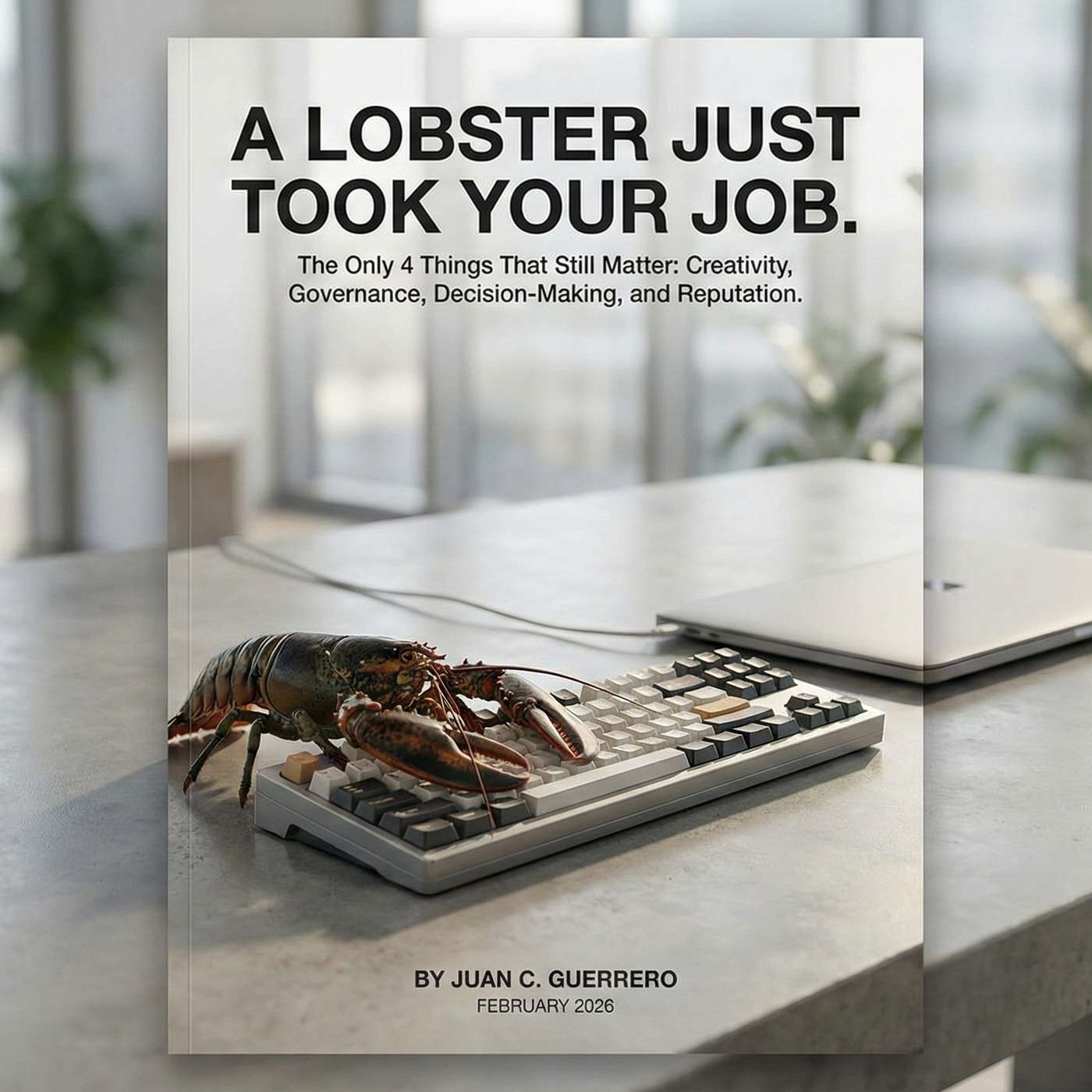
AI is driving a K-shaped economy. At the macro level, the AI sector booms while others decline. At the corporate level, AI stocks soar past others. At the individual level, a skills gap is widening between those who can leverage AI and those who can't.

Economist Thomas Piketty's theory that inequality grows indefinitely was historically countered by the complementarity of labor and capital. However, AI could make capital a full substitute for labor, breaking the market's self-correcting mechanism and validating Piketty's thesis for the future.

AI is expected to disproportionately impact white-collar professions by creating a skills divide. The top 25% of workers will leverage AI to become superhumanly productive, while the median worker will struggle to compete, effectively bifurcating the workforce.

While AI will make average performers good, its most dramatic effect will be making great performers spectacularly great. By augmenting top talent in fields like coding, art, or science, AI enables a single individual to achieve productivity levels previously requiring large teams, creating a new class of hyper-achievers.

AI is exacerbating labor inequality. While the top 1% of highly-skilled workers have more opportunity than ever, the other 99% face a grim reality of competing against both elite talent and increasingly capable AI, leading to career instability.

AI disproportionately benefits top performers, who use it to amplify their output significantly. This creates a widening skills and productivity gap, leading to workplace tension as "A-players" can increasingly perform tasks previously done by their less-motivated colleagues, which could cause resentment and organizational challenges.
AI makes turning money into labor unprecedentedly easy and scalable. Unlike hiring humans, AI "workers" can be copied instantly and have fewer coordination limits. This creates a powerful feedback loop where wealth rapidly translates into the ability to execute large-scale plans, accelerating power concentration.
