Get your free personalized podcast brief
We scan new podcasts and send you the top 5 insights daily.
Engineers at Anthropic are culturally encouraged to operate at a higher abstraction level. Their job is not just to build a product, but to create the automated systems and harnesses that allow an AI to build the product, even if it takes investment time.

Related Insights
The most effective team structure for new AI products involves a "co-founder" pairing. One person is a designer who can also build and rapidly prototype ideas. The other is a traditional software engineer who follows behind, ensuring the underlying architecture is robust and scalable, effectively "paving the trail."

Unlike professional services that trade time for money, Anthropic's Forward-Deployed Engineers (FDEs) partner on outcomes. Their core goal is to solve novel problems, feed learnings back into product/research, and create scalable templates for future customers, not to build a billable services arm.

As AI handles routine coding, the most valuable engineers are either "dreamers" with strong product sense who can own features end-to-end, or deep subject matter experts who can verify and handle the complex, trust-critical parts of the system where human verification is still essential.

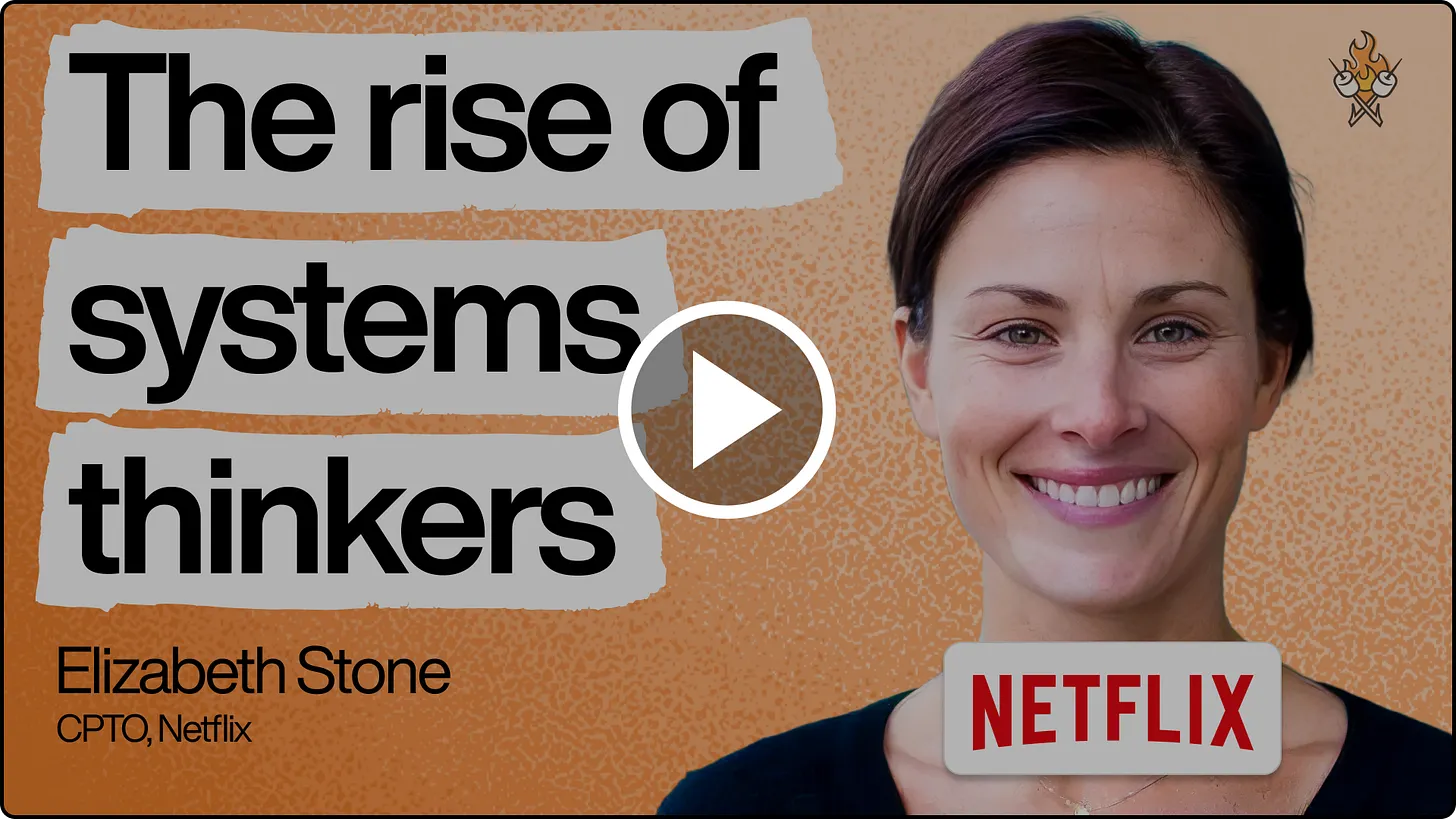
To manage risks and unlock the speed of AI, Netflix is shifting hiring toward "systems thinkers." These individuals create common infrastructure, "paved paths," and design systems. This scaffolding enables many teams to build quickly and safely without relying on tribal knowledge, which becomes critical as AI agents proliferate.
In Anthropic's small (3-5 person) AI pods, traditional roles are fluid. A team member's title merely indicates a specialty, not a boundary. Designers push code to production and engineers contribute to design, fostering a shared responsibility that accelerates development.

Coinbase invented a role called the "Super Builder" whose sole job is to create more super builders. This person focuses exclusively on building internal AI tools and workflows that accelerate the entire engineering organization, acting as a powerful force multiplier for developer productivity.

Companies like Anthropic and OpenAI are pioneering the "AI Builder" role, which combines product sense with hands-on coding. The traditional PM/engineer separation is dissolving as AI tools make building more accessible, shifting the focus to taste, problem-solving, and rapid prototyping.
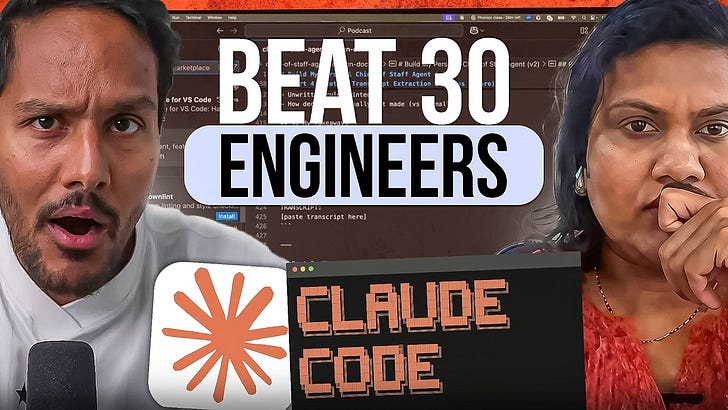
In an AI-first world, an engineer's role shifts from writing feature code to building leverage. They become akin to staff engineers for AI agents, creating the systems, documentation, and automated tests (the "harness") that empower AI to produce high-quality work autonomously.

As AI handles coding, traditional tech roles will merge. At Anthropic, PMs, designers, and engineers all code. The future is a generalist "Builder" who can handle multiple disciplines, making role specialization obsolete.

Instead of a top-down product strategy, Anthropic operates like a research lab where those closest to AI's emergent behaviors—often engineers or even finance staff—are empowered to ideate and drive new products. Leadership's role is to facilitate this bottom-up discovery.