Get your free personalized podcast brief
We scan new podcasts and send you the top 5 insights daily.
Skydio's CEO frames their relatively small Series F as a strength. It demonstrates rapidly declining capital needs due to a strong core business and operational efficiency—a rare position for a capital-intensive hardware company.

Related Insights
Even while profitable, Linear raised later-stage rounds primarily for market signaling. Larger customers were hesitant to trust a "Series A company." The subsequent funding rounds and higher valuation signaled stability and longevity, unlocking larger enterprise deals and building market trust.

Contrary to the belief that hardware is inherently capital-intensive, Monumental's founder argues their biggest expense is salaries for high-quality talent, much like a software startup. The cost of the robots is manageable and their payback time is good, challenging typical VC perceptions of the business model.

While a challenging fundraising market seems negative, it forces startups to operate with discipline. Unlike in frothy markets where companies expand based on hype, the current climate rewards tangible results. This compels a lean structure focused on high-value projects, creating a healthier long-term business model.

Counter to the 2021 venture climate of growth-at-all-costs, Sure operated with a private equity-like discipline. They raised a $100M Series C when they were already profitable and hadn't spent any of their Series B funds. This capital efficiency provided the freedom to control their own destiny and make long-term decisions.

Instead of building new autonomous vehicles from scratch, Bedrock Robotics develops technology to retrofit existing heavy machinery. This allows a contractor to turn their existing half-million-dollar Caterpillar excavator into an autonomous asset, a much more capital-efficient approach than replacing the entire fleet.

Skydio intentionally spent its first decade focused on a single drone type. This patient approach allowed them to mature a core technology stack which now functions as a platform, enabling them to rapidly launch new drone form factors.
In hyper-competitive, winner-take-all markets like ride-sharing or AI, Kalanick argues that the ability to attract capital is itself a core competency and strategic weapon. Being the best at fundraising is as critical as having the best product, as capital enables scale and endurance against rivals.
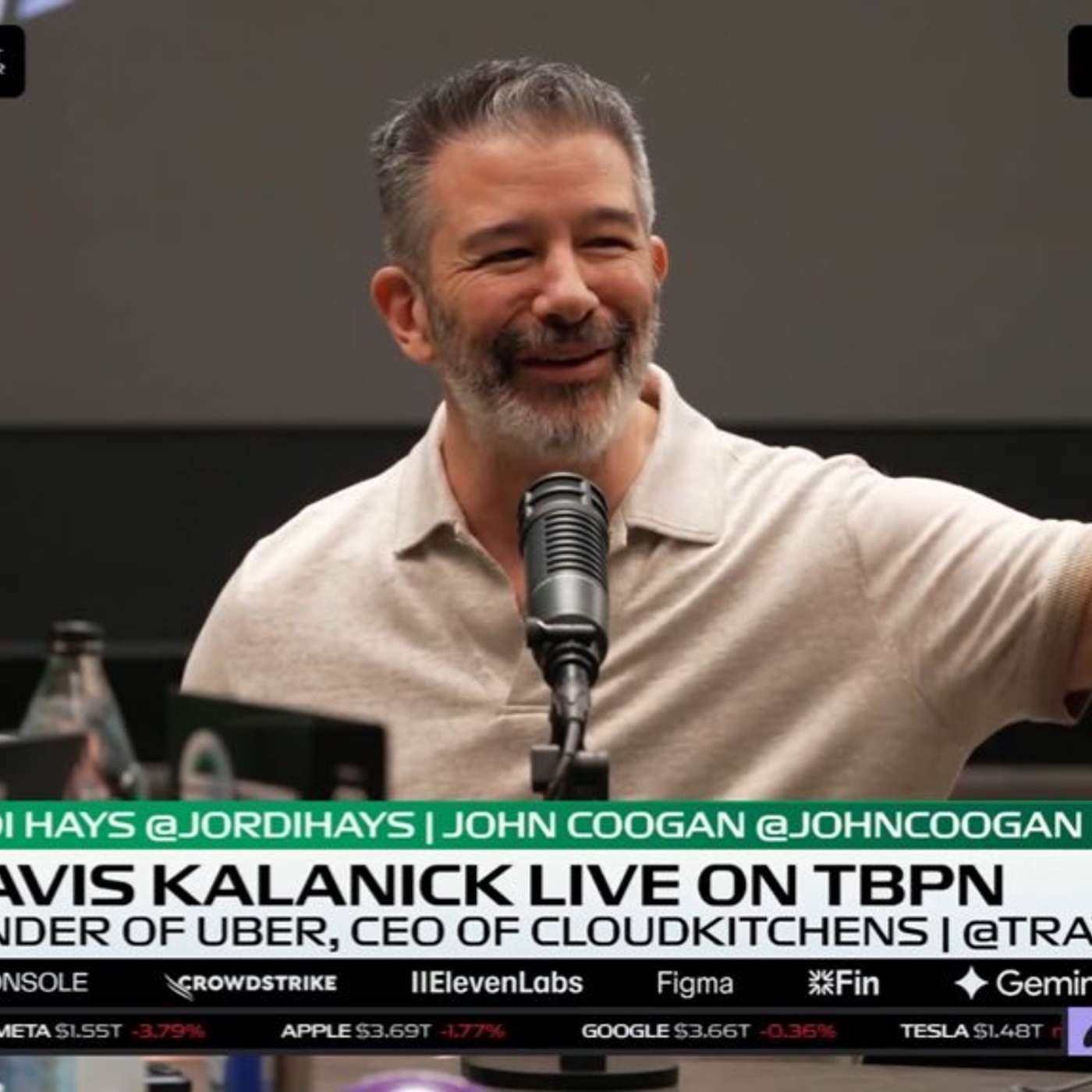
In capital-intensive markets like AI, capital is a competitive weapon. If fundraising feels easy, it's a signal you weren't aggressive enough. Kalanick's philosophy suggests you should have pushed for a much larger round to create a significant moat against competitors, treating capital as a strategic advantage.
While AI enables startups to reach $1-2M ARR with almost no hires, post-PMF companies are raising larger rounds than ever. Capital is still a weapon for scaling faster, and the surface area for AI products is so large that teams feel constrained even with enhanced productivity.

For startups taking on industrial giants, large capital raises are a competitive weapon, not just for growth. Accessing low-cost capital is a strategic advantage that directly lowers product costs, making massive fundraising a prerequisite to even sit at the table.
