Get your free personalized podcast brief
We scan new podcasts and send you the top 5 insights daily.
In the brutal calculus of international relations, projecting weakness does not garner sympathy or aid; it invites contempt and aggression from stronger powers. This Machiavellian principle suggests that survival and sovereignty depend on maintaining a posture of undeniable strength, as adversaries will exploit any vulnerability.

Related Insights
A world order based on coercion invites backlash. Weaker nations, when oppressed by a single superpower, will band together and use surreptitious methods to disrupt and weaken the hegemon. Civilization itself is a model of the weak uniting against the strong.

Recent global conflicts suggest a shift in international relations where coercive strength is more effective than diplomacy when dealing with superpowers. Examples like China's rare earth threats and Iran's actions in the Strait of Hormuz are teaching other nations that aggressive leverage works.

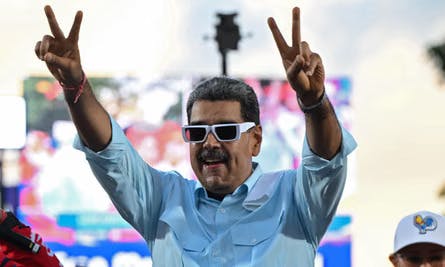
Authoritarian leaders who publicly mock or dismiss threats risk triggering a military response driven by personal pride. Venezuelan President Maduro's televised dancing was reportedly perceived by the Trump administration as calling their bluff, demonstrating how avoiding the appearance of being a 'chump' can become a primary motivator for military action.
In geopolitical analysis, considering an opponent's perspective—like why Iran's leaders can't show weakness—is often wrongly labeled as sympathizing. This strategic empathy is vital for predicting actions, as adversaries act based on their own values and pressures, not ours.

The Western assumption that virtues like compassion and generosity will be universally appreciated and reciprocated is a critical error. Cultures with a "might is right" worldview interpret these displays not as strength, but as weakness to be exploited, leading to parasitic rather than symbiotic outcomes.

Trump's strategy of publicly bullying and belittling allies backfires on the international stage. Unlike in domestic politics, sovereign nations have viable alternatives. This approach forces them to save face by aligning with rivals like China, even if it's not in their long-term best interest.

Many leaders focus on Machiavelli's preference for fear over love, missing his actual advice: the ideal is to be both. The belief that a nation or leader cannot inspire both fear and love simultaneously is a significant failing, leading to an over-reliance on coercion rather than a balanced strategy.
In politics, the perception of strength and decisiveness can be more electorally powerful than being correct but appearing weak or compromising. This principle explains why a political party might maintain a hardline stance that is unpopular, as the image of strength itself resonates more with voters than the nuance of being “right.”

An obsessive focus on internal political battles creates a critical geopolitical vulnerability. While a nation tears itself apart with divisive rhetoric, strategic adversaries like China benefit from the distraction and internal weakening. This domestic infighting accelerates the erosion of the nation's global influence and power.

The recent uptick in global conflicts, from Ukraine to the Caribbean, is not a series of isolated events. It's a direct result of adversaries perceiving American weakness and acting on the historical principle that nations expand their influence until they are met with sufficient counter-force.
