Get your free personalized podcast brief
We scan new podcasts and send you the top 5 insights daily.
In today's AI M&A market, the ease of replicating software has shifted acquisition focus away from pure technology. Buyers now prioritize targets with hard-to-replicate moats like brand reputation, established customer bases, and strong developer communities, as seen in the NVIDIA-Hugging Face deal.

Related Insights
Strategic buyers acquire companies with proven AI ('agentic') capabilities not just for their own value, but to use them as a blueprint to transform their larger organization. This makes AI adoption a key driver of M&A attractiveness and exit value.

Unlike traditional acquihires that saved failing startups, today's AI acquihires are offensive moves where large companies pay billions for elite teams. The target's product is often irrelevant; the goal is to infuse the acquirer's existing products with top-tier AI talent, treating engineers like superstar athletes.

The potential sale of Hugging Face highlights a strategic imperative: large tech companies must acquire open-source hubs to control the ecosystem. This allows them to neutralize competitive threats, gather usage data, and steer developers towards their proprietary cloud services or models.

As AI and better tools commoditize software creation, traditional technology moats are shrinking. The new defensible advantages are forms of liquidity: aggregated data, marketplace activity, or social interactions. These network effects are harder for competitors to replicate than code or features.

Strategic acquirers are prioritizing M&A targets that have already implemented agentic AI. The goal isn't just to buy technology, but to acquire the culture and processes to catalyze AI transformation across their broader, slower-moving organizations.
Brand is becoming a key moat in AI infrastructure, a sector where it was previously irrelevant. In rapidly growing and confusing markets, education can't keep pace with adoption. As a result, customers default to the brands they recognize, creating powerful monopolies for early leaders. This mirrors the early internet era when Netscape dominated through brand recognition.

NVIDIA's $12.9B acquisition of Hugging Face is not for its revenue but to control the entire AI stack. By owning the premier open model distribution channel, alongside its GPUs and CUDA platform, NVIDIA is building a full-stack business model to dominate the entire AI economy, not just sell hardware.

Advanced AI tools have made writing software trivially easy, erasing the traditional moat of technical execution. The new differentiators for businesses are non-technical assets like brand trust, distribution networks, and community, as the software itself has become instantly replicable.

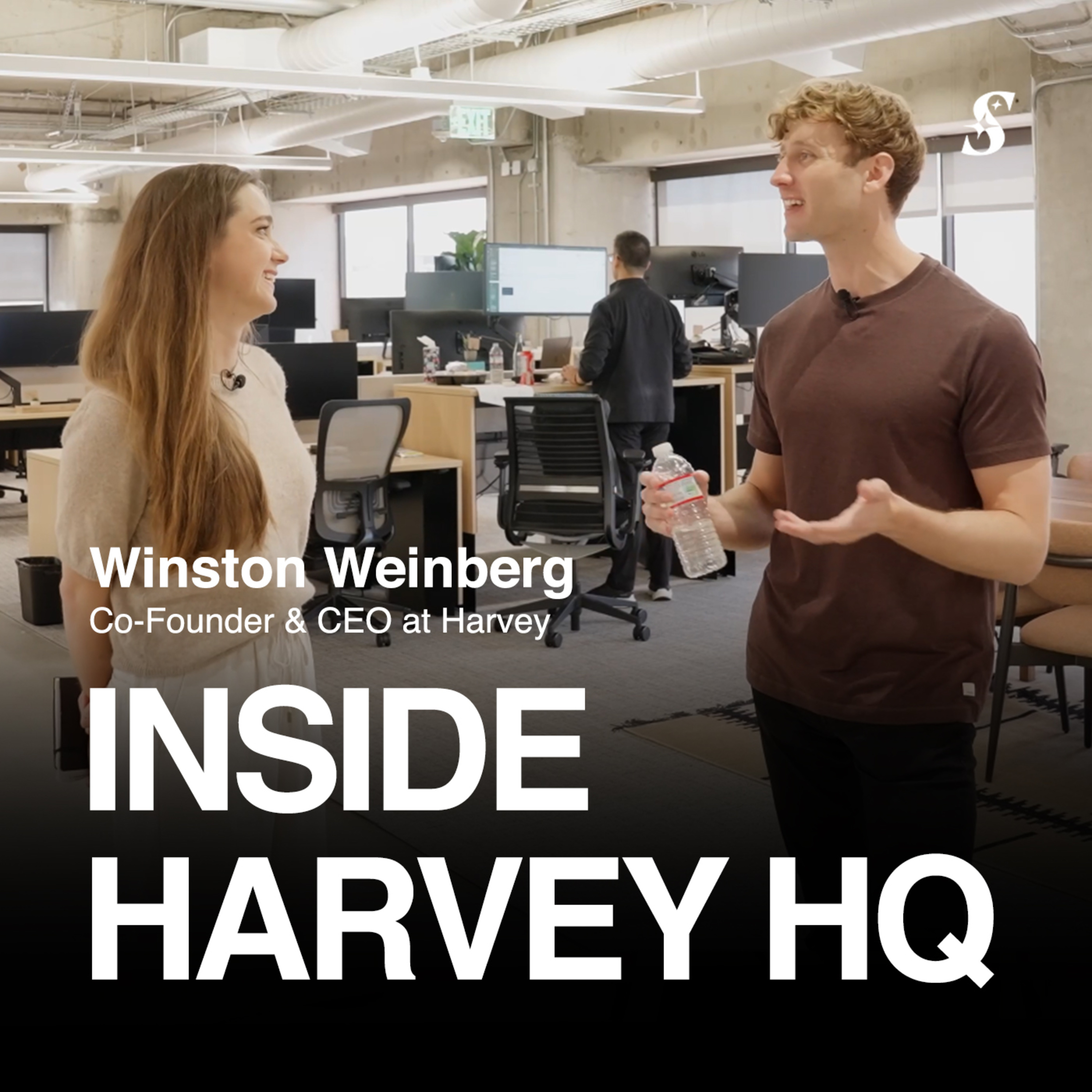
Harvey AI's M&A strategy prioritizes acquiring talented teams over buying existing tech, even from outside its industry. The rationale is that great talent can build new products much faster with modern AI tools, making the team the more valuable asset.
As AI models become commoditized, a slight performance edge isn't a sustainable advantage. The companies that win will be those that build the best systems for implementation, trust, and workflow integration around those models. This robust, trust-based ecosystem becomes the primary competitive moat, not the underlying technology.
