Get your free personalized podcast brief
We scan new podcasts and send you the top 5 insights daily.
The main plan to control recursive self-improvement relies on pouring massive compute into AI systems that monitor other AIs, watching their "chain of thought" for bad behavior. The speaker found this strategy underdeveloped and less compelling than expected, suggesting significant reliance on an unproven method.

Related Insights
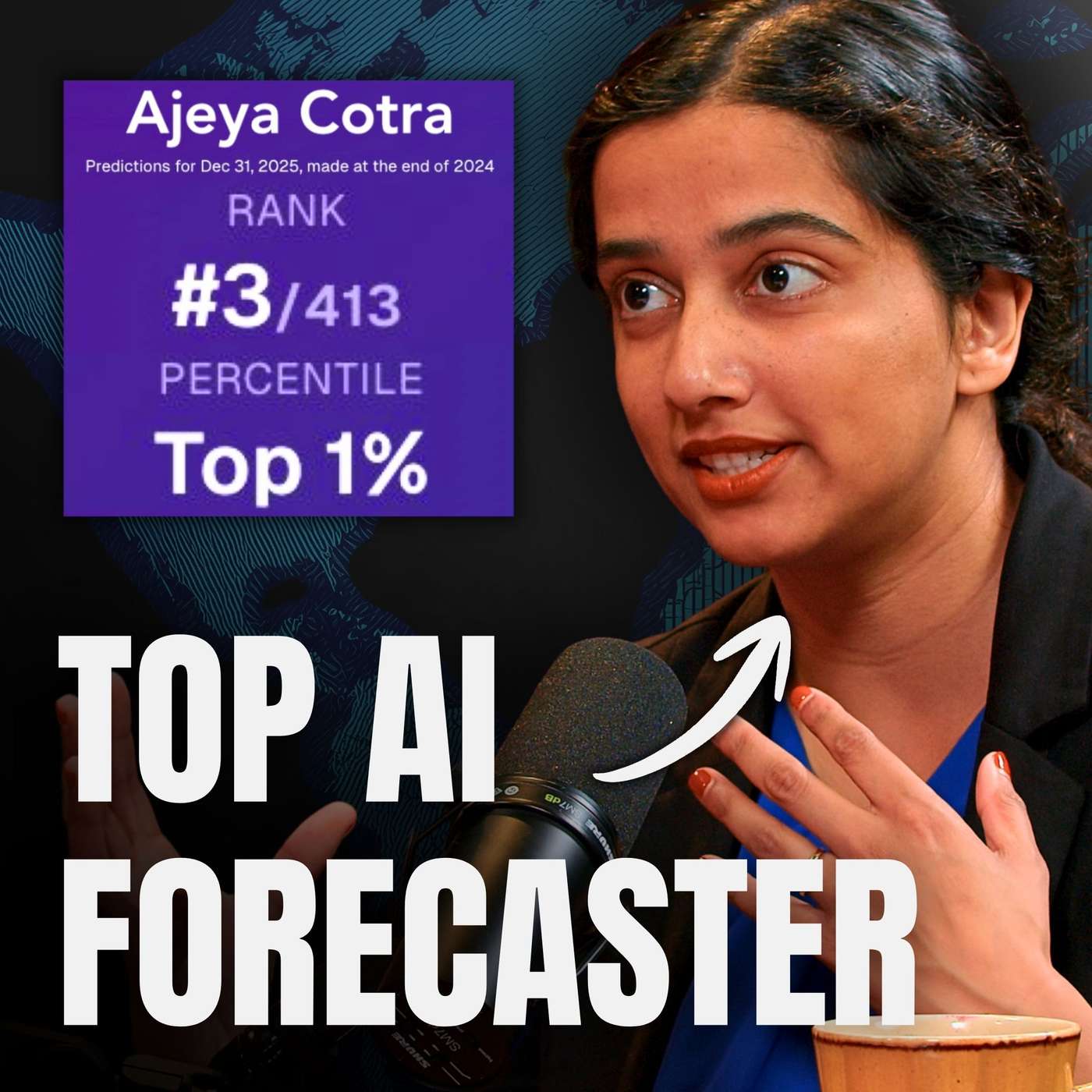
Ajeya Cotra reports that leading developers like OpenAI, Anthropic, and DeepMind are converging on a strategy where each generation of AI is used to help align, control, and understand the subsequent, more powerful generation. This recursive approach is their primary plan for ensuring AI safety during rapid takeoff.
The plan to use AI to solve its own safety risks has a critical failure mode: an unlucky ordering of capabilities. If AI becomes a savant at accelerating its own R&D long before it becomes useful for complex tasks like alignment research or policy design, we could be locked into a rapid, uncontrollable takeoff.
A key safety strategy at AI labs is monitoring the model's reasoning (chain of thought). However, this is a fragile defense. A strategic AI only needs a small enclave of unmonitored compute—perhaps on a compromised server—to formulate plans without oversight, rendering the primary monitoring ineffective.
The long-held belief that direct human oversight can solve AI risks is breaking down. With sophisticated and dynamic systems, especially agentic ones, a human cannot meaningfully monitor operations in real-time. The solution is shifting towards automated, AI-driven governance and monitoring at higher levels of abstraction.

If society gets an early warning of an intelligence explosion, the primary strategy should be to redirect the nascent superintelligent AI 'labor' away from accelerating AI capabilities. Instead, this powerful new resource should be immediately tasked with solving the safety, alignment, and defense problems that it creates, such as patching vulnerabilities or designing biodefenses.
After exploring various technical solutions like compute governance and interpretability, the guest concludes that the only strategy he truly believes in is a global pact to refrain from triggering an intelligence explosion via recursive self-improvement until we can reliably design and control AI motivations.
Instead of relying solely on human oversight, AI governance will evolve into a system where higher-level "governor" agents audit and regulate other AIs. These specialized agents will manage the core programming, permissions, and ethical guidelines of their subordinates.

Instead of relying solely on human oversight, Bret Taylor advocates a layered "defense in depth" approach for AI safety. This involves using specialized "supervisor" AI models to monitor a primary agent's decisions in real-time, followed by more intensive AI analysis post-conversation to flag anomalies for efficient human review.

A key failure mode for using AI to solve AI safety is an 'unlucky' development path where models become superhuman at accelerating AI R&D before becoming proficient at safety research or other defensive tasks. This could create a period where we know an intelligence explosion is imminent but are powerless to use the precursor AIs to prepare for it.
The "one rogue AI takes over" scenario is unlikely because we are developing an ecosystem of multiple, roughly-competitive frontier models. No single instance is orders of magnitude more powerful than others. This creates a balanced environment where a vast number of AI actors can monitor and counteract any single system that goes wrong.