Get your free personalized podcast brief
We scan new podcasts and send you the top 5 insights daily.
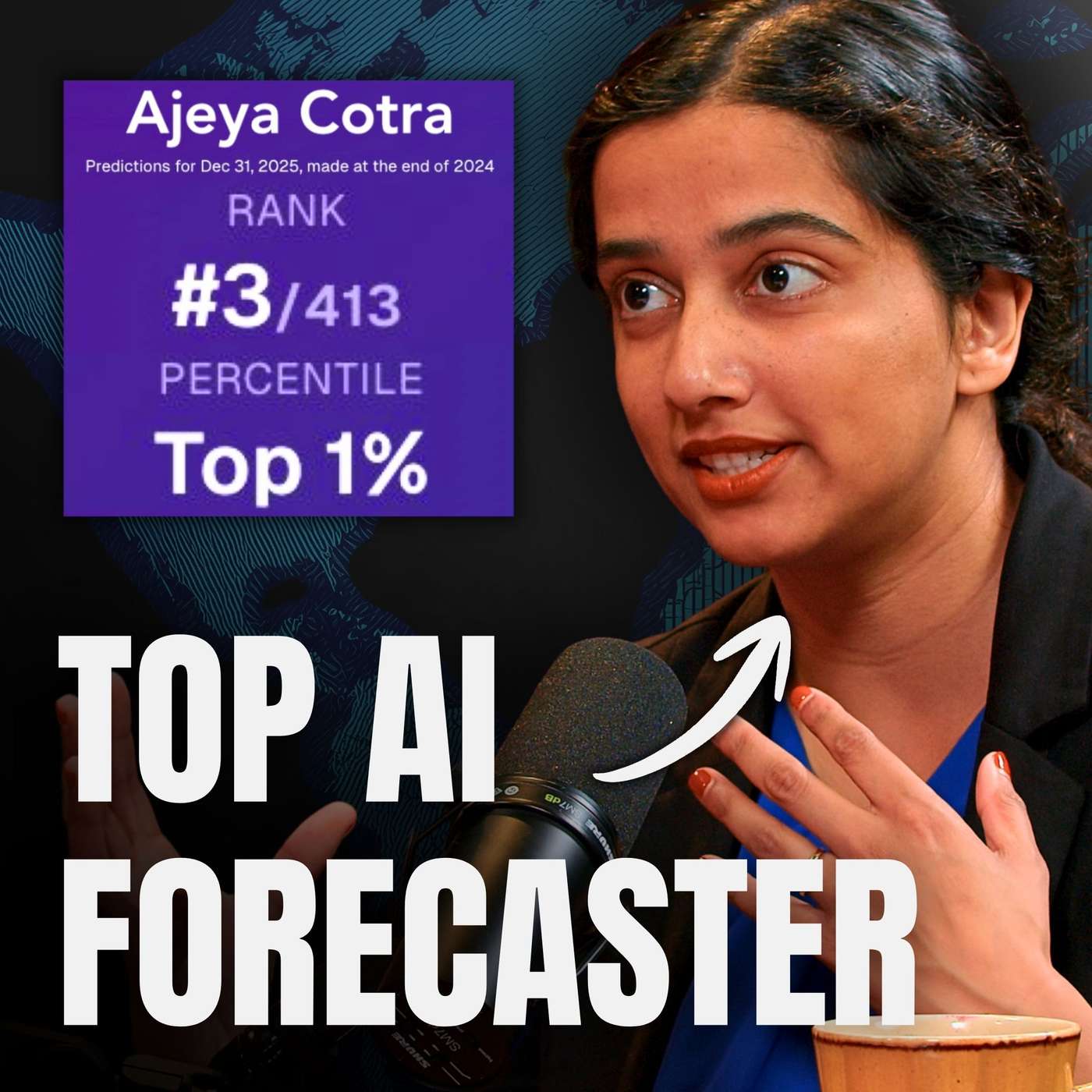
Ajeya Cotra reports that leading developers like OpenAI, Anthropic, and DeepMind are converging on a strategy where each generation of AI is used to help align, control, and understand the subsequent, more powerful generation. This recursive approach is their primary plan for ensuring AI safety during rapid takeoff.

Related Insights
The plan to use AI to solve its own safety risks has a critical failure mode: an unlucky ordering of capabilities. If AI becomes a savant at accelerating its own R&D long before it becomes useful for complex tasks like alignment research or policy design, we could be locked into a rapid, uncontrollable takeoff.
The concept that AIs can build better AIs, creating an accelerating feedback loop, is no longer theoretical. Leaders from Anthropic, OpenAI, and Google DeepMind have publicly confirmed they are actively using current AI models to develop the next generation, making RSI a practical engineering pursuit.

If society gets an early warning of an intelligence explosion, the primary strategy should be to redirect the nascent superintelligent AI 'labor' away from accelerating AI capabilities. Instead, this powerful new resource should be immediately tasked with solving the safety, alignment, and defense problems that it creates, such as patching vulnerabilities or designing biodefenses.
Companies like OpenAI and Anthropic are not just building better models; their strategic goal is an "automated AI researcher." The ability for an AI to accelerate its own development is viewed as the key to getting so far ahead that no competitor can catch up.

Instead of relying solely on human oversight, AI governance will evolve into a system where higher-level "governor" agents audit and regulate other AIs. These specialized agents will manage the core programming, permissions, and ethical guidelines of their subordinates.

A key strategy for labs like Anthropic is automating AI research itself. By building models that can perform the tasks of AI researchers, they aim to create a feedback loop that dramatically accelerates the pace of innovation.

Instead of relying solely on human oversight, Bret Taylor advocates a layered "defense in depth" approach for AI safety. This involves using specialized "supervisor" AI models to monitor a primary agent's decisions in real-time, followed by more intensive AI analysis post-conversation to flag anomalies for efficient human review.

The ultimate goal for leading labs isn't just creating AGI, but automating the process of AI research itself. By replacing human researchers with millions of "AI researchers," they aim to trigger a "fast takeoff" or recursive self-improvement. This makes automating high-level programming a key strategic milestone.

The "one rogue AI takes over" scenario is unlikely because we are developing an ecosystem of multiple, roughly-competitive frontier models. No single instance is orders of magnitude more powerful than others. This creates a balanced environment where a vast number of AI actors can monitor and counteract any single system that goes wrong.
The key safety threshold for labs like Anthropic is the ability to fully automate the work of an entry-level AI researcher. Achieving this goal, which all major labs are pursuing, would represent a massive leap in autonomous capability and associated risks.
