Get your free personalized podcast brief
We scan new podcasts and send you the top 5 insights daily.
Specialized AI models no longer require massive datasets or computational resources. Using LoRA adaptations on models like FLUX.2, developers and creatives can fine-tune a model for a specific artistic style or domain with a small set of 50 to 100 images, making custom AI accessible even with limited hardware.

Related Insights
The z-image LoRa trainer enables businesses to create custom AI models for specialized commercial purposes. For example, an e-commerce company can train the model on its product catalog to generate consistent and on-brand lifestyle marketing images, moving beyond general artistic applications.
LoRa training focuses computational resources on a small set of additional parameters instead of retraining the entire 6B parameter z-image model. This cost-effective approach allows smaller businesses and individual creators to develop highly specialized AI models without needing massive infrastructure.
A helpful mental model distinguishes parameter-space edits from activation-space edits. Fine-tuning with LoRA alters model weights (the "pipes"), while activation steering modifies the information flowing through them (the "water"), clarifying two distinct approaches to model control.
Quantized Low-Rank Adaptation (QLORA) has democratized AI development by reducing memory for fine-tuning by up to 80%. This allows developers to customize powerful 7B models using a single consumer GPU (e.g., RTX 3060), work that previously required enterprise hardware costing over $50,000.

For creating specific image editing capabilities with AI, a small, curated dataset of "before and after" examples yields better results than a massive, generalized collection. This strategy prioritizes data quality and relevance over sheer volume, leading to more effective model fine-tuning for niche tasks.
The model moves beyond single-style applications by allowing users to combine multiple LoRa (low-rank adaptation) weights simultaneously. This feature enables the creation of unique, hybrid visual styles by layering different artistic concepts, textures, or characteristics onto one base image.
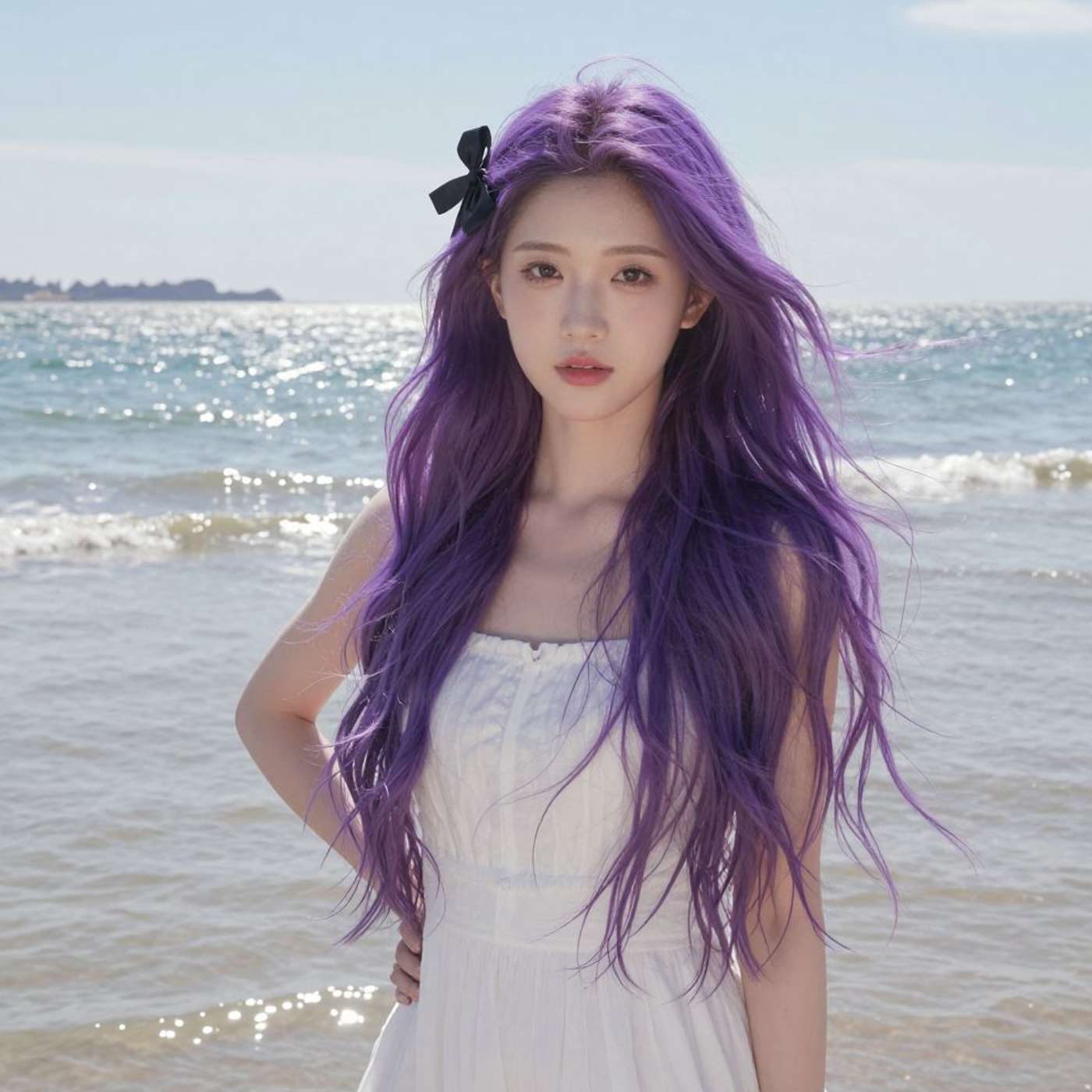
The perception of LORAs as a lesser fine-tuning method is a marketing problem. Technically, for task-specific customization, they provide massive operational upside at inference time by allowing multiplexing on a single GPU and enabling per-token pricing models, a benefit often overlooked.

Low-Rank Adaptation (LoRa) allows a single base AI model to be efficiently fine-tuned into multiple, distinct specialist models. This is a powerful strategy for companies needing varied editing capabilities, such as for different client aesthetics, without the high cost of training and maintaining separate large models.
Customizing AI image models provides concrete business advantages. E-commerce companies can ensure consistent product visualization, design agencies can automate client-specific styles without manual editing, and art studios can generate concept variations that adhere to their established visual language, increasing efficiency and brand consistency.
Despite base models improving, they only achieve ~90% accuracy for specific subjects. Enterprises require the 99% pixel-perfect accuracy that LoRAs provide for brand and character consistency, making it an essential, long-term feature, not a stopgap solution.