Get your free personalized podcast brief
We scan new podcasts and send you the top 5 insights daily.
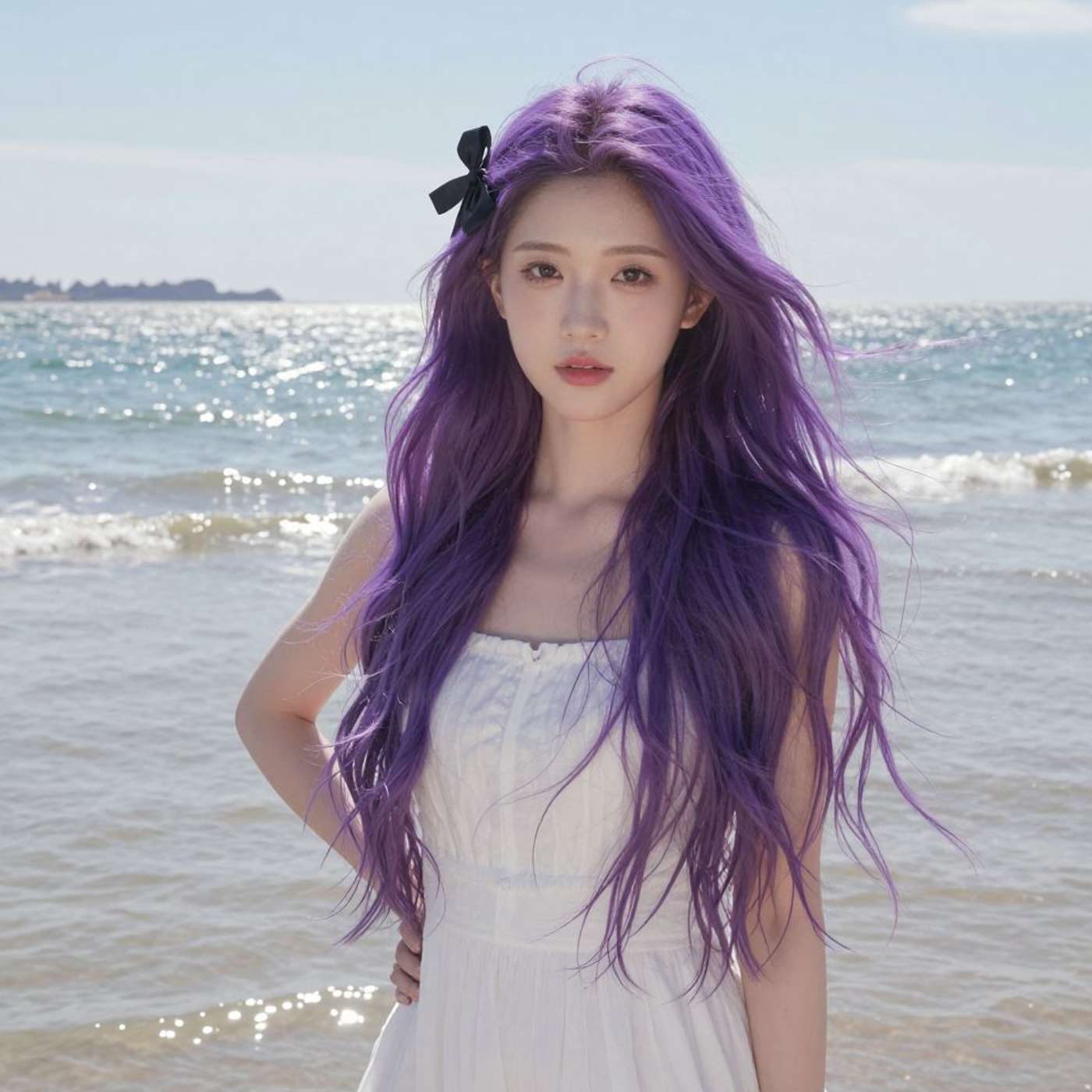
The model moves beyond single-style applications by allowing users to combine multiple LoRa (low-rank adaptation) weights simultaneously. This feature enables the creation of unique, hybrid visual styles by layering different artistic concepts, textures, or characteristics onto one base image.
Related Insights
The z-image LoRa trainer enables businesses to create custom AI models for specialized commercial purposes. For example, an e-commerce company can train the model on its product catalog to generate consistent and on-brand lifestyle marketing images, moving beyond general artistic applications.
LoRa training focuses computational resources on a small set of additional parameters instead of retraining the entire 6B parameter z-image model. This cost-effective approach allows smaller businesses and individual creators to develop highly specialized AI models without needing massive infrastructure.
This model is explicitly optimized for speed in production environments, distinguishing it from slower, experimental tools. This focus on performance makes it ideal for commercial applications like marketing and content creation, where rapid iteration and high-volume asset generation are critical for efficiency.
The future of creative AI is moving beyond simple text-to-X prompts. Labs are working to merge text, image, and video models into a single "mega-model" that can accept any combination of inputs (e.g., a video plus text) to generate a complex, edited output, unlocking new paradigms for design.

The perception of LORAs as a lesser fine-tuning method is a marketing problem. Technically, for task-specific customization, they provide massive operational upside at inference time by allowing multiplexing on a single GPU and enabling per-token pricing models, a benefit often overlooked.

Exceptional AI content comes not from mastering one tool, but from orchestrating a workflow of specialized models for research, image generation, voice synthesis, and video creation. AI agent platforms automate this complex process, yielding results far beyond what a single tool can achieve.

The true creative potential for AI in design isn't generating safe, average outputs based on training data. Instead, AI should act as a tool to help designers interpolate between different styles and push them into novel, underexplored aesthetic territories, fostering originality rather than conformity.
Despite base models improving, they only achieve ~90% accuracy for specific subjects. Enterprises require the 99% pixel-perfect accuracy that LoRAs provide for brand and character consistency, making it an essential, long-term feature, not a stopgap solution.
Unlike tools that generate images from scratch, this model transforms existing ones. Users control the intensity, allowing for a spectrum of changes from subtle lighting adjustments to complete stylistic overhauls. This positions the tool for iterative design workflows rather than simple generation.
Instead of offering a model selector, creating a proprietary, branded model allows a company to chain different specialized models for various sub-tasks (e.g., search, generation). This not only improves overall performance but also provides business independence from the pricing and launch cycles of a single frontier model lab.