Get your free personalized podcast brief
We scan new podcasts and send you the top 5 insights daily.
Diller’s process for navigating the unknown isn't about brilliance but relentless iteration. He describes it as taking "one dumb step" at a time, bouncing off the walls of bad ideas and mistakes, and course-correcting. This embraces looking foolish as a prerequisite for finding the right path.

Related Insights
Success brings knowledge, but it also creates a bias against trying unconventional ideas. Early-stage entrepreneurs are "too dumb to know it was dumb," allowing them to take random shots with high upside. Experienced founders often filter these out, potentially missing breakthroughs, fun, and valuable memories.

When pursuing breakthrough ideas ("10x thinking"), the process is inherently uncomfortable. It's crucial to distinguish this discomfort, which signals you're pushing boundaries, from the feeling of being wrong. Embracing this discomfort is key to innovation in ambiguous, early-stage product development.

Drawing from Leonardo da Vinci, Nike's innovation philosophy combines "sfumato" (a mad scientist's willingness to fail) and "arte de science" (logical, scientific thinking). The fusion of these two opposing mindsets creates a "calculated risk"—the essential ingredient for meaningful breakthroughs.

The default assumption for any 'moonshot' idea is that it is likely wrong. The team's immediate goal is to find the fatal flaw as fast as possible. This counterintuitive approach avoids emotional attachment and speeds up the overall innovation cycle by prioritizing learning over being right.

For ambitious 'moonshot' projects, the vast majority of time and effort (90%) is spent on learning, exploration, and discovering the right thing to build. The actual construction is a small fraction (10%) of the total work. This reframes failure as a critical and expected part of the learning process.
Inspired by James Dyson, Koenigsegg embraces a radical commitment to differentiation: "it has to be different, even if it's worse." This principle forces teams to abandon incremental improvements and explore entirely new paths. While counterintuitive, this approach is a powerful tool for escaping local maxima and achieving genuine breakthroughs.

Entrepreneurs often view early mistakes as regrettable detours to be avoided. The proper framing is to see them as necessary, unskippable steps in development. Every fumble, pivot, and moment of uncertainty is essential preparation for what's next, transforming regret into an appreciation for the journey itself.

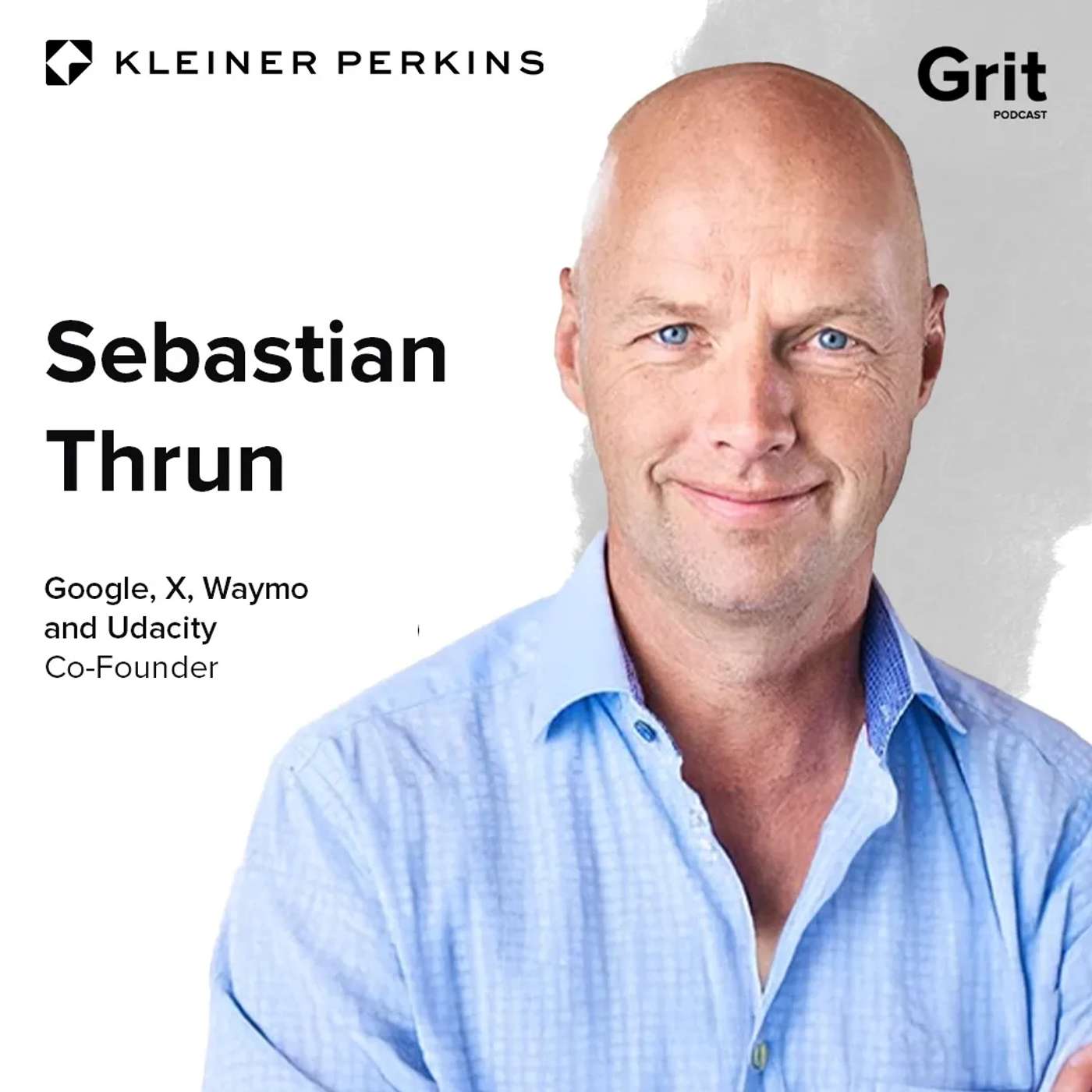
Sebastian Thrun advises innovators to eliminate guilt and fear, estimating 80% of his work is correcting mistakes. Feeling guilty about errors stifles risk-taking and leads to safe, incremental work. Instead, he treats mistakes purely as learning opportunities to be applied in the future.
When an experimental campaign failed, Edelman's CEO Richard Edelman protected the mid-level employee responsible. He framed the mistake as a necessary cost of innovation in a new field, explicitly telling the team to "keep pushing boundaries." This response fosters a culture where calculated risks are encouraged rather than punished.

Finding entrepreneurial success often requires a decade-long period of trial and error. This phase of launching seemingly "dumb" or failed projects is not a sign of incompetence but a necessary learning curve to develop skills, judgment, and self-awareness. The key is to keep learning and taking shots.