Get your free personalized podcast brief
We scan new podcasts and send you the top 5 insights daily.
Vanta's core product isn't just a checklist. It is a system of automated tests that continuously monitors a company's tools (like GitHub) to verify that its security controls are correctly implemented, much like unit tests verify code functionality.

Related Insights
Instead of relying on engineers to remember documented procedures (e.g., pre-commit checklists), encode these processes into custom AI skills. This turns static best-practice documents into automated, executable tools that enforce standards and reduce toil.

Penetration testing was often a periodic, "checkbox" exercise for compliance. Terra's continuous AI-powered approach transforms it into a strategic validation tool. It helps CISOs justify security spending and quantify business risk, aligning security efforts with business impact.

To maintain high velocity with AI coding assistants, Chris Fregly has stopped line-by-line code reviews and traditional unit testing. He now focuses on high-level evaluations and 'correctness harnesses' that continuously run in the background, shifting quality control from process (review) to outcome (performance).

A key benefit of tools like Codex is the significant reduction in friction for writing unit tests. Developers can prompt the AI to test an API, and it will generate comprehensive tests, including edge cases, leading to higher code coverage and more reliable software with less drudgery.

Vanta effectively segments the market by product experience. Startups, unfamiliar with compliance, need a guided, prescriptive "TurboTax-like" process. In contrast, mature enterprises want a monitoring platform—"DataDog for compliance controls"—to manage their existing, complex programs.
Solo developers can integrate AI tools like BugBot with GitHub to automatically review pull requests. These specialized AIs are trained to find security vulnerabilities and bugs that a solo builder might miss, providing a crucial safety net and peace of mind.

As AI generates more code, the developer tool market will shift from code editors to platforms for evaluating AI output. New tools will focus on automated testing, security analysis, and compliance checks to ensure AI-generated code is production-ready.

While AI accelerates the creation of UIs and features, it's ill-suited for critical infrastructure like authentication and compliance. WorkOS provides these enterprise-ready components as a service, allowing startups to quickly sell up-market without spending years building the unglamorous but essential security foundations.

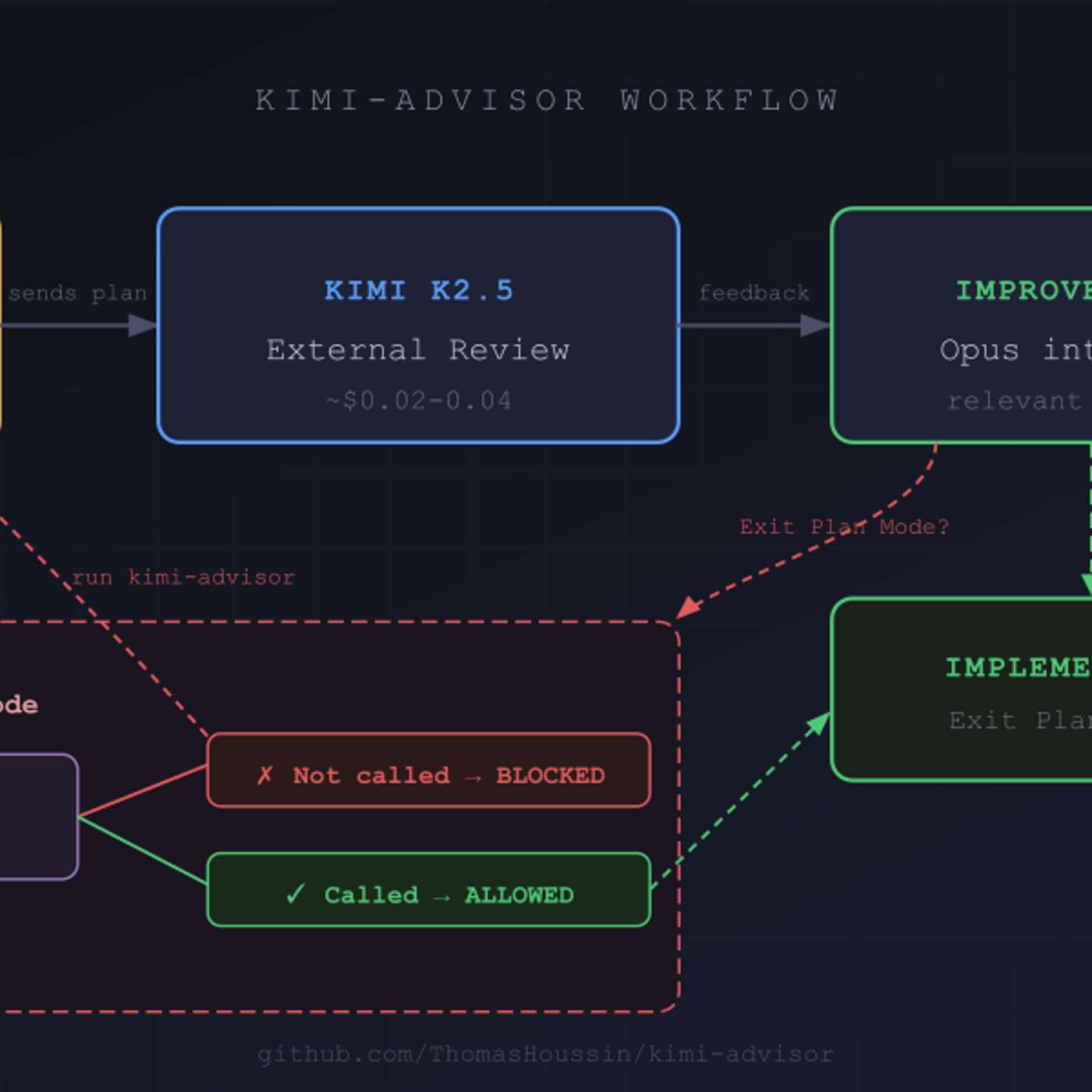
Developers often skip optional quality checks. To ensure consistent AI-powered plan reviews, implement a mandatory hook—a script that blocks the development process (e.g., exiting plan mode) until the external AI review has been verifiably completed. This engineers compliance into the workflow, guaranteeing a quality check every time.
Standalone AI tools often lack enterprise-grade compliance like HIPAA and GDPR. A central orchestration platform provides a crucial layer for access control, observability, and compliance management, protecting the business from risks associated with passing sensitive data to unvetted AI services.