Get your free personalized podcast brief
We scan new podcasts and send you the top 5 insights daily.
Contrary to the belief that AI will flatten technology stacks, history shows that layers persist because they map to organizational boundaries, compatibility needs, and human logic. Instead of eliminating them, AI agents will learn to navigate and operate within these established structures.

Related Insights
Don't view AI as just a feature set. Instead, treat "intelligence" as a fundamental new building block for software, on par with established primitives like databases or APIs. When conceptualizing any new product, assume this intelligence layer is a non-negotiable part of the technology stack to solve user problems effectively.
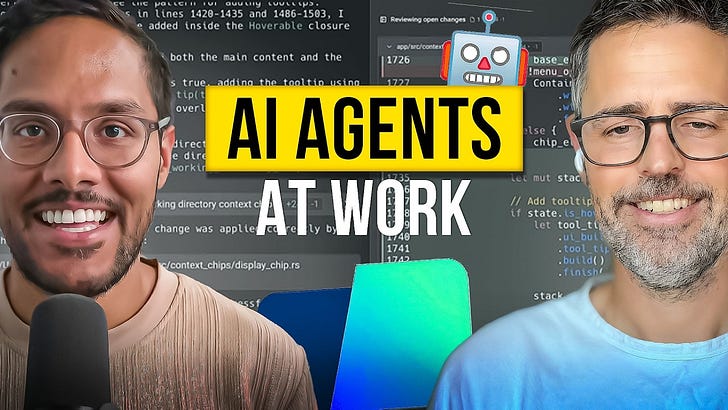
Instead of interacting with a single LLM, users will increasingly call an API that represents a "system as a model." Behind the scenes, this triggers a complex orchestration of multiple specialized models, sub-agents, and tools to complete a task, while maintaining a simple user experience.
The future of integration isn't about pre-building every connection. AI agents will perform "integration on demand," stitching systems together at runtime to answer a specific user query. This transforms a slow, expensive IT function into a fluid, dynamic part of everyday work.
The true building block of an AI feature is the "agent"—a combination of the model, system prompts, tool descriptions, and feedback loops. Swapping an LLM is not a simple drop-in replacement; it breaks the agent's behavior and requires re-engineering the entire system around it.
The future of AI requires two distinct interaction models. One is the conversational "agent," akin to collaborating with a person. The other is the formally programmed "system." These are different paradigms for different needs, like a chair versus a table, not a single evolutionary path.
The 'agents vs. applications' debate is a false dichotomy. Future applications will be sophisticated, orchestrated systems that embed agentic capabilities. They will feature multiple LLMs, deterministic logic, and robust permission models, representing an evolution of software, not a replacement of it.

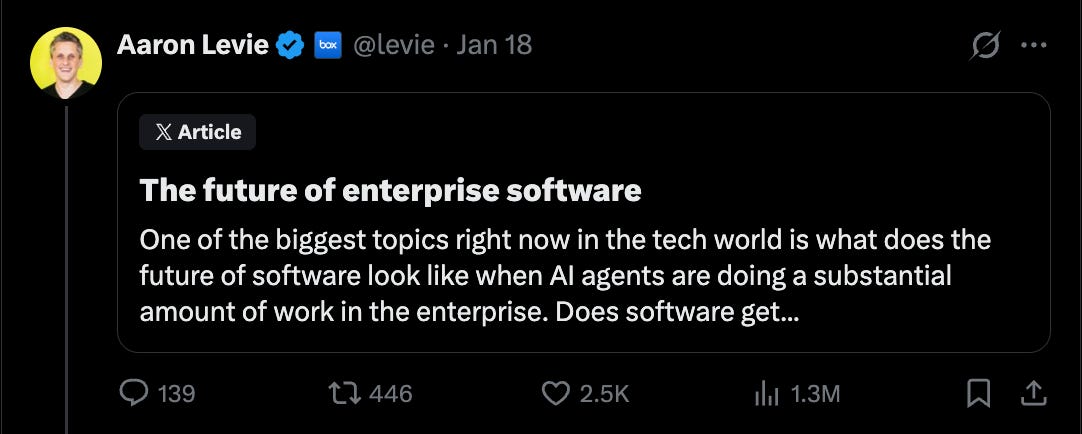
Unlike previous technologies that integrated into existing workflows, AI agents require us to fundamentally re-engineer our work processes to make them effective. Early adopters who adapt their operations to how agents "think" will gain compounding advantages over competitors.
The most powerful AI systems consist of specialized agents with distinct roles (e.g., individual coaching, corporate strategy, knowledge base) that interact. This modular approach, exemplified by the Holmes, Mycroft, and 221B agents, creates a more robust and scalable solution than a single, all-knowing agent.

A more likely AI future involves an ecosystem of specialized agents, each mastering a specific domain (e.g., physical vs. digital worlds), rather than a single, monolithic AGI that understands everything. These agents will require protocols to interact.

Viewing AI as just a technological progression or a human assimilation problem is a mistake. It is a "co-evolution." The technology's logic shapes human systems, while human priorities, rivalries, and malevolence in turn shape how the technology is developed and deployed, creating unforeseen risks and opportunities.
