Get your free personalized podcast brief
We scan new podcasts and send you the top 5 insights daily.
Santé Ventures operates on the principle that a 40-50% loss ratio is inherent to early-stage biotech investing. Attempting to reduce this failure rate is seen as a sign of not taking enough risk. The core strategy is ensuring the winners are large enough to pay for all the losers.

Related Insights
Unlike tech investing, where a single power-law outlier can return the entire fund, biotech wins are smaller in magnitude. This dynamic forces biotech VCs to prioritize a higher success rate across their portfolio rather than solely hunting for one massive unicorn.

Even with big wins, a venture portfolio can fail if not constructed properly. The relative size of your investments is often more critical than picking individual winners, as correctly sized successful investments must be large enough to overcome the inevitable losers in the portfolio.

In venture capital, the potential return from a single massive winner (1000x) is so asymmetric that it dwarfs the cost of multiple failures (1x loss). This reality dictates that the primary focus should be on identifying and capturing huge winners, making the failure to invest in one a far greater error than investing in a company that goes to zero.

In venture capital, a portfolio with no failed investments is a sign of a flawed, risk-averse strategy. The goal isn't to avoid losses but to back the market leader in a potentially huge category. Losing money on the leader if the entire category fails is an acceptable and expected outcome.

Venrock partner Brian Roberts states that a 2-3x return, often considered good in other sectors, is poor in biotech. The decade-long timelines and extremely high failure rates necessitate massive "70x" outlier wins to make a fund's investment model viable.

Life science investing is inherently tougher than tech because its best-case returns are around 10x, whereas tech can achieve 1000x. This means a single 10x biotech winner cannot compensate for 9 failures in a portfolio, forcing a more capital-disciplined approach to investment and risk management.

A successful early-stage strategy involves actively maximizing specific risks—product, market, and timing—to pursue transformative ideas. Conversely, risks related to capital efficiency and team quality should be minimized. This framework pushes a firm to take big, non-obvious swings instead of settling for safer, incremental bets.
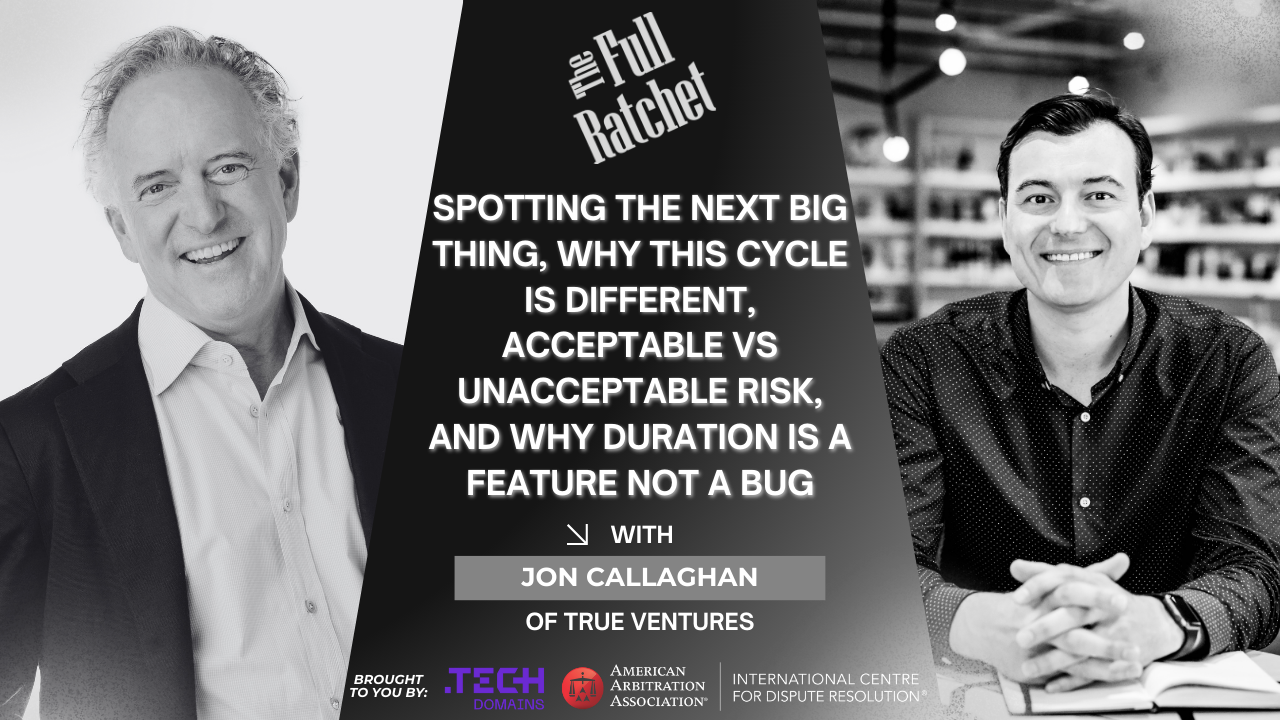
While biotech cannot easily replicate tech's rapid iteration cycles due to high costs and long feedback loops, it can adopt the capital efficiency model of tech seed investing. The strategy is to kill flawed projects quickly and cheaply, ensuring that when you lose, you lose small.
Sequoia's internal philosophy dictates that venture capital is not a downside minimization game. A fund with a write-off rate below 40% is seen as not taking enough risk to generate outlier returns. This counter-intuitive metric prioritizes bold bets over preserving capital on every deal.

The majority of venture capital funds fail to return capital, with a 60% loss-making base rate. This highlights that VC is a power-law-driven asset class. The key to success is not picking consistently good funds, but ensuring access to the tiny fraction of funds that generate extraordinary, outlier returns.
![[REPLAY] Matt Bank - "GEMs" of Risk, Asset Allocation, and Manager Selection (EP.419) thumbnail](https://static.libsyn.com/p/assets/f/b/7/6/fb76e1c8bfb69e8dd959afa2a1bf1c87/CA_Square_logo_light_background_6.26.24.jpg)