Get your free personalized podcast brief
We scan new podcasts and send you the top 5 insights daily.
The Green Hornet's sidekick, Kato, exemplifies how minority representation is shaped by political convenience. Originally written as Japanese, his ethnicity was changed to Filipino and then Korean to avoid negative sentiment during WWII, showing a disregard for authenticity in favor of geopolitical palatability.

Related Insights
Unlike the 1980s, when Japanese corporations were common antagonists in films like Die Hard, modern Hollywood avoids portraying China negatively. This is attributed to a desire to maintain access to China's lucrative box office, resulting in a pop culture landscape that doesn't reflect geopolitical tensions.

A British Museum exhibit shows the clear lineage from samurai armor to modern pop culture icons. George Lucas specifically instructed his costume designer to create "some kind of big helmet like a Japanese warrior" for Darth Vader, cementing the aesthetic's global influence.

In Marine boot camp, Yul Kwon's instinct to bow to a superior—a sign of respect in his Korean upbringing—was perceived as indiscipline. This highlights how deeply ingrained cultural norms can be misread as personal failings in a new context, requiring conscious adaptation.

Japan's unique cultural output, like manga, stems from its history of repression, collectivism, and post-WWII trauma. This "illicit storytelling"—content kids want but parents might disapprove of—resonates globally because it feels truthful and raw, preserving a distinct cultural identity born from struggle.

Tabitha Brown found the overt racism of the South easier to handle than the covert prejudice in Los Angeles. In North Carolina, you knew where you stood. In Hollywood, bias is hidden behind fake pleasantries, making it much harder to identify true allies and navigate professional relationships effectively.
Hollywood maintains a tacit "foreign policy veto" where studios self-censor content to ensure access to lucrative markets like China. This business reality shapes American films, avoiding patriotic themes or sensitive topics that could hinder international distribution. The film "The Interview" was an exception as North Korea represented no market to lose.

The historical warrior monk Benkei was thin and ascetic, but legend transformed him into a hulking giant. This narrative embellishment made his defeat by the smaller Yoshitsune far more dramatic and memorable, demonstrating how storytelling often enhances historical fact to build a more powerful legacy.
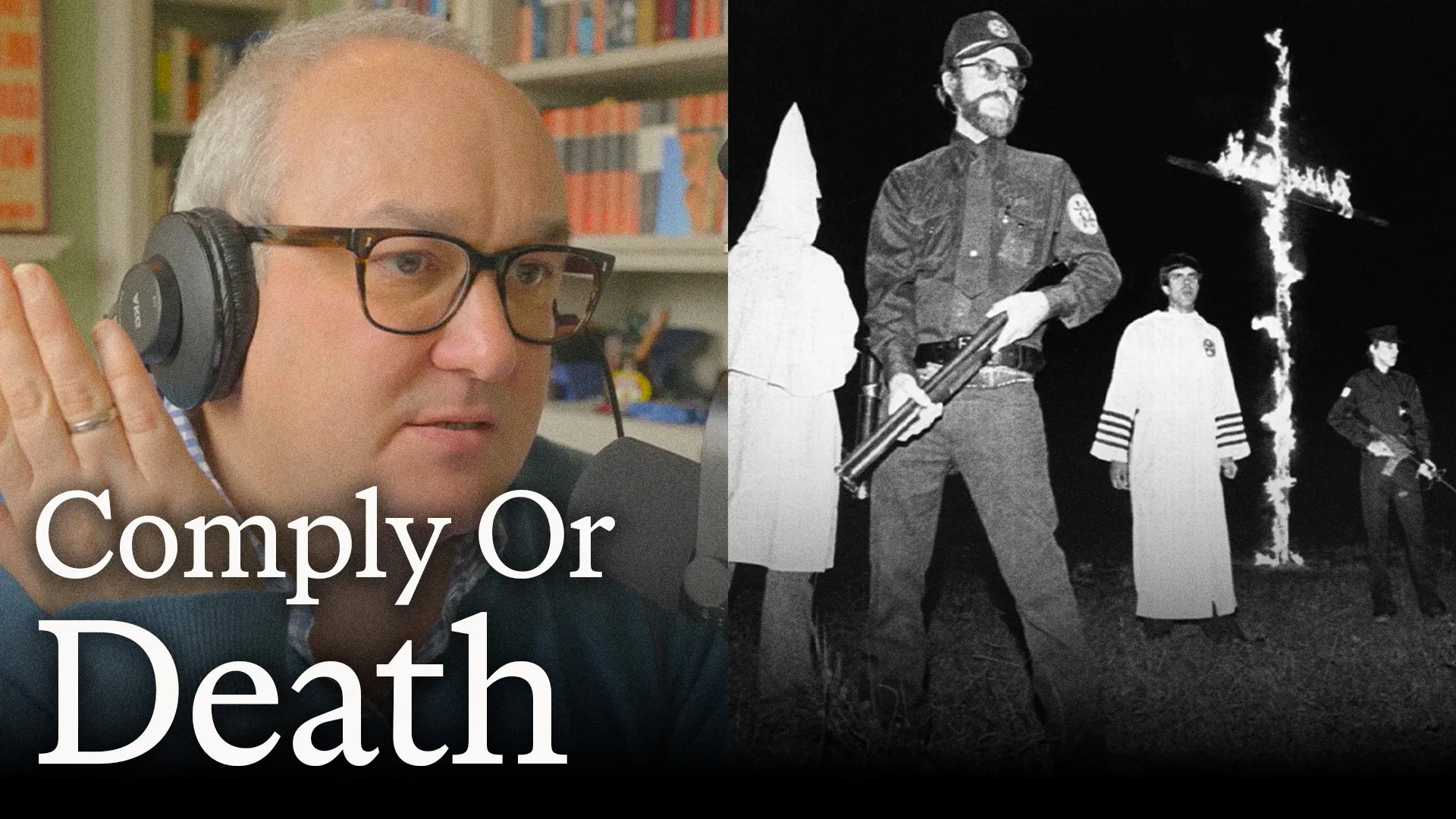
Following its demise, the KKK's violent legacy was completely sanitized by the 'Lost Cause' mythology. Academic historians and popular culture, most notably D.W. Griffith's 1915 film 'The Birth of a Nation', recast the Klan not as racist terrorists but as swashbuckling defenders of civilization, a narrative that enabled its eventual rebirth.
Debates about race-swapping historical figures like Joan of Arc are superficial. A more insightful adaptation would identify the source of the figure's revolutionary impact—in her case, a woman in a hyper-masculine world—and translate that archetype into a modern context that creates similar societal discomfort.

The term "Asian American" was intentionally created by activists Yuji Ichioka and Emma G to unite disparate Asian nationalities. They rejected "Oriental" to build a coalition addressing shared struggles, transforming a homogenizing label used by others into a powerful political identity of their own.