Get your free personalized podcast brief
We scan new podcasts and send you the top 5 insights daily.
Investor Ben Black passed on MongoDB after CIOs criticized its security and scalability, favoring DataStax. However, developers loved MongoDB, driving its massive success. This proves that end-user passion can be a more powerful indicator of future success than immediate enterprise-readiness concerns from executive buyers.

Related Insights
Contrary to conventional wisdom, MongoDB's CEO reveals enterprise leaders have a surprising appetite for full system replacement. An AI-native company that can replace an entire legacy system of record—making it cheaper, faster, and better—will get a leader's attention far more effectively than one offering an incremental feature layer on top of an existing platform.

When deciding on a tech stack like Tailwind, the CEO's key criterion isn't just marginal technical improvement. It's whether the stack would excite and attract top young talent, like a hypothetical 20-year-old CMU dropout. This frames a technical decision around its crucial impact on recruiting and developer happiness.

MongoDB's CEO attributes his business acumen as a product person to constant customer interaction. This goes beyond feature requests to understanding their broader problems, buying processes, and deployment challenges. This intimacy allows product leaders to anticipate market needs and build solutions that have a clear path to market, moving beyond the "if you build it, they will come" fallacy.
Stripe's foundational tech stack (Ruby, MongoDB) was a casual choice made by its founders on a couch. This early decision has had lasting consequences, requiring significant engineering investment to scale and maintain, illustrating how initial, seemingly minor choices dictate a company's long-term technical trajectory.

StatusGator initially targeted developers but found success only after realizing IT directors were the true buyers. The mistake was focusing on users who loved the tool but lacked the authority and budget to purchase it for their company.

MongoDB's CEO argues that successful pivots during tech transitions like cloud or AI are fundamentally change management challenges, not technical ones. The biggest risk for established companies is complacency. Leadership must force the organization to lean into new platform shifts, even when their maturity is uncertain, to avoid being disrupted like Nokia or BlackBerry.
MongoDB's CEO candidly stated that enterprises are not adopting agentic AI products as rapidly as investors might expect. This confirms that the hype cycle is far ahead of actual implementation, providing a reality check for the market and explaining why AI-adjacent infrastructure companies aren't seeing massive tailwinds yet.

Ladder's success stems from prioritizing aggregate customer data over individual opinions, especially from investors. They view an investor's product suggestion as a single, biased data point that often contradicts what their broader user base actually wants and needs.
![Tom Digan & Greg Stewart - Building the World’s Best Fitness App - [Invest Like the Best, EP.454] thumbnail](https://megaphone.imgix.net/podcasts/8459013c-f00c-11f0-ac98-fbad2fe189ee/image/d99352e9439af266dbb87c1efac1299f.jpg?ixlib=rails-4.3.1&max-w=3000&max-h=3000&fit=crop&auto=format,compress)
MongoDB CEO CJ Desai considers Frontier AI labs the "Holy Grail" customer segment. Their explosive, non-linear growth in users and data provides the ultimate stress test for an infrastructure platform's architecture. Successfully supporting their vertical scaling spikes gives immense confidence that the platform can handle any enterprise workload.
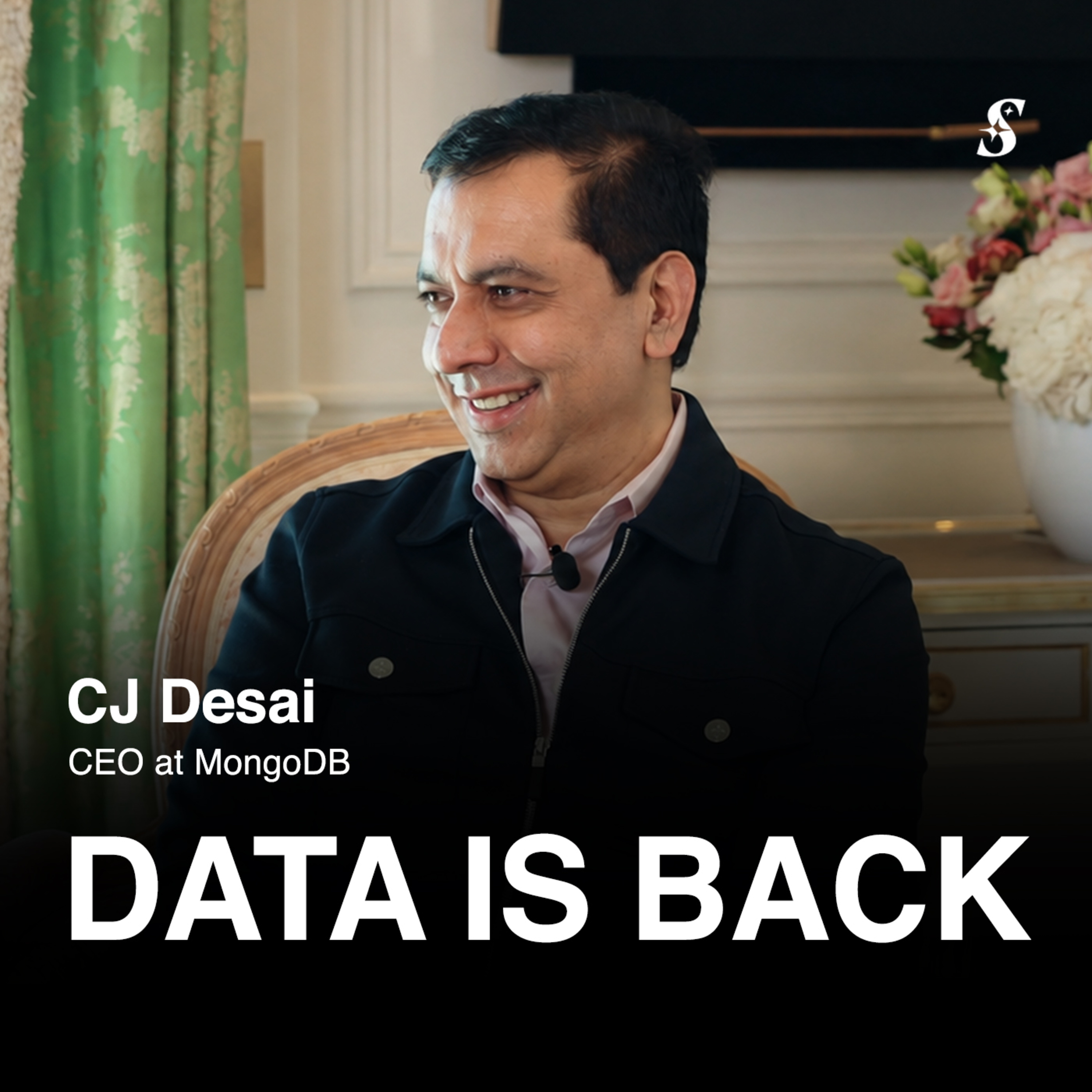
MongoDB's CEO argues that while a wedge product provides entry, long-term defensibility comes from becoming a platform. Platforms are sticky because customers build integrations around them, making them much harder to remove than a single-purpose tool. This rarity of platforms is why few software companies surpass $10 billion in revenue.