Get your free personalized podcast brief
We scan new podcasts and send you the top 5 insights daily.
Brockman anticipates that user interaction will transition from static screens and text boxes to dynamically generated UI created on the fly. Models will craft bespoke visual interfaces tailored to momentary tasks, giving users the precise controls needed for complex activities without requiring pre-built applications.

Related Insights
Transitioning from static, predefined design widgets to dynamic, real-time UI generated on the fly by frontier models upends conventional product design practices. When model outputs determine not just text but complete layout and interactive components non-deterministically, designers can no longer blueprint fixed states. Instead, design teams must integrate directly with AI researchers to build evaluation frameworks and steering tools that teach models design systems natively.

Block is moving beyond static UIs. Tools like 'ManagerBot' will allow users to generate custom apps and interfaces on the fly with simple prompts. The core user experience will no longer be a rigid, uniform design, but a dynamic, personalized interface generated in real-time.

A future is predicted where UIs are no longer static but are dynamically generated in real-time. Interfaces will change and adapt based on user prompts and observed behavior, becoming a personalized, sycophantic stream of information tailored to an individual's unique consumption patterns and preferences.

The future of computing involves devices with minimal software, where an AI model generates a custom user interface on demand to solve a specific problem. This 'Software 3.0' paradigm abstracts away the need for discrete applications like spreadsheets or finance tools, turning complex multi-step workflows into single-prompt actions.

The next frontier for conversational AI is not just better text, but "Generative UI"—the ability to respond with interactive components. Instead of describing the weather, an AI can present a weather widget, merging the flexibility of chat with the richness of a graphical interface.

Instead of AI writing code that then gets rendered, future interfaces will be generated directly by diffusion models. This "intention-to-pixel" paradigm allows for hyper-personalized, real-time UIs, effectively making the diffusion model the new front-end.
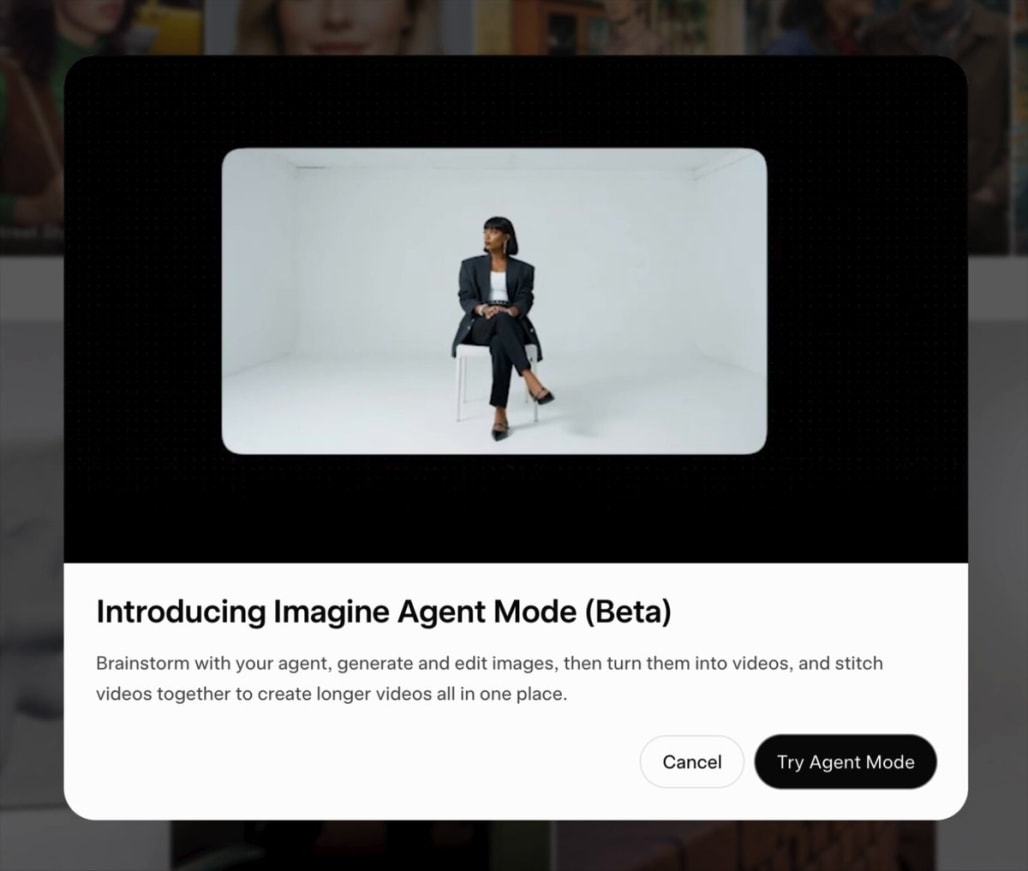
Vanta is moving beyond chat-based AI to develop agents that can generate entire, task-specific user interfaces on the fly. This "on-demand software" can guide a user through a workflow with a custom-built UI that disappears once the task is complete.

AI will fundamentally change user interfaces. Instead of designers pre-building UIs, AI will generate the necessary "forms and lists" on the fly based on a user's natural language request. This means for the first time, the user, not the developer, will be the one creating the interface.
OpenAI is developing a "dynamic user interface library" designed so the AI model can interpret and compose UI elements itself. This forward-thinking approach anticipates a future where the model assembles bespoke interfaces for users on the fly.
The "Interface World Model" treats software interfaces as real-time video. Instead of coding with HTML/CSS, developers can describe UI behavior in natural language. The model generates the interactive pixels directly, enabling rapid prototyping, exploration, and personalization.
