Get your free personalized podcast brief
We scan new podcasts and send you the top 5 insights daily.
Ackman argues that the most critical challenge AI poses for long-term investors isn't about AI-powered analysis tools. Instead, it's about how AI exponentially increases the risk of even the most dominant businesses being disrupted, making long-term forecasts much harder.

Related Insights
Investors mistakenly believe that buying AI stocks is a direct bet on the technology itself. Dalio warns that, like past tech revolutions, the underlying technology will thrive, but most individual companies will fail due to intense competition. The investment risk lies in picking the few corporate survivors, not in the technology's potential.

Stock market investors are pricing in rapid, significant productivity gains from AI to justify high valuations. This sets up a binary outcome: either investors are correct, leading to massive productivity growth that could disrupt the job market, or they are wrong, resulting in a painful stock market correction when those gains fail to materialize.

For AI to meet its lofty revenue forecasts, it must be transformative enough to displace labor. If it fails to do so, the labor market remains stable but the massive investments and market valuations become unsustainable. This creates a "lesser of two evils" scenario for investors and the economy.
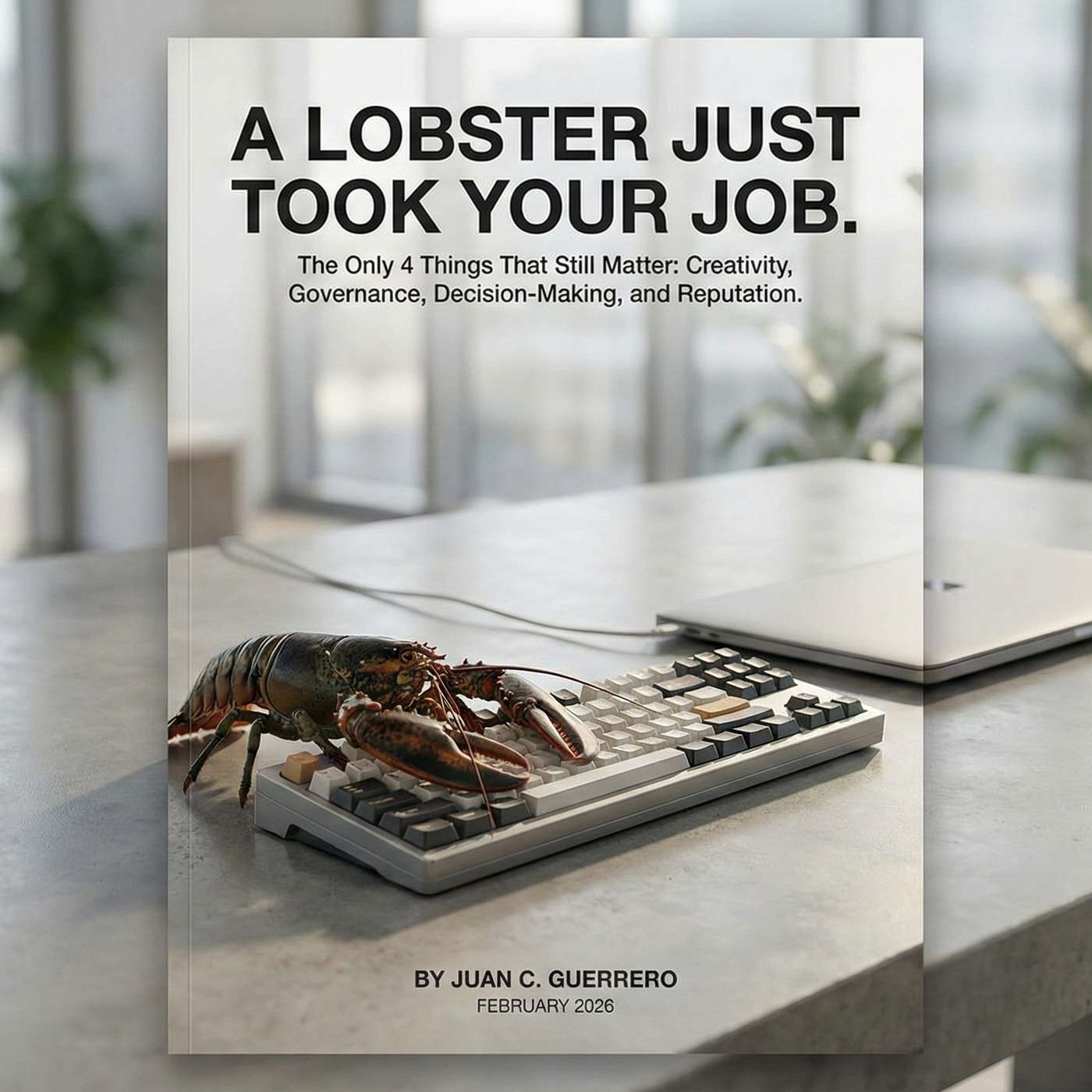
The true disruption from AI is not a single bot replacing a single worker. It's the immense leverage granted to individuals who can deploy thousands of autonomous AI agents. This creates a massive multiplication of productivity and economic power for a select few, fundamentally altering labor market dynamics from one-to-one replacement to one-to-many amplification.
Unlike previous tech shifts like cloud, AI is so disruptive that it creates a viable narrative for how incumbents could either massively win or be completely displaced. This complicates investment decisions across the software sector, as both optimistic and pessimistic outcomes are highly plausible.

The key threat from AI isn't just its capability, but the unprecedented speed of its improvement. Unlike past technological shifts that unfolded over decades, AI agent autonomy on complex tasks has grown exponentially in just two years. This rapid acceleration is what financial systems and labor markets are not stress-tested for.

While companies are still focused on quantifying the immediate benefits of AI adoption, the market's narrative has quickly pivoted. Investors are now more concerned with the long-term, negative consequences of powerful AI, such as industry-wide disruption and deflationary pressures.

Ackman believes that since AI tools are universally available, true investment edge will come from human creativity and insight. His most successful investments were non-obvious moves an AI trained on historical data would never have recommended, highlighting the limits of models.
For decades, the value of investment firms was concentrated in their human talent. AI fundamentally shifts this, moving enterprise value towards proprietary software, data, and systems. This creates an existential threat for incumbents who must now compete with new, asset-light, AI-native firms.
![Gabe Stengel - Building Investing Superintelligence - [Invest Like the Best, EP.492] thumbnail](https://megaphone.imgix.net/podcasts/ef669774-cccd-11ed-889b-c36caad6646f/image/158efdddfb983d2678b3530d484e8aa2.jpg?ixlib=rails-4.3.1&max-w=3000&max-h=3000&fit=crop&auto=format,compress)
The dominant fear is an AI investment bubble bursting. However, Andrew Ross Sorkin argues the greater risk is AI *working too well*, causing widespread job displacement and leading to a 1932-style depression with 25% unemployment, disrupting the entire economic structure.
