Get your free personalized podcast brief
We scan new podcasts and send you the top 5 insights daily.
As a national icon in Scotland, the painting's reproduction on moving vehicles like buses adds a modern layer of irony. This unintended context playfully comments on the artwork's central paradox of a figure depicted as both gracefully gliding and statically posed.

Related Insights
The artwork captures a pivotal cultural shift. The sober, scholarly minister represents the rationalism of the Scottish Enlightenment, while the misty, atmospheric landscape behind him expresses the emotionalism of emerging Romanticism. The painting places these two conflicting worldviews in a single frame.
The moving walkway’s popular debut at World's Fairs typecast it as an amusement ride, creating a "magnificently impractical" reputation that prevented government officials from taking it seriously for major urban infrastructure projects like the Brooklyn Bridge.

Art is a mechanism for changing perception. It often makes audiences uncomfortable at first by introducing a novel idea or form. Over time, great art guides people from that initial discomfort to a new state of understanding, fundamentally altering how they see the world.

While often no faster than walking, iconic moving walkways like Chicago O'Hare's succeed by transforming a tedious journey into a "transportive and calming" experience. This demonstrates the high value of experiential design in otherwise utilitarian public infrastructure.
An art expert's transformative experience with 'Las Meninas' was accidental; she visited the Prado museum without knowing the painting was there. This suggests that encountering great art without premeditation or expectation can lead to a more profound and personal emotional connection, stripped of academic or critical baggage.
The painting's humor stems from the juxtaposition of a minister, a figure of intense seriousness, engaged in the graceful act of ice skating. This inherent contradiction between his dignified persona and his balletic pose creates a subtle, comic tension.
The unreliability of Germany's national rail service is so widespread and well-known that it has become a socially acceptable, no-questions-asked excuse for being late. This shared misery has created an ironic social lubricant, as nearly everyone has personally experienced the problem.

Dennis creates "paintings within paintings" to challenge perception. Inspired by Wile E. Coyote and a real-life museum experience, his work makes the viewer's interaction part of the art itself, creating a nested, self-aware narrative that questions the relationship between art and its audience.
Social rituals, like walking on the street-side of a sidewalk, often outlive their original practical purpose. However, they retain significant value as symbols. The gesture itself becomes a signal of thoughtfulness and care, demonstrating that the intent behind an action can be more important than its literal function.
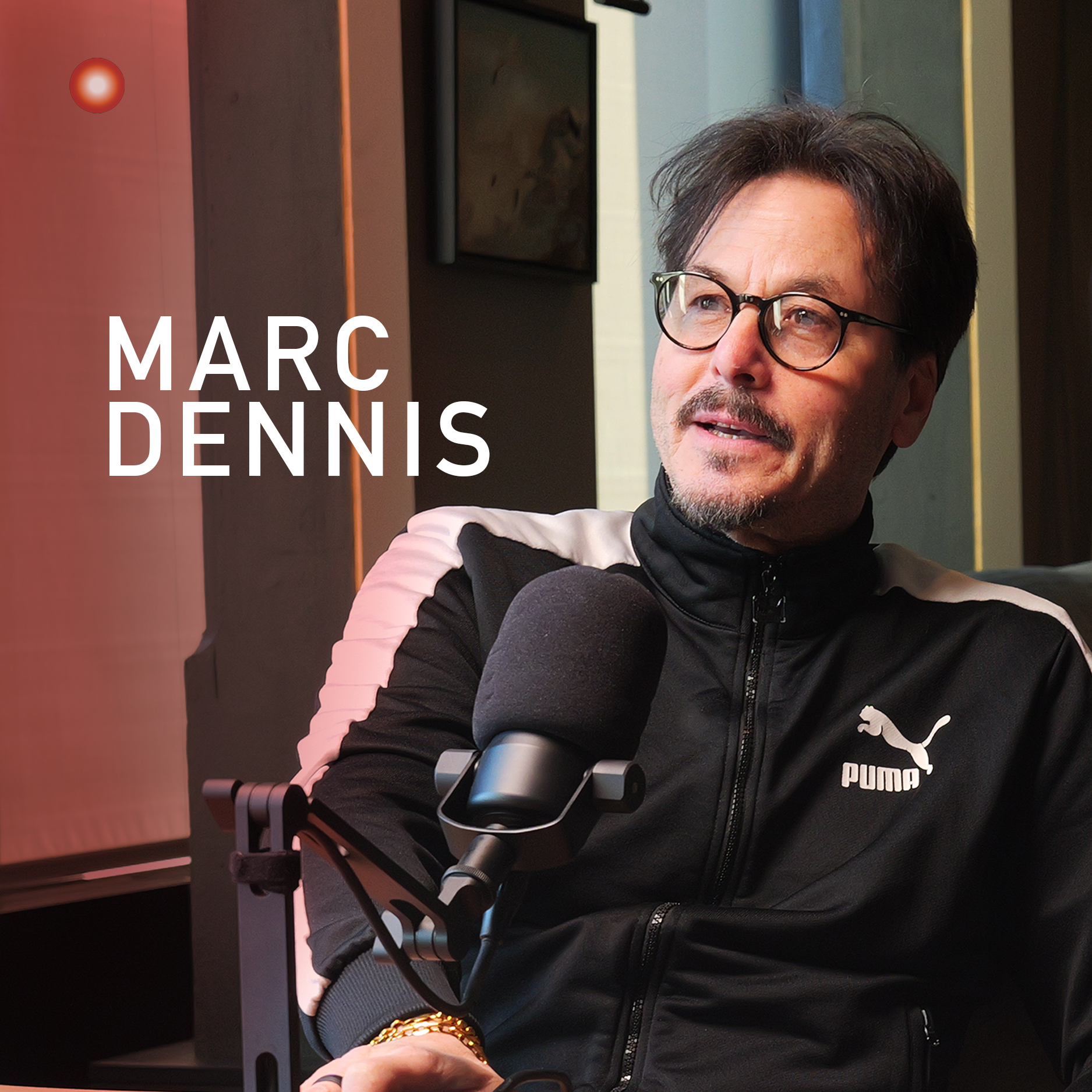
Artist Marc Dennis combines his obsessive, hyper-real painting skill with an unserious sense of humor. He views this humor not as a gimmick but as a "high voltage technique" that energizes his technically demanding work and injects his distinct personality, preventing it from being solely about craftsmanship.