Get your free personalized podcast brief
We scan new podcasts and send you the top 5 insights daily.
Achieving near-perfect AV reliability (99.999%) is exponentially harder than getting to 99%. This final push involves solving countless subtle, city-specific issues, from differing traffic light colors and curb heights to unique local sounds like emergency sirens, which vehicles must recognize.
Related Insights
During a San Francisco power outage, Waymo's map-based cars failed while Teslas were reportedly unaffected. This suggests that end-to-end AI systems are less brittle and better at handling novel "edge cases" than more rigid, heuristic-based autonomous driving models.
Tesla's camera-only system gives it a significant cost advantage over Waymo's LiDAR-equipped vehicles. However, current data shows a Waymo vehicle crashes every 400,000 miles, while Tesla's crashes every 50,000. Tesla's ability to scale hinges entirely on proving its cheaper technology can become as safe.

Contrary to popular belief, direct communication between autonomous vehicles (V2V) may be a bad idea because it creates dependencies. If one vehicle's signal is compromised, it could affect others. The more robust approach is for each AV to be entirely self-sufficient, relying only on its own sensors to perceive the world.
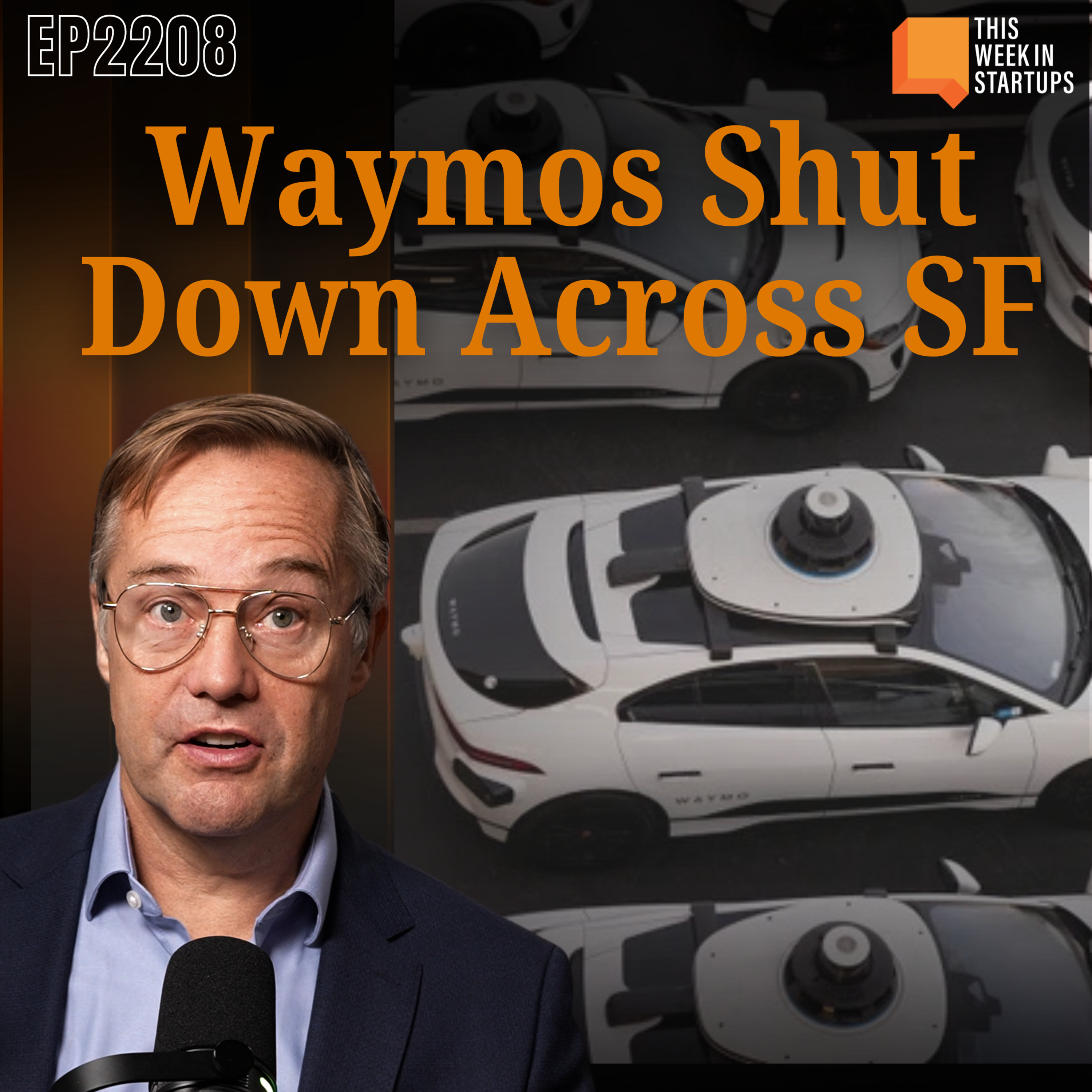
Waymo vehicles froze during a San Francisco power outage because traffic lights went dark, causing gridlock. This highlights the vulnerability of current AV systems to real-world infrastructure failures and the critical need for protocols to handle such "edge cases."
Rivian's CEO explains that early autonomous systems, which were based on rigid rules-based "planners," have been superseded by end-to-end AI. This new approach uses a large "foundation model for driving" that can improve continuously with more data, breaking through the performance plateau of the older method.

Drawing from his Tesla experience, Karpathy warns of a massive "demo-to-product gap" in AI. Getting a demo to work 90% of the time is easy. But achieving the reliability needed for a real product is a "march of nines," where each additional 9 of accuracy requires a constant, enormous effort, explaining long development timelines.

While initial safety validation is crucial, the bigger, long-term problem is ensuring safety across thousands of vehicles over many years. This involves managing part obsolescence, configuration drift, and real-time performance monitoring to prevent a fleet-wide grounding event, similar to challenges in the airline industry.
Waive's core strategy is generalization. By training a single, large AI on diverse global data, vehicles, and sensor sets, they can adapt to new cars and countries in months, not years. This avoids the AV 1.0 pitfall of building bespoke, infrastructure-heavy solutions for each new market.

AV companies use "Operational Design Domains" (ODDs) to define safe operating environments. They expand from a cleared city (e.g., Las Vegas) to a similar one (e.g., Los Angeles) to reuse core engineering solutions and only solve for marginal differences, accelerating rollout.
The public holds new technologies to a much higher safety standard than human performance. Waymo could deploy cars that are statistically safer than human drivers, but society would not accept them killing tens of thousands of people annually, even if it's an improvement. This demonstrates the need for near-perfection in high-stakes tech launches.
