Get your free personalized podcast brief
We scan new podcasts and send you the top 5 insights daily.
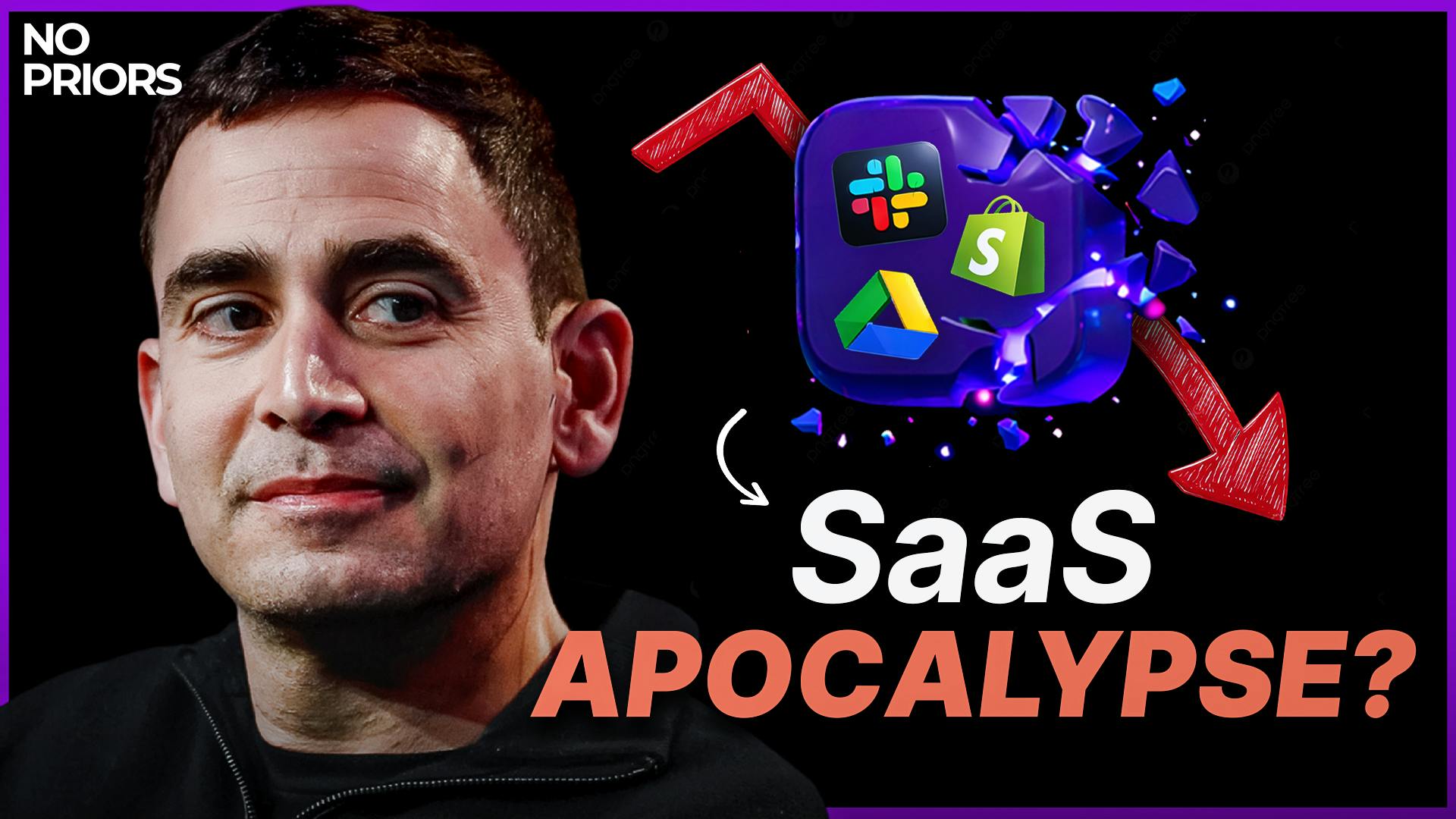
The market has overreacted to AI's threat to SaaS giants like Salesforce and Adobe. While AI can replicate code, it cannot easily replace the years of deep integration into client billing, customer service, and employee training. These high switching costs are being ignored, making their stocks undervalued.

Related Insights
The rise of agentic coding is creating a "SaaSpocalypse." These agents can migrate data, learn different workflows, and handle integrations, which undermines the core moats of SaaS companies: data switching costs, workflow lock-in, and integration complexity. This makes the high gross margins of SaaS businesses a prime target for disruption.

While AI can easily replicate simple SaaS features (e.g., a server alert), it poses little threat to deeply embedded enterprise systems. The complexity, integrations, and "dark matter" of these platforms create a "hostage" dynamic where ripping them out is impractical, regardless of cloning capabilities.

Sridhar Ramaswamy suggests software valuation multiples are contracting because investors see through the strategy of just adding an 'AI SKU.' The market believes this approach won't win, favoring integrated, consumption-based models where customers only pay for demonstrated value from AI.

Investor Mitchell Green argues that the fear of AI "vibe coding" away SaaS businesses is overblown. Incumbents like Workday spent decades building trust and deep enterprise integrations, a moat that can't be easily replicated with code alone, regardless of AI's power.

AI agents can easily siphon off value from SaaS products priced on per-seat utility by automating tasks previously done by humans (e.g., support tickets). In contrast, deeply embedded systems of record (ERP, CRM) are insulated by career-limiting switching costs and the immense challenge of migrating timeless, critical data.
![Gokul Rajaram - Lessons from Investing in 700 Companies - [Invest Like the Best, EP.456] thumbnail](https://megaphone.imgix.net/podcasts/a35cb364-fc94-11f0-a24d-836fa963ece3/image/f64963c59af651cbb2d022f3a0dd7199.jpg?ixlib=rails-4.3.1&max-w=3000&max-h=3000&fit=crop&auto=format,compress)
SaaS value lies in its encoded business processes, not its underlying code. AI's primary impact will be forcing SaaS companies to adopt natural language and conversational interfaces to meet new user expectations. The backend complexity remains essential and is not the point of disruption.

AI doesn't kill all software; it bifurcates the market. Companies with strong moats like distribution, proprietary data, and enterprise lock-in will thrive by integrating AI. However, companies whose only advantage was their software code will be wiped out as AI makes the code itself a commodity. The moat is no longer the software.
AI coding agents will make migrating between complex enterprise systems like SAP and Oracle dramatically easier and cheaper. This erodes the moat of high switching costs, forcing incumbents to compete on product value rather than customer lock-in, where they once held customers as "hostages."
SaaS products like Salesforce won't be easily ripped out. The real danger is that new AI agents will operate across all SaaS tools, becoming the primary user interface and capturing the next wave of value. This relegates existing SaaS platforms to a lower, less valuable infrastructure layer.
The idea that AI will eliminate SaaS is overblown because it incorrectly projects small startup behavior onto large enterprises. Fortune 100s face immense change management, security, and maintenance challenges, making replacing established vendors with internal AI-coded tools impractical.