Get your free personalized podcast brief
We scan new podcasts and send you the top 5 insights daily.
"God Save the King," now a symbol of the British establishment, began as a Jacobite anthem supporting the Stuart dynasty. It was co-opted by the ruling Hanoverians during the 1745 uprising, effectively making the anthem a "turncoat."

Related Insights
The melody for "The Star-Spangled Banner" was not original but an English tune called "The Anacreontic Song." It was the official song for a London-based amateur musicians' club. This well-known melody was frequently repurposed for new lyrics, a common practice at the time for creating so-called "broadside ballads."
"God Save the King" first gained widespread popularity as a pro-Hanoverian anthem in the autumn of 1745. It was performed nightly in London theaters to rally support for King George II against the invading army of Bonnie Prince Charlie.
Despite its historical subject matter—the 1314 Battle of Bannockburn—Scotland's unofficial national anthem, "Flower of Scotland," is a relatively modern creation. It was composed in 1966 by the folk duo The Corries and was adopted for sporting events decades later.
The line "may he defend our laws" in "God Save the King" is a subtle endorsement of the 1688 Glorious Revolution. It praises a monarch who upholds laws made by Parliament, reflecting a constitutional monarchy rather than a divine right to rule.
In the Whig-dominated 18th century, being a Tory was a form of rebellion. For Samuel Johnson, it was not an alignment with the affluent but a defense of the poor and traditional hierarchies against what he viewed as the predatory greed and commercial expansion championed by the ruling Whig party.

The rarely-sung third verse contains the line, "No refuge could save the hireling and slave." While sometimes seen as a generic insult to British forces, historical context suggests it may specifically target the corps of escaped African American slaves armed by the British to fight against the United States during the War of 1812.
The concept of a national anthem as an "audible national symbol" was pioneered by Britain. After the Napoleonic Wars, the tune of "God Save the King" was so influential that around 20 other countries, from Prussia to Hawaii, adopted its melody for their own anthems.
During the Napoleonic Wars, Britain responded to France's secular "Marseillaise" by terming "God Save the King" a national "anthem." This deliberately Christianized the song, positioning it as an ideological counterpoint to what they saw as France's militant atheism.
"God Save the King" lacks a specific author or creation event, much like Britain's unwritten constitution. This contrasts sharply with revolutionary anthems like the "Marseillaise," mirroring the British preference for organic, evolved traditions over explicitly designed systems.
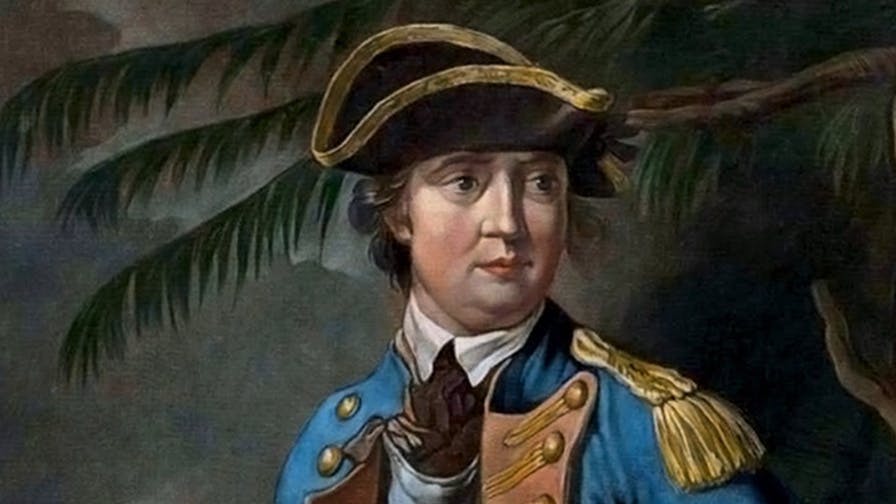
The American Revolution was itself an act of treason against Britain. Benedict Arnold's defection created a singular, despised traitor, allowing the American people to unite against an internal enemy and solidifying their identity beyond simply being rebels against the crown.