Get your free personalized podcast brief
We scan new podcasts and send you the top 5 insights daily.
The melody for "The Star-Spangled Banner" was not original but an English tune called "The Anacreontic Song." It was the official song for a London-based amateur musicians' club. This well-known melody was frequently repurposed for new lyrics, a common practice at the time for creating so-called "broadside ballads."

Related Insights
According to Ken Burns, democracy was not the revolution's intention but its consequence. Initially an "elitist program," the leaders realized they needed to enlist the masses to win. This forced them to extend the language of liberty to everyone, which, once spoken, could not be taken back and ultimately applied to all.

A primary objection to adopting "The Star-Spangled Banner" was its musical difficulty. The melody demands a range of 19 semitones, beyond the capability of many amateur and even some professional singers. This "unsingable" quality was a major argument in favor of alternatives like "America the Beautiful."
The concept of cultural ownership is fundamentally flawed because traditions are built by incorporating and reinterpreting the stories of others. This "theft" and adaptation, as seen in foundational myths, is how culture is made and shared.

The rarely-sung third verse contains the line, "No refuge could save the hireling and slave." While sometimes seen as a generic insult to British forces, historical context suggests it may specifically target the corps of escaped African American slaves armed by the British to fight against the United States during the War of 1812.
Abolitionists repurposed the popular tune of "The Star-Spangled Banner" for their own cause. In 1844, the newspaper "The Liberator" published lyrics highlighting the hypocrisy of a nation that condoned slavery, asking "O say, do you hear... the shrieks of those bondsmen?" while a banner with "stars mocking freedom is fitfully gleaming."
Truly original ideas in music are nearly nonexistent. Breakthrough artists aren't necessarily inventing new sounds, but are the first to successfully apply and popularize existing concepts from other domains. As the saying goes, 'originality is just undetected plagiarism.'
The Beatles and their peers didn't read or write music. Instead, they relied on a peer-to-peer system of sharing chords and riffs—a direct "mind to mind" transfer of ideas. This informal, oral tradition allowed for rapid, intuitive creation and collaboration, bypassing formal structures.
Despite being celebrated as a patriot, Francis Scott Key was a slave owner his entire life. As District Attorney for Washington D.C., he was a "tireless foe of abolitionism," famously prosecuting a man merely for possessing anti-slavery pamphlets, complicating the anthem's "land of the free" message.
The massive flag that inspired the anthem was not flying during the bombardment of Fort McHenry. A smaller, more durable "storm flag" was used in the battle. The huge, iconic flag was raised at dawn only after the fighting ceased, a detail that contradicts the popular myth of it enduring the bombardment.
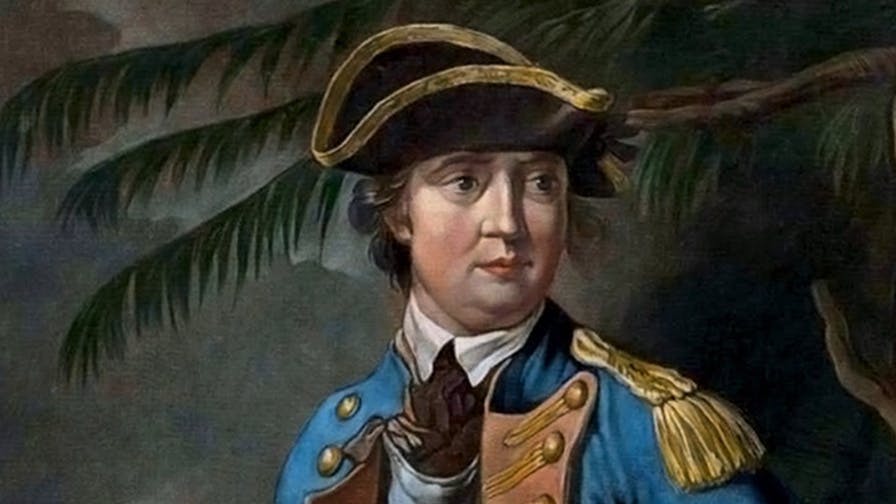
The American Revolution was itself an act of treason against Britain. Benedict Arnold's defection created a singular, despised traitor, allowing the American people to unite against an internal enemy and solidifying their identity beyond simply being rebels against the crown.