Get your free personalized podcast brief
We scan new podcasts and send you the top 5 insights daily.
The current market leaves no room for mediocrity. SaaS companies are either at the forefront of AI, delivering jaw-dropping value and capturing new budget, or they are being displaced. Hiding behind long-term contracts is a temporary solution, as there is no longer a middle ground.
Related Insights
Unlike the slow denial of SaaS by client-server companies, today's SaaS leaders (e.g., HubSpot, Notion) are rapidly integrating AI. They have an advantage due to vast proprietary data and existing distribution channels, making it harder for new AI-native startups to displace them. The old playbook of a slow incumbent may no longer apply.

For established software companies with sluggish growth, the path forward is clear: find a way to become relevant in the age of AI. While they may not become the next Harvey, attaching to AI spend can boost growth from 15% to 25%, the difference between a viable public company and a sale to a private equity firm.
For incumbent software companies, surviving the AI era requires more than superficial changes. They must aggressively reimagine their core product with AI—not just add chatbots—and overhaul back-end operations to match the efficiency of AI-native firms. It's a fundamental "adapt or die" moment.

AI is making core software functionality nearly free, creating an existential crisis for traditional SaaS companies. The old model of 90%+ gross margins is disappearing. The future will be dominated by a few large AI players with lower margins, alongside a strategic shift towards monetizing high-value services.

Ben Thompson's analysis suggests the era of siloed SaaS growth is over. With AI enabling infinite software creation, companies will be forced to attack adjacent business functions to grow. This shifts the market from collaborative expansion to a competitive battle for existing customer spend, with AI model providers as the key "arms dealers."

In the age of AI, 10-15 year old SaaS companies face an existential crisis. To stay relevant, they must be willing to make radical changes to culture and product, even if it threatens existing revenue. The alternative is becoming a legacy player as nimbler startups capture the market.

The threat to established SaaS companies is not just technological but also psychological. Simply adding AI features to an existing product like Photoshop may not be enough if AI creates entirely new workflows. Survival depends on 'human agency'—bold leadership willing to cannibalize existing products and fundamentally reimagine their business for an AI-centric world.
Founders must honestly assess if their product still creates a "jaw-dropping" reaction, similar to early experiences with powerful AI. If it doesn't, the product is losing its competitive edge and is vulnerable to disruption, regardless of existing customer contracts.
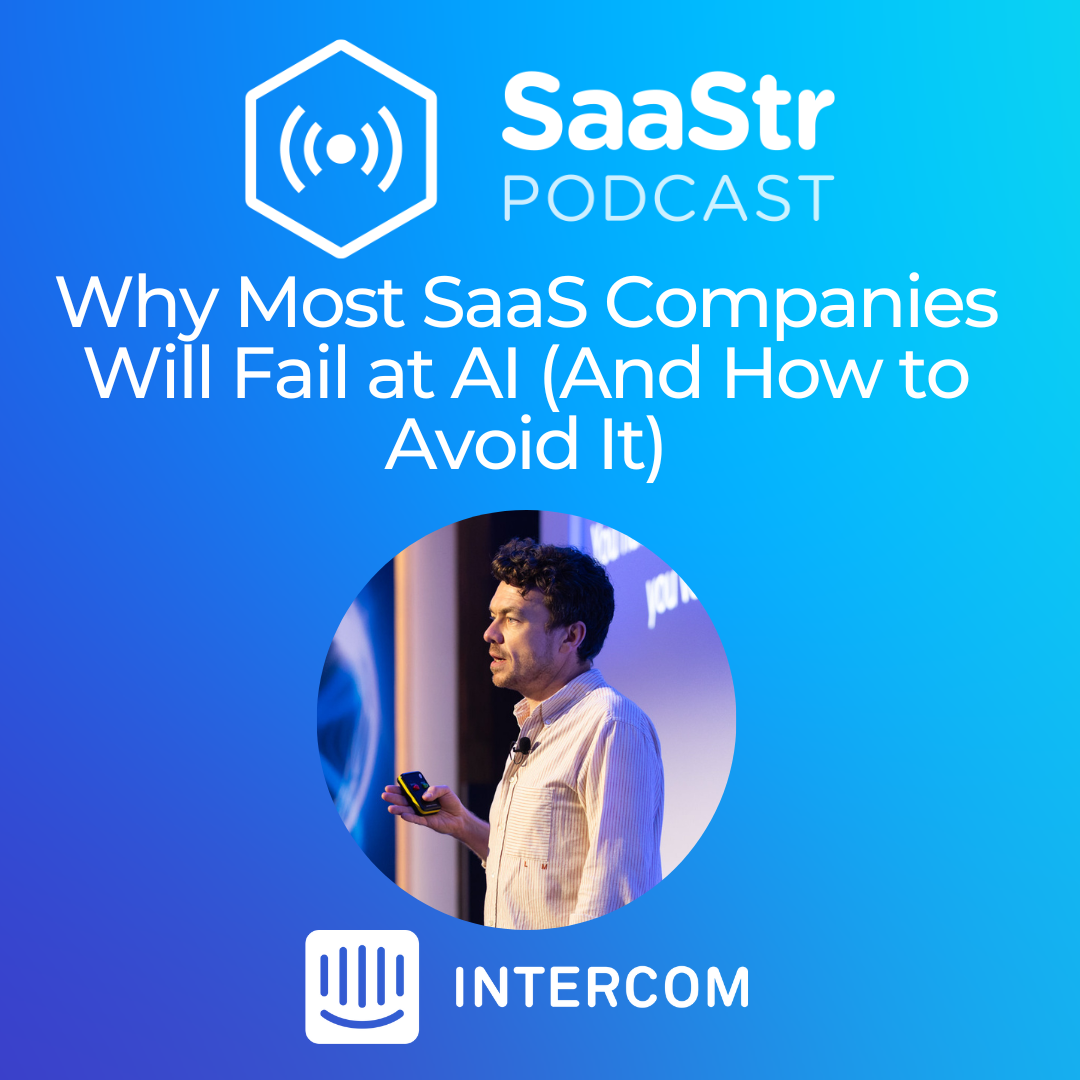
To succeed in the AI era, SaaS companies cannot just add AI features. They must undergo a 'brutal' transformation, changing everything from their org chart and GTM strategy to their core metrics and pricing model. This is a non-negotiable, foundational shift.
A 'tale of two cities' exists in SaaS. Traditional software budgets are frozen, with spending eaten by price hikes from incumbents. Simultaneously, new, separate AI budgets are creating massive opportunities, making the market feel dead for classic SaaS but booming for AI-native solutions.