Get your free personalized podcast brief
We scan new podcasts and send you the top 5 insights daily.
Upon testing Meta's new AI agent, users discovered it knew nothing about them, despite their decades of activity on Facebook, Instagram, and WhatsApp. This failure to leverage Meta's unique, vast dataset for personalization represents a significant missed opportunity at launch.

Related Insights
The backlash to Meta's AI video feed "Vibes" stemmed from its impersonal, generic content. This contrasts with ChatGPT's viral "Studio Ghibli" filter, which succeeded by letting users apply an AI aesthetic to their own photos. Successful consumer AI must empower self-expression, not just serve curated assets.

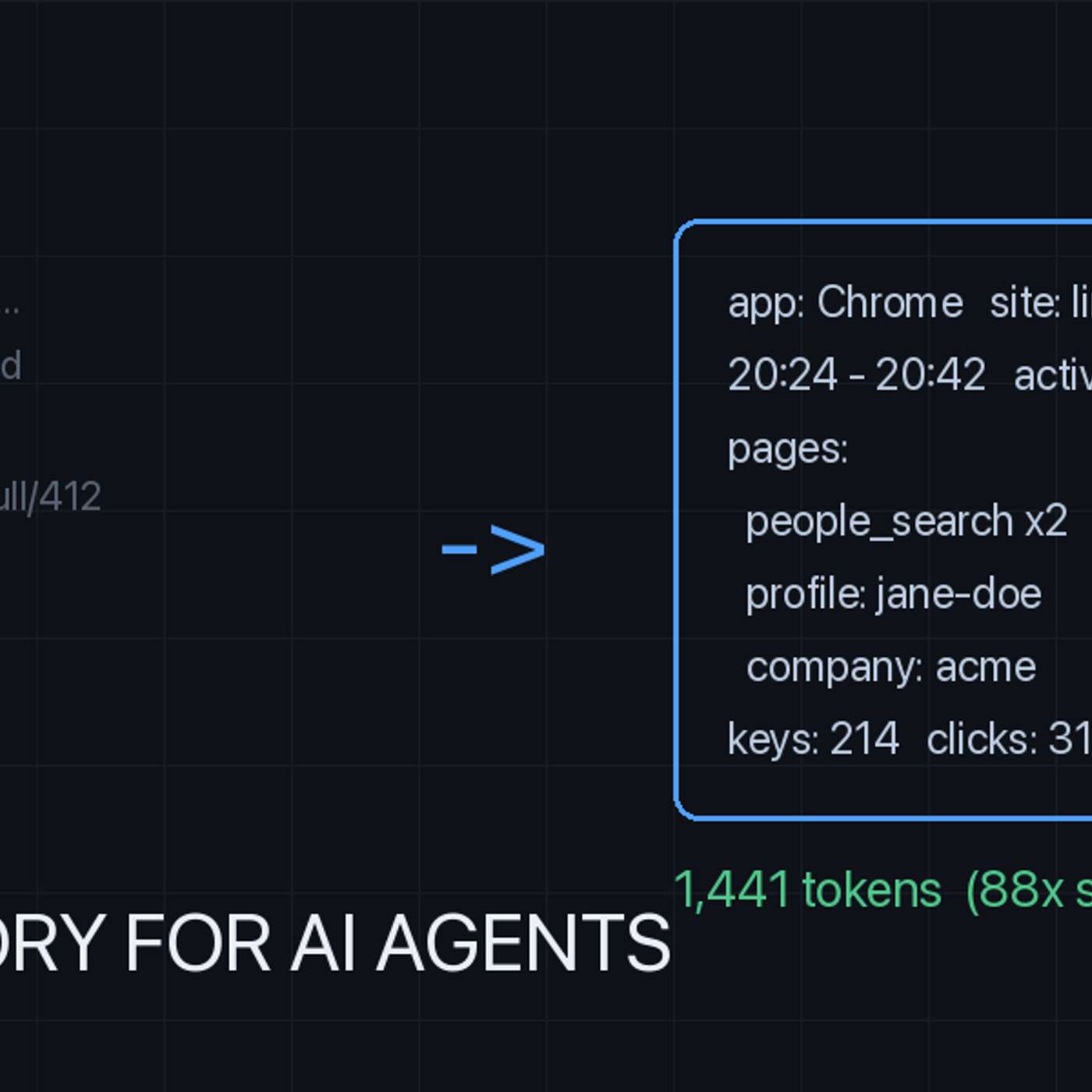
Current AI agents focus on "conversation memory" (what you tell them), completely missing the vast context of a user's actual work—like code commits, browsing sessions, or abandoned emails. This creates a significant blind spot in their understanding of user context and intent, as most work happens outside the chat window.
By testing premium subscriptions with expanded AI capabilities and integrating its Manus acquisition, Meta is revealing its strategy. It aims to create a 'personalized super intelligence' that operates across its massive ecosystem (WhatsApp, Instagram, Facebook), effectively leveraging its distribution power to dominate the consumer agent market.
Meta's new model, MuseSpark, is explicitly designed for personal consumer tasks like shopping, health, and social content, not enterprise or coding use cases. This signals a strategic choice to avoid direct competition with OpenAI and Anthropic in the B2B space and instead dominate the consumer AI agent market.

Meta's AI is failing its most valuable users: creators. Instead of providing generic advice from blog posts, Meta AI could deliver 'personal super intelligence' by analyzing a creator's specific data to offer tailored recommendations for growth. This represents a massive, unfulfilled opportunity to empower the platform's lifeblood.

Meta's current AI tools for creators are a significant missed opportunity. Despite possessing granular data on user engagement, the AI provides generic, blog-post-level advice. This failure to create a personalized 'social media copilot' that leverages unique user data represents a major gap in their AI product strategy.
An individual's data (emails, browser history) is valuable not for its content, but for teaching AI deep personalization. It provides context on writing style, priorities, and decision-making processes, a capability current models severely lack, which explains why they often feel generic.

Meta's Muse Spark suggested "Malibu surf puns" to a user who hadn't mentioned Malibu, then denied using personal data. This reveals a conflict between the AI's underlying access to user information for personalization and its programmed safety responses, creating a jarring and untrustworthy user experience.

An interaction with Meta's new AI demonstrates the fine line between helpful personalization and invasive creepiness. The AI suggested "Malibu appropriate surf puns" based on the user's private data (likely from Instagram), then awkwardly denied it. This highlights the PR and user trust challenges of leveraging personal data, even for seemingly innocuous features.
Meta and OpenAI's same-day launches reveal a strategic split. Meta’s generic AI video feed, "Vibes," was poorly received as "slop." In contrast, OpenAI’s "Pulse" offers personalized, high-utility content, showcasing a superior strategy of personal intelligence over mass-market AI entertainment.