Get your free personalized podcast brief
We scan new podcasts and send you the top 5 insights daily.
AdvanCell's core manufacturing innovation is a modular, automated generator for its lead-212 isotope. Described as being like an espresso machine, this system allows the company to scale production simply by adding more generator units in a line, de-risking a major industry challenge.

Related Insights
Radically departing from the traditional model of massive, on-site construction, Radiant is designing portable micro-reactors to be mass-produced in a factory. This "reactor as a product" approach aims to deliver power solutions that can be shipped and activated in 48 hours.

While vertical integration is key, AdvanCell employs a practical, blended manufacturing strategy. They partner with a CDMO for initial US production to ensure speed and access, while simultaneously building their own flagship commercial-scale facility. This dual approach balances near-term execution with long-term control and scalability.
The transformative potential for nuclear energy isn't merely building components in a factory. The real breakthrough is achieving assembly-line mass production, using robotics and standardization to reach a pace and cost structure similar to the automotive industry—a significant leap beyond current "factory-built" concepts.

Unlike traditional fermentation where moving to larger tanks introduces significant process variability, photosynthetic systems using photobioreactors scale modularly. Companies can simply add more units ("scaling out"), which minimizes performance differences and de-risks the transition to commercial-scale manufacturing.

Unlike traditional nuclear power which involves building massive, site-specific projects, Radiant is treating reactors as mass-producible products. Their focus on smaller, mobile 1MW units prioritizes rapid deployability and mobility over raw power scale, enabling them to serve off-grid and remote use cases.

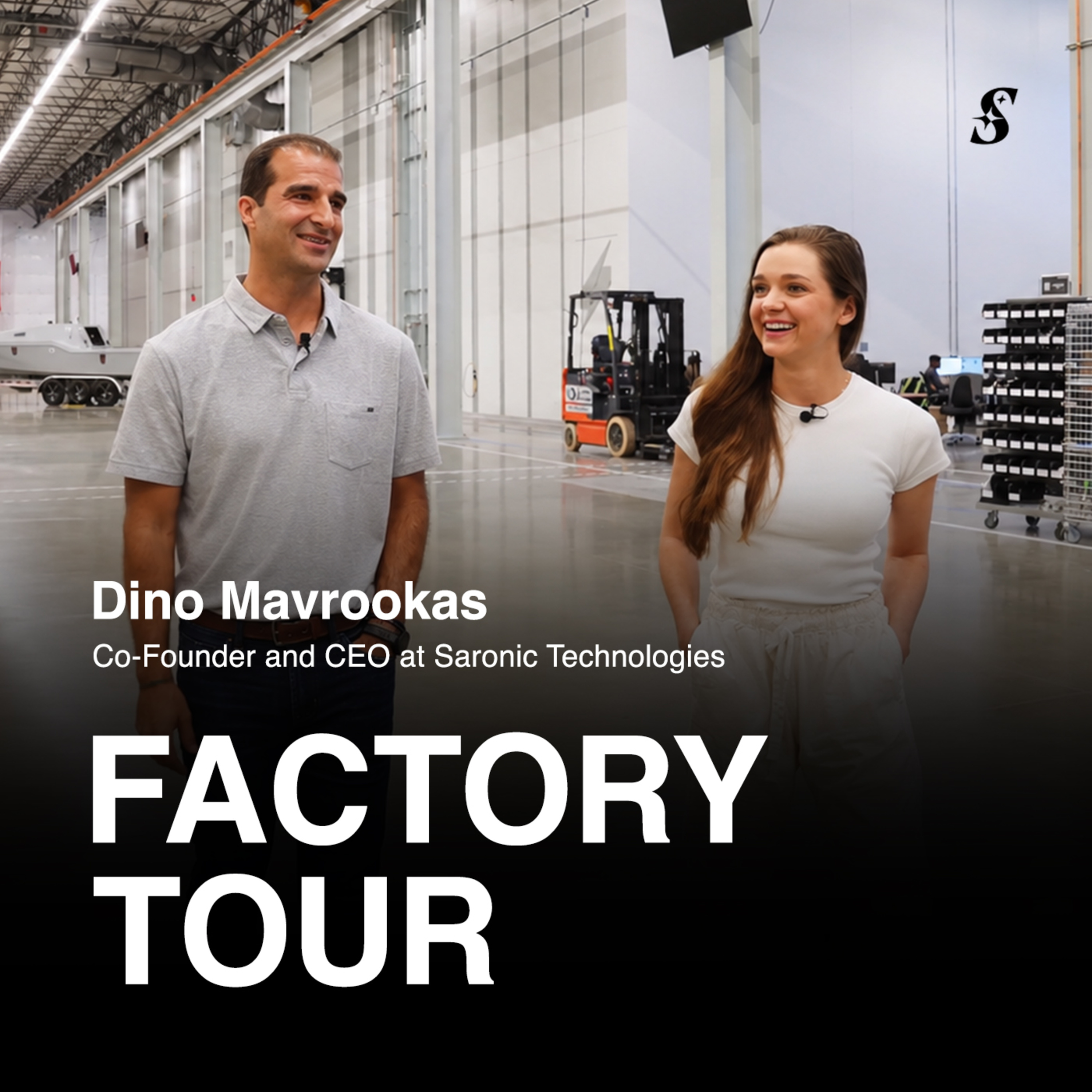
Saronic focuses on a simple, linear production flow that acts as a replicable blueprint. This 'system that builds the system' allows them to quickly establish new manufacturing facilities in standard warehouses, enabling rapid scaling not just in the U.S. but also for international allies.
A key innovation for modular nuclear power is the turbine technology. Supercritical CO2 turbines are much smaller and more efficient (up to 50%) than traditional steam turbines. This size reduction is crucial because it makes them suitable for mass manufacturing, aligning with the strategy of factory-building the entire power generation system.
The primary challenge for many MedTech innovations is not the initial science but translating a lab process into a robust, scalable, and GMP-compliant manufacturing system. This requires a shift from proving a concept to ensuring consistent quality and patient safety.
Unlike radiotherapeutics with short half-lives requiring local production, Plus Therapeutics' use of Rhenium-186 (90-hour half-life) is a key operational advantage. It allows for centralized manufacturing and a flexible supply chain, enabling shipment across the U.S. and to Europe from a single facility.
AdvanCell's choice of lead-212 isotope is a strategic one. Its parent, thorium-228, is far more abundant than the parent isotope for actinium-225, which is used by hundreds of competing companies. This secures a more reliable and scalable supply chain, a critical advantage in the radiopharma space.