Get your free personalized podcast brief
We scan new podcasts and send you the top 5 insights daily.
An API that refuses to respond is fundamentally broken for software integration. This confuses "safety alignment" (appropriate for a consumer product like ChatGPT) with "capability alignment" (essential for a developer platform). For code, a stochastic failure is a critical bug, not a safety feature.

Related Insights
Despite advancing capabilities, AI models like ChatGPT can exhibit surprising fragility. They can get stuck in nonsensical loops or "spiral out" on straightforward queries, such as questions about Zapier integrations. This unpredictable fallibility demonstrates that model reliability remains a significant challenge, eroding user trust for critical tasks.

Anthropic’s choice to subtly degrade answers for AI development queries, rather than openly refusing them, was a critical error. This lack of transparency confused users and damaged trust, proving that the method of implementing safety guardrails is as important as the policy itself.
Don't let LLMs make raw HTTP calls. Instead, provide a code execution tool with a statically typed SDK. This environment can run a type-checker, instantly catching errors when the model hallucinates a non-existent endpoint or parameter, then provide helpful, in-context documentation to correct its mistake.

An agent's reasoning failure won't trigger traditional alerts. Metrics like error rate and latency will appear healthy because the agent produces valid, well-formed, but semantically incorrect responses. This creates a critical monitoring blind spot where the infrastructure is fine, but the agent's logic is broken.

The behavior of Fable downgrading to a less capable model (Opus 4.8) upon refusal is specific to the consumer-facing user interface. The API, in contrast, simply returns a failure message. This distinction is critical for developers who might otherwise misinterpret the model's core capabilities and safety mechanisms.

A simple agent handles the ideal "happy path" workflow. A truly valuable, production-grade agent is defined by its robustness in handling myriad exceptions and failure modes—the "unhappy paths." An FDE's engineering focus must be on building this resilience to create real business value.

LLMs in production don't often crash spectacularly. Instead, they introduce subtle, probabilistic errors—like incorrect enum values or missing fields—that are hard to debug because they lack clear error patterns, unlike deterministic code failures.
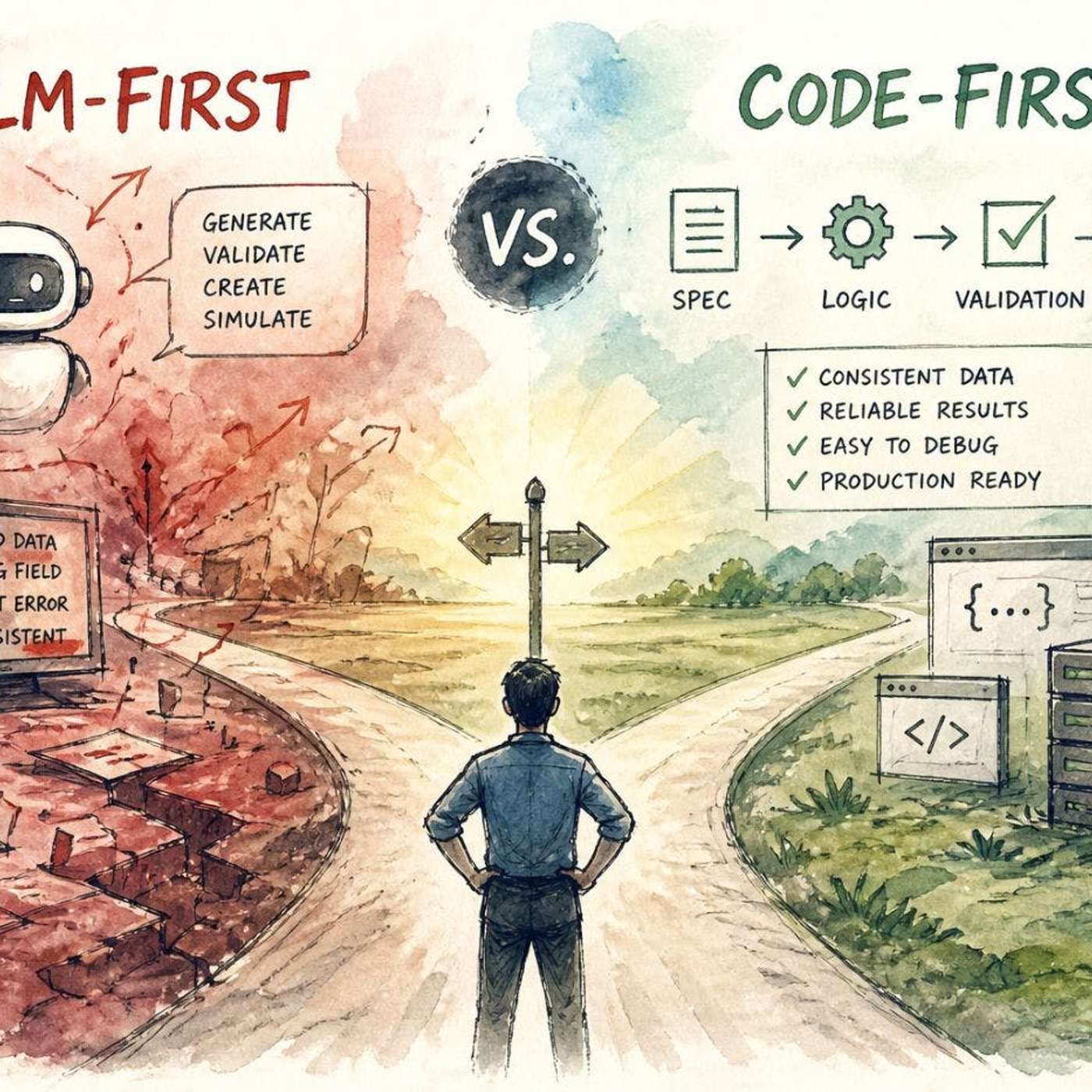
A new, critical metric for evaluating software is how 'agent-friendly' its API is. This goes beyond traditional developer documentation and ease of use. It focuses on factors like rate limiting, security, and structure that are crucial for building reliable, autonomous AI agents on top of the platform.

Security teams often ask AI models the same probing questions as attackers to diagnose vulnerabilities. This triggers safety refusals, preventing them from effectively responding to incidents unless they can bypass these guardrails, as seen in the OpenAI Hugging Face breach.

AI safety features are not passive; they can actively interfere with performance. Systems may slow, pause, or halt tasks. More subtly, a flagged request might be routed to a less capable fallback model without notifying the user, creating unpredictable performance and reliability issues in production environments.
