Get your free personalized podcast brief
We scan new podcasts and send you the top 5 insights daily.
Unlike in other cancers, about one-third of HER2-positive gastroesophageal tumors become HER2-negative after first-line treatment. This loss is a key mechanism of resistance, making it mandatory to re-biopsy and re-test for HER2 at the time of disease progression to determine appropriate subsequent therapies.

Related Insights
In gastroesophageal adenocarcinoma, treatment decisions and pivotal clinical trials rely on HER2 status determined by tissue IHC and ISH testing. While liquid biopsy (ctDNA) is used in other cancers, it is not considered an interchangeable or recommended surrogate for tissue-based analysis in this specific disease, and should only be used when a tissue biopsy is not feasible.
Before starting a second-line HER2-targeted therapy like trastuzumab deruxtecan, it is critical to re-biopsy the tumor if feasible. HER2 status can change after first-line treatment, and confirming persistent HER2 positivity is essential to ensure the subsequent therapy will be effective.

While re-biopsying at disease progression is the "by-the-book" standard to confirm biomarkers like HER2, clinicians acknowledge it is often skipped. The difficulty of obtaining tissue and the desire to provide patients with potential treatment options create a gap between guidelines and clinical reality.
Patients with HER2-positive GI cancers can lose expression after treatment. While re-biopsy is ideal, it's often impractical or risky. In these cases, clinicians find ctDNA analysis of HER2 copy numbers to be a reliable alternative for guiding subsequent treatment decisions.

Unlike breast or lung cancer where a biomarker's effectiveness persists across treatment stages, biomarkers in upper GI cancers often fail to show similar efficacy when moved from one line of therapy to another. This suggests a more variable and rapidly changing tumor biology.
Nearly half of HER2-positive gastric cancer patients lose HER2 expression after initial chemotherapy and trastuzumab. This dynamic biomarker status requires re-testing at progression to confirm eligibility for subsequent HER2-targeted therapies like trastuzumab deruxtecan, ensuring the right patients receive the treatment.

Due to selective pressure from first-line treatment, 30-40% of HER2-positive gastroesophageal cancers lose HER2 expression by the time of progression. It is crucial to re-test these patients, either via tissue biopsy or ctDNA, to confirm continued HER2 positivity before initiating second-line HER2-targeted therapy like TDXD.

Experts recommend using the most effective first-line therapy, like zanidatumab combinations, for HER2-positive gastric cancer, despite the risk of the tumor losing HER2 expression upon progression. The substantial upfront survival benefit outweighs the concern of losing a second-line target like T-DXd.
In the increasingly common scenario of a patient with multiple positive biomarkers, a clear hierarchy exists for treatment decisions. Based on the robustness and maturity of clinical trial data, HER2-directed therapy is the top priority, followed by PD-L1 immunotherapy, with Claudin-18.2 targeting considered third.
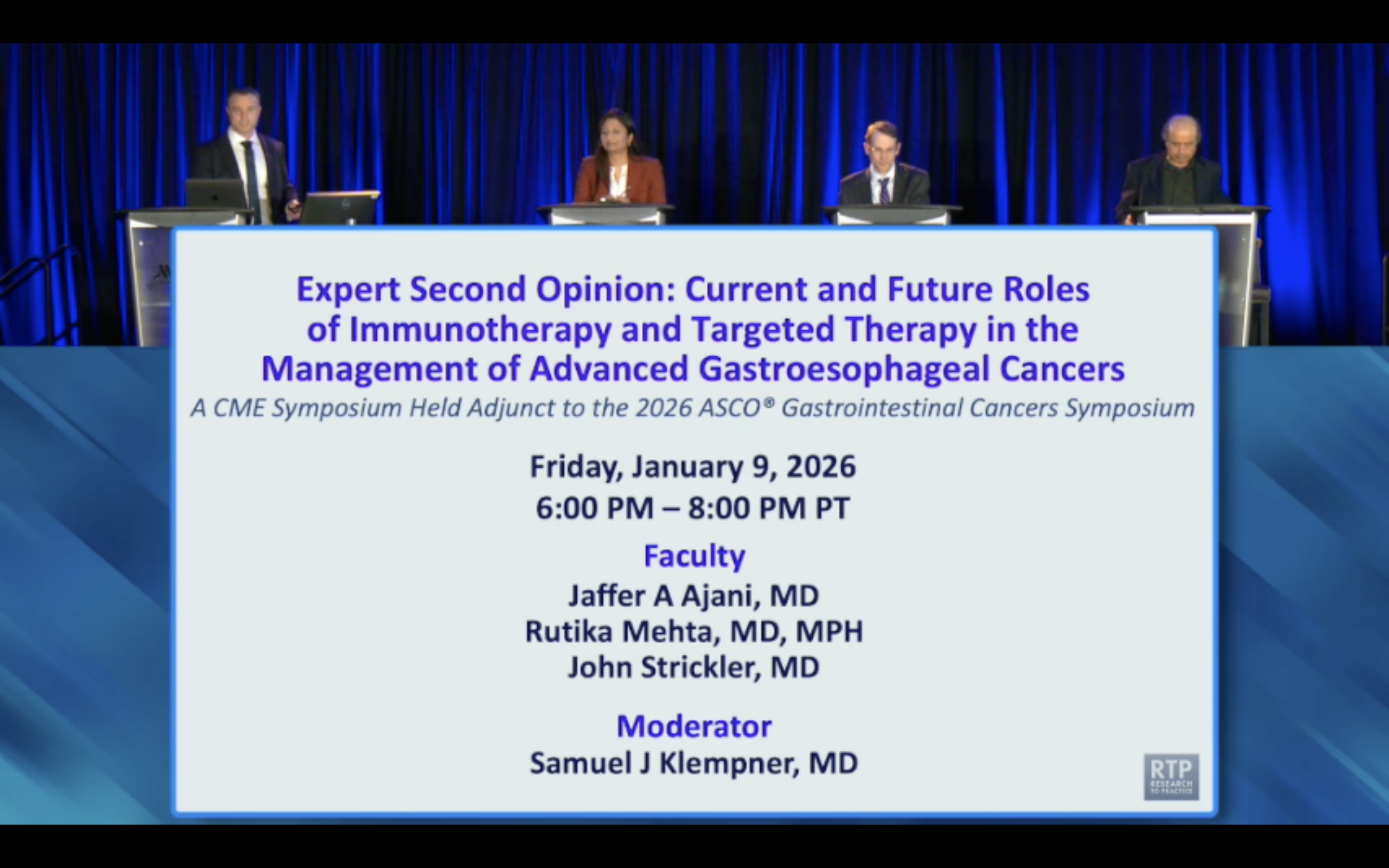
While loss of HER2 is common at progression, the conversion of a HER2-negative tumor to HER2-positive is an extremely rare but documented event. This possibility justifies re-biopsying progressive disease and repeating the entire biomarker panel, as finding this conversion—even in 1 of 100 patients—can unlock new, life-prolonging targeted therapies.