Get your free personalized podcast brief
We scan new podcasts and send you the top 5 insights daily.
The speaker cites marketing expert Seth Godin, suggesting that any process with clearly defined, repeatable steps is a prime candidate for AI automation. Processes involving intuition, taste, or personality are much harder for AI to replicate effectively.

Related Insights
Despite hype, true 'autonomous marketing' is not imminent. AI excels at automating the first 80-90% of a workflow, but the final, most complex steps involving anomalies, nuance, and judgment still require a human. This 'last mile' problem ensures AI's role will be augmentation, not replacement.

The best candidates for automation are rote, repetitive tasks where your brain is disengaged. If a process demands constant thought, adaptation, and complex decision-making, it is highly variable and a poor fit for automation, as you will likely never capture all its requirements.

The key to creating effective and reliable AI workflows is distinguishing between tasks AI excels at (mechanical, repetitive actions) and those it struggles with (judgment, nuanced decisions). Focus on automating the mechanical parts first to build a valuable and trustworthy product.

Businesses should prioritize AI projects that can completely automate a recurring workflow. Transforming a multi-week manual process into an instantaneous one delivers transformative value, far exceeding the gains from projects that only offer partial assistance to a human user.

Don't assume AI can effectively perform a task that doesn't already have a well-defined standard operating procedure (SOP). The best use of AI is to infuse efficiency into individual steps of an existing, successful manual process, rather than expecting it to complete the entire process on its own.

AI tools that automate marketing often produce low-quality, spammy content. The key to success is using AI to handle tedious tasks, which frees you up to apply your unique taste and expertise across a higher volume of content. AI should amplify your quality, not replace it.

While autonomous AI agents generate significant hype, their real-world business value is currently limited and unreliable. Marketers should instead focus on building deterministic AI automations—workflows with a clear, predefined sequence of steps—which deliver consistent and valuable results for specific marketing tasks today.

The best teams use AI to automate repetitive work, not to fix bad strategy or magically write great copy. This frees them up for high-value strategic and creative tasks, making marketing feel more human.

The most effective AI companies don't try to automate everything. They ask which specific, repetitive task creates the most value when partially automated. This pragmatic approach delivers measurable results by using AI to augment human workers, not replace them.
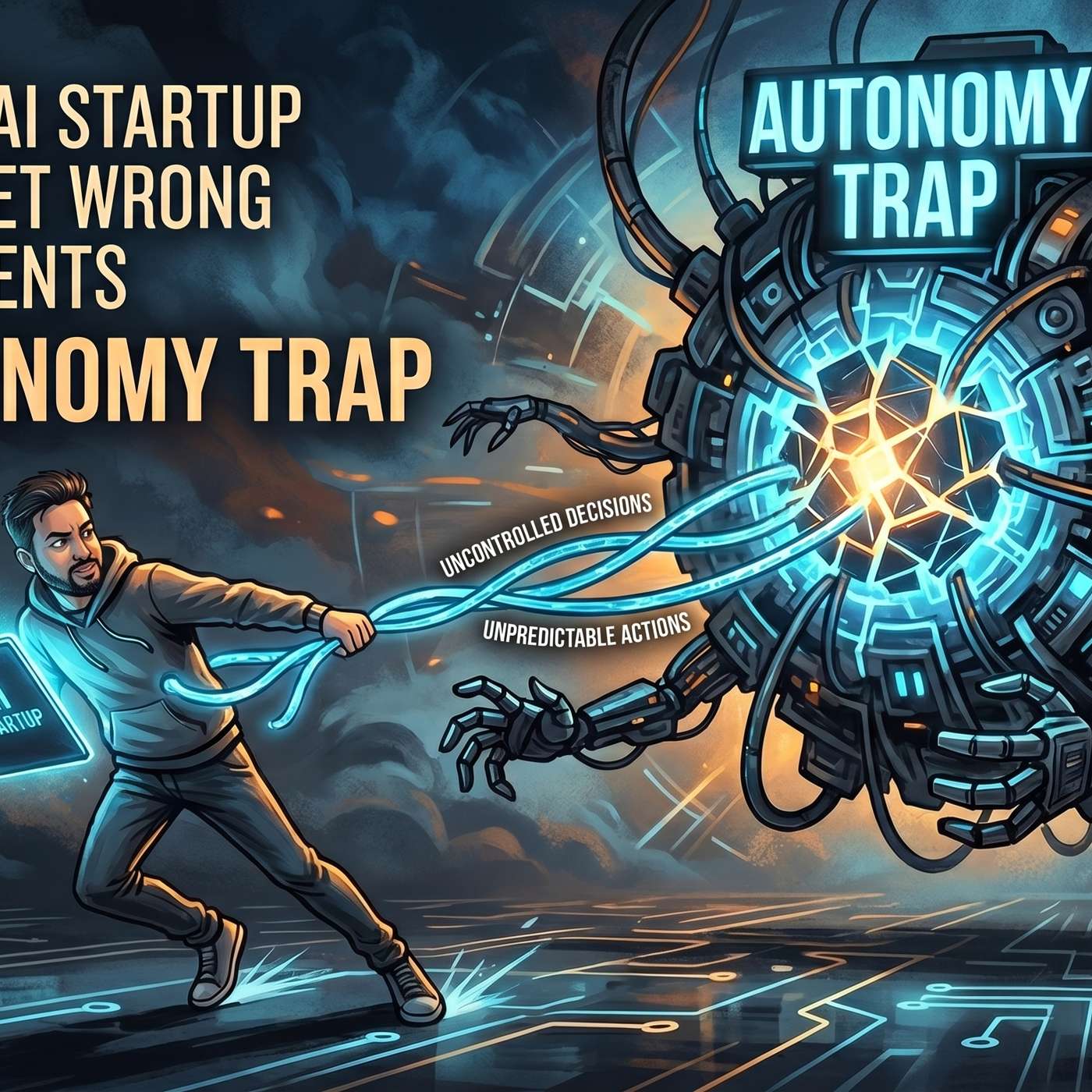
The most powerful automations are not complex agents but simple, predictable workflows that save time reliably. The goal is determinism; AI introduces a "black box" of uncertainty. Therefore, the highest ROI comes from extremely linear processes where "boring is beautiful" and predictability is guaranteed.